Our website use cookies to improve and personalize your experience and to display advertisements (if any). Our website may also include cookies from third parties like Google Adsense, Google Analytics, and Youtube. By using the website, you consent to the use of cookies.

Elephants or avocados: a Kenyan dilemma

Elephants or avocados: a Kenyan dilemma

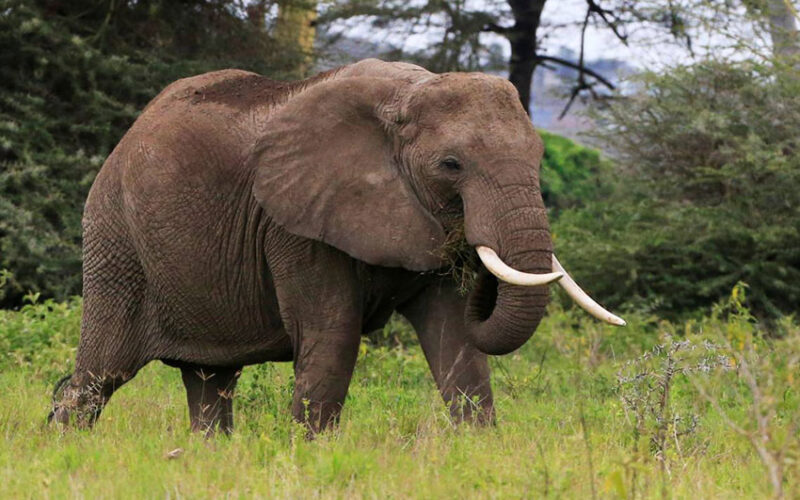
JACKSON NJEHIA and NAZANINE MOSHIRI THE majestic sight of elephants roaming beneath Mount Kilimanjaro has long lured throngs of wildlife-lovers to Amboseli National Park on Kenya's border with Tanzania. Yet the free movement of some 2,000 Amboseli elephants, along with two dozen other wildlife species plus cows owned by local Maasai people, may be under threat - from avocados. Kenyan agricultural company KiliAvo Fresh Ltd, which has farms near Amboseli on nearly 175 acres of land, is building nurseries and preparing to grow the fruit, whose popularity is growing worldwide due to its high nutritional value. Conservationists are aghast. They…
Read More
Africa looks likely to continue relying on power from fossil fuels for some time

Africa looks likely to continue relying on power from fossil fuels for some time

THE narratives of “leapfrogging” to new technologies are pervasive when it comes to development in Africa. One example is skipping cord phones and landlines to advance directly from limited phone coverage to wide mobile phone usage. Another that’s frequently discussed is Africa’s potential for a quick transition to renewable energy. GALINA ALOVA, Environmental Economist | Energy, Sustainable Finance and Machine Learning, University of Oxford PHILIPP TROTTER, Research Associate, Renewable Energy, University of Oxford This is important both from a climate change and an economic development perspective. Providing affordable clean energy is big on the UN Sustainable Development Agenda (Goal 7).…
Read More
We need a green recovery after COVID-19, but banning wildlife trade could do more harm than good

We need a green recovery after COVID-19, but banning wildlife trade could do more harm than good

AFTER several early cases of COVID-19 were linked to a wet market in China, wildlife trade became central to discussions about links between public health and nature. HOLLIE BOOTH, PhD Candidate, Conservation Science, University of Oxford Some groups called for a complete ban on the consumption and trade of wildlife, with governments such as China and Vietnam acting decisively to introduce large-scale prohibitions. The pandemic has brought humanity’s strained relationship with nature into sharp focus. It’s drawn public attention to links between environmental and human health, and led to calls for a “green recovery” that puts the environment at the…
Read More
Solar lights help Kenyan women escape sex-for-fish trap

Solar lights help Kenyan women escape sex-for-fish trap

KAGONDU NJAGI MARY Achieng' sifted through her catch of silver cyprinid fish, sorting them into gunny sacks and carrying them to the weighing stand at Kogwang' Beach, on the Kenyan shore of Lake Victoria. Achieng' had caught the fish the night before, using a solar-powered light to lure them into her nets. The 500-kg (1,100-lb) haul would earn her 50,000 Kenyan shillings ($450) - enough to keep her family going until she next went out again on the lake a week later. Before she got the lamp two years ago, Achieng' had to stock her stall in Kendu Bay with whatever she…
Read More
To what extent does climate change affect food insecurity? What we found in Lesotho

To what extent does climate change affect food insecurity? What we found in Lesotho

FOOD security is a growing concern globally, with two billion people being subject to moderate to severe food insecurity in 2019 according to the United Nation’s Food and Agriculture Organisation. Food security consists of four interconnected pillars: food availability (how much is produced), food access (can people afford food), food use (how is food prepared and consumed) and stability (how stable is the food supply and consumption). FRIEDERIKE OTTO, Associate Director, Environmental Change Institute, University of Oxford JASPER VERSCHUUR, DPhil Student, University of Oxford Large-scale droughts can have cascading impacts on all these four pillars. They can reduce yield which…
Read More
Deep-sea gear helps Kenyan fishermen ride rough waves of climate change

Deep-sea gear helps Kenyan fishermen ride rough waves of climate change

WESLEY LANGAT FISHERMAN Ahmed Amir Samir, 35, who works in the Kenyan coastal town of Mombasa, feels his job got a lot safer after the county government donated modern boats to locals nearly 18 months ago. "Sometimes in tumultuous waves, we would risk our lives going out into the deep ocean using locally made wooden canoes," he said, describing artisanal fishing as costly and dangerous. As many parts of the world struggle with the effects of climate change, the ocean is warming fast, seas are rising and storms are becoming more powerful, threatening marine ecosystems and communities that rely on…
Read More
Human-wildlife conflicts surge in Namibia

Human-wildlife conflicts surge in Namibia

NAMIBIA has seen a surge in incidents of human-wildlife conflicts involving elephants, buffaloes and other species, mainly in the north and northeastern parts of the country, the environment minister told parliament on Wednesday. Like several other African nations, Namibia is trying to strike a balance between protecting high-value species like elephants and rhinos, while managing the danger they pose when they encroach on areas of human habitation. The country has resorted to auctioning off some of its elephants while relocating others to national parks. In some cases, government would "destroy" problem-causing animals, the minister said. The plans have riled some…
Read More
The protection of our planet, and the protection of women’s rights, are intertwine

The protection of our planet, and the protection of women’s rights, are intertwine

ADENIKE OLADOSU I call myself an ecofeminist because the climate crisis is not gender-neutral – it is first and foremost a crisis for women and girls. Women bear the largest burden of the climate crisis, despite having the smallest carbon footprint. In my region, women tend to be the closest to nature and the environment, as they are more dependent on natural resources like land, forests and water for their livelihoods. Therefore, when natural resources are depleted, women are the first victims. In rural Nigeria, women produce the majority of food grown for consumption and local markets, yet they have little…
Read More
Africa urged to embrace wind power to create jobs and go green

Africa urged to embrace wind power to create jobs and go green

KIM HARRISBERG WIND could power Africa's energy demands 250 times over and create jobs lost in the move away from fossil fuels but the continent has only tapped into 0.01% of its potential, wind experts have said. Wind projects are growing fast, with 724MW of new capacity added in 2020, bringing the total to 6468MW across Africa - equal to taking more than 2 million cars off the road, said the Global Wind Energy Council (GWEC), which represents the sector. "Now is the time to urgently scale-up wind power in the region ... as a driver of local jobs and…
Read More
OPINION: Want to heal Africa’s degraded land? Go local

OPINION: Want to heal Africa’s degraded land? Go local

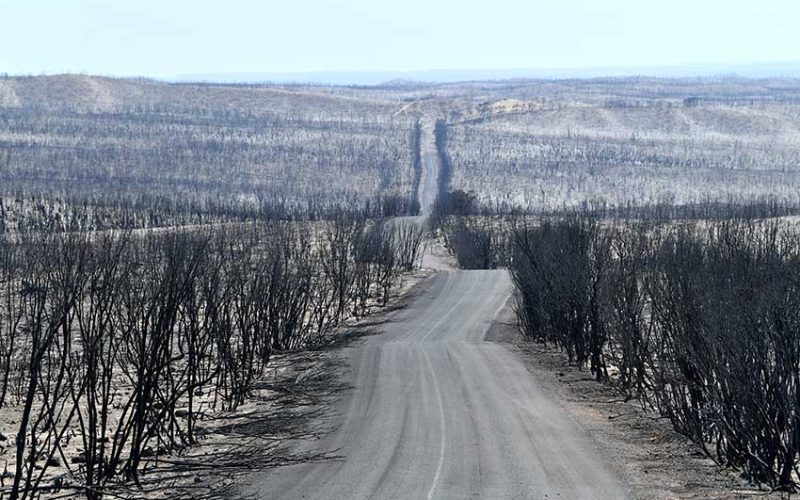
WANJIRA MATHAI and SALIMA MAHAMOUDOU IN Kenya and Niger, the countries that we call home, the land is hurting. Across Africa, land degradation is threatening the health of 1 billion people, eroding opportunity just as it erodes the soil. That crisis is compounded by the impact of COVID-19, which could push a further 49 million people into extreme poverty. But this is not the future that we foresee for Africa’s vital landscapes. We see thousands of communities healing forests, farms, and pasture across 100 million hectares of land, an area the size of Egypt, by 2030. What makes us believe in this…
Read More