Our website use cookies to improve and personalize your experience and to display advertisements (if any). Our website may also include cookies from third parties like Google Adsense, Google Analytics, and Youtube. By using the website, you consent to the use of cookies.

Small efforts can protect farmers from pesticides. Insights from Zambia

Small efforts can protect farmers from pesticides. Insights from Zambia

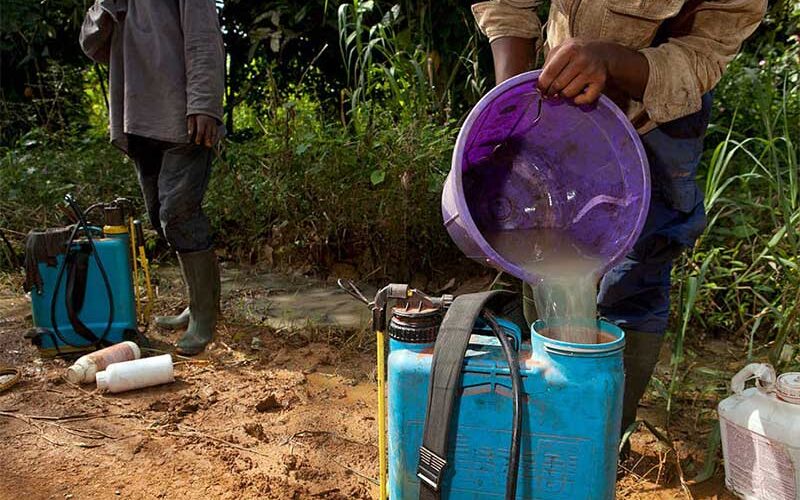
JOSEPH GOEB, Research Associate, Michigan State University VEGETABLE production, tomato production in particular, is an important source of income for many smallholder farmers in Zambia. It can provide them with gross margins that are much higher than maize, the dominant field crop. But these higher returns come with nearly ubiquitous crop loss risks from pests. Two commonly reported pests are bollworms and nematodes. These can dramatically reduce the amount of tomatoes that meet quality standards. To address this, farmers in Zambia are starting to use more pesticides. A trend that can be seen in many African countries, such as Ethiopia…
Read More
How fracking plans could affect shared water resources in southern Africa

How fracking plans could affect shared water resources in southern Africa

SURINA ESTERHUYSE, Lecturer Centre for Environmental Management, University of the Free State RECENTLY, news reports revealed plans by a Canadian oil and gas company, ReconAfrica, to explore for oil and gas in some of Africa’s most sensitive protected areas. These areas include the Namibian headwaters of the Okavango delta and a world heritage site, Tsodilo Hills, in Botswana. Plans are afoot to explore inside the Kavango-Zambezi transfrontier conservation area. Both conventional and unconventional oil and gas are the targets. Conventional oil and gas occur in porous geological formations. Unconventional oil and gas occur in impermeable geological formations and need specialised…
Read More
More than 7,000 dead seals found along Namibian beach – conservation group

More than 7,000 dead seals found along Namibian beach – conservation group

THE number of dead seals found washed ashore on the coast of Namibia has risen to more than 7,000, according to non-profit group Ocean Conservation Namibia (OCN). OCN said last week thousands of dead seal pups had washed ashore at Pelican Point peninsula, a tourist destination known for its colony of seals and school of dolphins. Naude Dreyer, a marine biologist at OCN, said investigations in the past week had revealed a spike in the number of dead female adults. "What we have been observing is less freshly dead seal pups and a lot of dead female adults," he said…
Read More
Extreme heat is a threat to lives in Africa, but it’s not being monitored

Extreme heat is a threat to lives in Africa, but it’s not being monitored

EXTREME heat is a serious hazard to people’s health. It affects the cardiovascular system and is particularly dangerous for the elderly and people with pre-existing health conditions. LUKE HARRINGTON, Postdoctoral researcher in Climate Extremes, Environmental Change Institute, University of Oxford FRIEDERIKE OTTO, Associate Director, Environmental Change Institute, University of Oxford Recent research has found that since the 1950s, extreme heat has become more frequent and severe, and lasted longer, in nearly all regions of the world. The biggest increases have been seen in the Middle East, South America and parts of Africa. Because societies in different parts of the world…
Read More
River of bacteria: a South African study pinpoints what’s polluting the water

River of bacteria: a South African study pinpoints what’s polluting the water

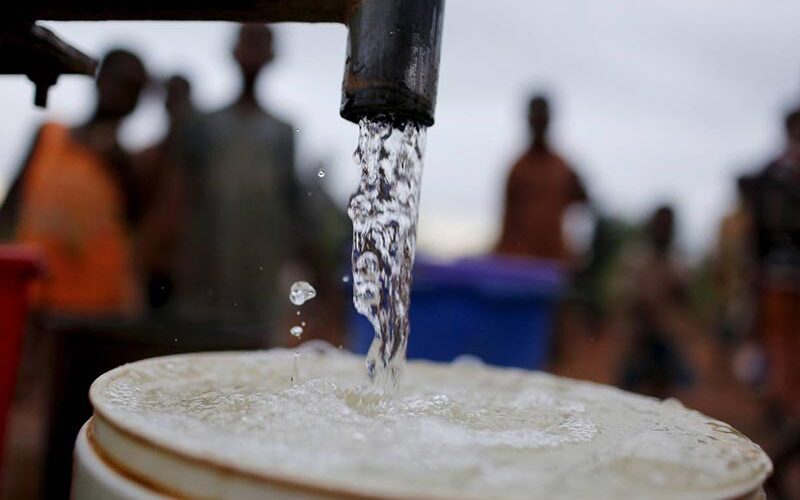
IN 2010, the United Nations recognised access to clean water and sanitation as a fundamental human right. However, over 4.1 billion people around the world, particularly in low- and middle-income countries, still do not have access to this human right. AKEBE LUTHER KING ABIA, Research Scientist, University of KwaZulu-Natal Clean and safe water is necessary for basic life functions — for drinking, for cooking, for bathing, and more. When it is not available, people resort to alternative sources, which are often polluted with pathogenic bacteria arising from human waste. Using such water exposes people to waterborne diseases such as diarrhoea.…
Read More
Toxic waste dumping in the Gulf of Guinea amounts to environmental racism

Toxic waste dumping in the Gulf of Guinea amounts to environmental racism

TOXIC waste and electronic waste (e-waste) is generated from a wide range of industries – such as health, hydrocarbon or manufacturing – and can come in many forms, such as sludges or gas. E-waste is used electronic items that are nearing the end of their useful life, and are discarded or given to be recycled. If these types of waste aren’t properly discarded they can cause serious harm to human health and the environment. IFESINACHI OKAFOR-YARWOOD, Lecturer, University of St Andrews This makes the proper disposal of toxic and e-waste expensive. Because of this a market has been created and…
Read More
Nigeria’s COVID-19 waste management policy should include the informal sector

Nigeria’s COVID-19 waste management policy should include the informal sector

SOLID waste management is an important public health service because it helps to prevent the transmission of disease. It also has a social significance: piles of uncollected waste in cities are an embarrassment to authorities and can create a political backlash from residents. CHIDI NZEADIBE, Professor of Environmental Management & Sustainability., University of Nigeria ADAEZE EJIKE-ALIEJI, PhD candidate, Meteorologist, University of Nigeria But many residents make their living from unmanaged waste. About a million waste pickers are estimated to operate in Nigerian cities. They depend on collecting and recycling waste, thus giving it a value. In doing so they are…
Read More
Kenyan farmers and young guides enlisted to protect city forests

Kenyan farmers and young guides enlisted to protect city forests

KAGONDU NJAGI  PETER Wainana remembers when the forest near his home outside Kenya's capital, Nairobi, was so thick with trees and vegetation it was difficult to walk through. Today, Thogoto forest, on Nairobi's northwest edge, is dotted with open spaces that locals and environmentalists say have been illegally cleared of trees by loggers and property developers, Wainana said. The destruction motivated the 49-year-old to join with a dozen other farmers from Karinde village to protect Thogoto's trees through projects such as bamboo farming and beekeeping. "Everybody wants a piece of this forest because it is near the capital city. Rich…
Read More
Family farmers struggle to keep up with fast-warming world

Family farmers struggle to keep up with fast-warming world

THIN LEI WIN  YOUNG African farmers Mavis Gofa and Andrew Goodman had a vastly different upbringing - Gofa grew up on a one-hectare (2.5-acre) farm and could not afford to finish high school, while Goodman's family cultivated 275 hectares and educated him in Britain. But they share the same big dream. Both want a better life for the families who run the world's half a billion small farms, many of whom remain steeped in poverty despite producing about 80% of food consumed in Asia and sub-Saharan Africa, according to the United Nations. It is a tough ask as climate change…
Read More
The coronavirus pandemic drove life online. Is video streaming pushing up harmful emissions?

The coronavirus pandemic drove life online. Is video streaming pushing up harmful emissions?

LIN TAYLOR WITH COVID-19 restrictions in place globally, our reliance on digital technology sky-rocketed this year as video calls, emails, instant messaging and virtual entertainment replaced face-to-face interactions in and out of the workplace. Between February and April, at the peak of worldwide lockdowns, global internet traffic surged by nearly 40%, driven by video conferences, online gaming, streaming and social media, according to the International Energy Agency (IEA). At this rate, web traffic is set to double by 2022, with mobile internet users expected to jump to 5 billion by 2025 from 3.8 billion last year, the IEA predicts. And all…
Read More