Our website use cookies to improve and personalize your experience and to display advertisements (if any). Our website may also include cookies from third parties like Google Adsense, Google Analytics, and Youtube. By using the website, you consent to the use of cookies.

Coronavirus pandemic sparks surge in firewood use in rural Kenya

Coronavirus pandemic sparks surge in firewood use in rural Kenya

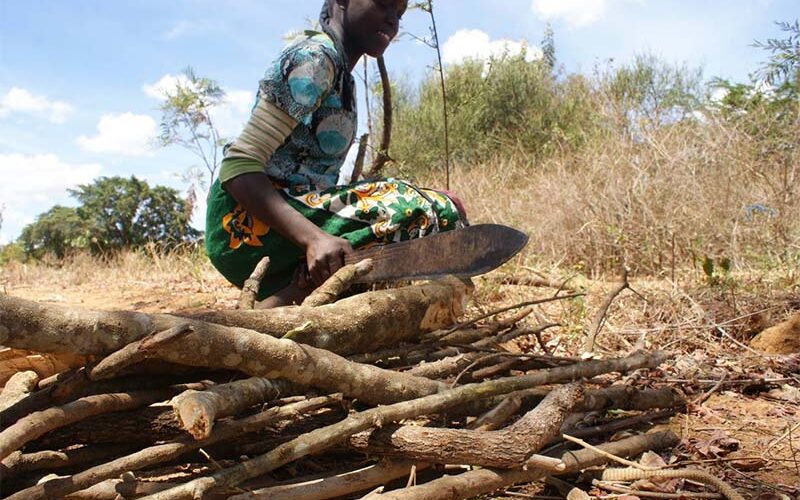
KAGONDU NJAGI AFTER selling another bundle of firewood to his latest customer, Augustinoa Kinyua whistled as he made his way back to the spot where he had been preparing his field for planting. Usually, Kinyua supports his family by growing and selling crops such as maize, beans and bananas on his farm in the central Kenyan village of Nkuthika. But these days, he finds there is more money in firewood, as families hit by the economic impact of the coronavirus pandemic turn away from natural gas toward more affordable, readily available wood for cooking and heating their homes. "My customers…
Read More
As African penguin population dwindles, researchers plan new colony

As African penguin population dwindles, researchers plan new colony

WENDELL ROELF SOUTH African researchers plan to release scores of abandoned, hand-reared African penguin chicks at the Western Cape's De Hoop nature reserve, boosting efforts to start a new breeding colony of the seabirds at risk of extinction. The only penguin that breeds in Africa, it was once South Africa's most abundant seabird. But the population plunged to around 13,000 breeding pairs last year, from more than 1 million pairs in the 1920s, when their eggs started to be harvested for human consumption, government data shows. Researchers have since January 2019 deployed dummy penguins that emit the distinctive call of…
Read More
In a thirsty world, information gaps dog a push to tap groundwater

In a thirsty world, information gaps dog a push to tap groundwater

LAURIE GOERING  AS growing populations and accelerating climate change worsen water scarcity around the world, pumping more from underground could help fill the gap in poorer nations - but only if supplies are better charted and they are used wisely, researchers said. "It's a resource with a huge amount of potential," said Jude Cobbing, who led a new study for charities WaterAid, Earthwatch and WWF on how groundwater is managed in India, Bangladesh, Nepal, Nigeria and Ghana. Little is understood about how much groundwater is available, particularly at local level, and poor organisation between government agencies can mean it does…
Read More
Poisoned carcasses killing off Kenya’s vultures

Poisoned carcasses killing off Kenya’s vultures

EDWIN WAITA A wildlife conservation group is trying to dissuade herders in central Kenya from poisoning cattle carcasses to target predators because vultures often end up being harmed and not lions. Poisoning is one of the chief causes of death for Kenyan vultures. Four of the East African nation's eight vulture species are critically endangered. One of those, the hooded vulture, has seen its population plunged by nearly 90% over the past 45 years, said scientist Darcy Ogada of The Peregrine Fund conservation group. Herders usually poison carcasses because they hope lions will return to the kill. Sometimes they do,…
Read More
Swelled by rain and COVID curbs, locust swarms ravage Ethiopia

Swelled by rain and COVID curbs, locust swarms ravage Ethiopia

TIKSA NEGERI  WIDOW-OF-TEN Marima Wadisha screamed, threw rocks and in her desperation even fired bullets at the locusts that descended on her sorghum fields in northeast Ethiopia. But the insect swarms were so relentless that her entire crop - her family's only source of income - was destroyed. "They never left for a week. We are left with an empty harvest, we tie our waist and cry day and night. How can (I) feed ... my children like this," she said, surrounded by five of them as she held a bundle of damaged sorghum. The locust invasion is Ethiopia's worst…
Read More
Kenyan villagers nurture local springs as founts of clean water

Kenyan villagers nurture local springs as founts of clean water

WESLEY LANGAT MONICA Kirui, 30, a mother of five from Kipsegon, remembers queueing for hours as she waited to fetch water from the local springs, the only source of fresh drinking water in her village in the southern part of Kenya's Rift Valley. One of the few springs in the area that has water year round, Kipsegon attracts people from all over. In the past, some would wait overnight to get their water, often contaminated by so many people dipping containers into the springs, Kirui said. But that has not been a problem since April, when a concrete barrier was built…
Read More
How to green Africa from the grassroots

How to green Africa from the grassroots

CAMILLA TOULMIN GLOBAL lessons can be learned from Africa’s villages. Each one is different and yet, large or small, they represent a microcosm of the forces at work across the continent. They show a capacity to mix traditional with new forms of knowledge, to take advantage of innovations which make sense for them. And people show a tenacious ability to adapt and prosper in the face of land shortages, urban migration and climate impacts. People get on with daily survival despite shortcomings in support, whether from national or international levels. At a time when COVID-19 has now joined climate change…
Read More
Africa shrugs off net-zero emissions push without finance to follow

Africa shrugs off net-zero emissions push without finance to follow

 LAURIE GOERING  AS more countries, cities, investors and businesses set net-zero emissions goals, they now cover about half of the world's economy - but Africa is largely left out of the picture so far. Of its 54 countries, only South Africa has set a net-zero aim - and failure to revamp policies to benefit from a global low-carbon shift may mean Africa misses out on investment, said Wendy Hughes, a carbon markets manager at the World Bank Group. But officials from the continent noted that with sub-Saharan Africa currently producing less than 4% of global emissions, "carbon-cutting" goals have limited…
Read More
As Cape Town races to save water, risk of ‘Day Zero’ drought seen rising

As Cape Town races to save water, risk of ‘Day Zero’ drought seen rising

KIM HARRISBERG CAPE TOWN faces an 80% higher chance of another 'Day Zero' drought by the end of the century if greenhouse gas emissions keep rising at current rates, research showed on Monday, as the South African city races to safeguard water supplies. Following a 2018 drought in South Africa that nearly caused Cape Town's taps to run dry, known as Day Zero, officials have been working to avert further water crises that could put lives at risk and destroy livelihoods in the coming years. Using new high-resolution simulations, researchers from Stanford University and the National Oceanic and Atmospheric Administration…
Read More
‘Potholes’ from the past help drought-hit Zimbabwean farmers save water

‘Potholes’ from the past help drought-hit Zimbabwean farmers save water

LUNGELO NDHLOVU FOR 18 years, Thokozile Ncube has been planting her crops in manure-filled holes covered with straw - and every year, she grows enough to feed her family, as other farmers in Zimbabwe's drought-prone Matobo district watch their crops shrivel. The traditional planting method helps crops survive droughts by keeping them hydrated for longer than tilling and watering an entire field, said the mother of eight from Gwangazile village, 40 km (25 miles) south of Bulawayo. "Whenever the rain comes, that's when you do the planting and your crops will remain green, even during a dry spell, until the…
Read More