Our website use cookies to improve and personalize your experience and to display advertisements (if any). Our website may also include cookies from third parties like Google Adsense, Google Analytics, and Youtube. By using the website, you consent to the use of cookies.

Key insights into land degradation from seven African countries

Key insights into land degradation from seven African countries

KARL HUGHES, Head of Monitoring, Evaluation and impact Assessment, World Agroforestry Centre (ICRAF) LAND is essential to our lives – we grow food on it and rely on it for economic growth and development. In sub-Saharan Africa, approximately 83% of people depend directly on land for survival. However, approximately two-thirds of the continent’s productive land is degraded – it has lost its productive capacity – to some degree. This is driven by years of overgrazing, inappropriate agricultural practices, extreme weather events and the conversion of forest land into farm land. The future doesn’t look promising either as Africa is the…
Read More
Satellite data provides fresh insights into the amount of water in the Nile basin

Satellite data provides fresh insights into the amount of water in the Nile basin

FLOWING through 11 African countries, the Nile River plays an important role in the lives of more than 24% of Africa’s population. To both upstream and downstream countries, the Nile waters are crucial in development planning, food and energy production. EMAD HASAN, Postdoctoral Researcher in Remote Sensing Hydrology, Binghamton University, State University of New York AONDOVER TARHULE, Professor, Vice president for Academic Affairs and Provost, at Illinois State University, Illinois State University As countries vie for these resources, there has been immense tension. Most notably, Egypt and Sudan have challenged Ethiopia’s decision to construct and fill the Grand Ethiopian Renaissance…
Read More
Flooded out, hungry South Sudan farmers race to plant fresh crops

Flooded out, hungry South Sudan farmers race to plant fresh crops

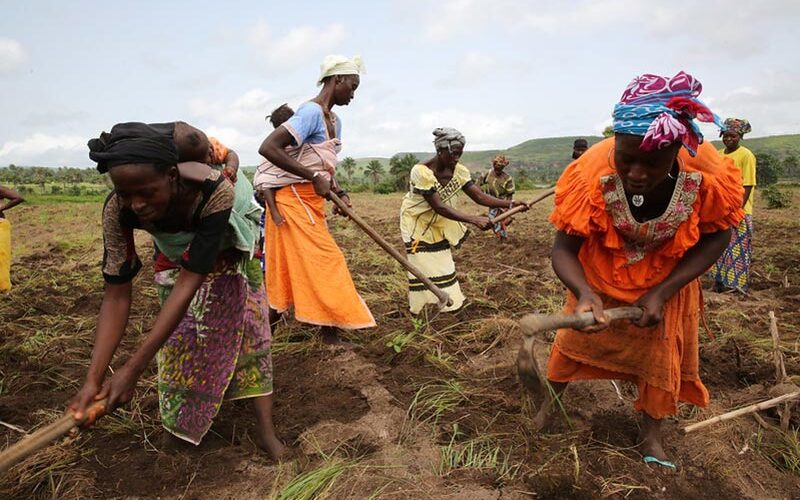
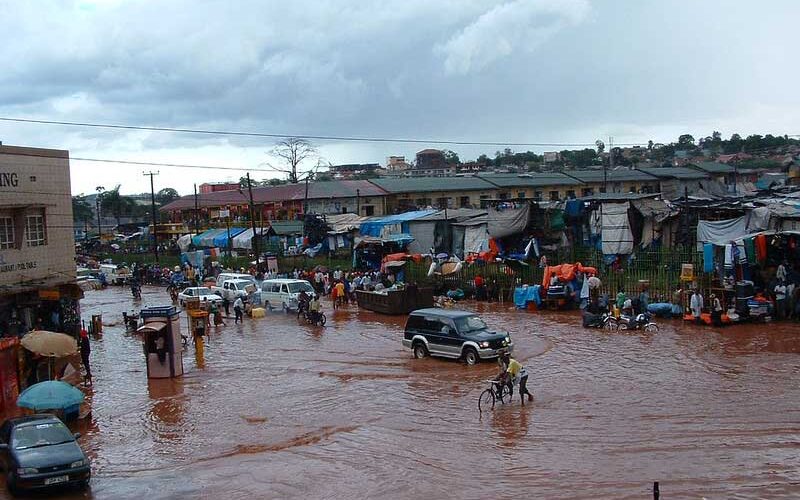
STEPHEN TEKAJUOK AFTER the worst rains in living memory inundated her fields, South Sudan farmer Alexandra Karama is, like hundreds of thousands of her compatriots, staring hunger in the face. Her smallholding is located outside the western town of Mundri, one of the worst affected areas where swathes of crops have failed. "My groundnuts have all been swept by the water... Nothing is left, no sorghum (either)," Karama, a grandmother, told Reuters in Mundri town, where she has been forced to seek shelter at a U.N. compound. Like much of east Africa, South Sudan has been affected by unusually prolonged…
Read More
Climate change, migration and urbanisation: patterns in sub-Saharan Africa

Climate change, migration and urbanisation: patterns in sub-Saharan Africa

ROMAN HOFFMAN, Postdoctoral researcher, Potsdam Institute for Climate Impact Research THE link between climate change and migration has gained both academic and public interest in recent years. Many studies have found that environmental hazards affect migration. But the links are nuanced and depend on the economic and sociopolitical conditions in the respective regions of origin. So what causes people to move and where do they go? And what is the relationship between these decisions and changes in climatic conditions? To answer these questions we conducted a meta-analysis to systematically analyse previous findings in the literature on environmental migration. We combined…
Read More
Why microplastics found in Nigeria’s freshwaters raise a red flag

Why microplastics found in Nigeria’s freshwaters raise a red flag

EMMANUEL O. AKINDELE, Senior Lecturer, Obafemi Awolowo University FRESHWATER ecosystems are a priority for environmental scientists because they affect the health of animals and plants on land too – as well as people. They provide food, water, transport and flood control. Freshwater ecosystems also keep nutrients moving among organisms and support diverse forms of life. Freshwater systems make a big difference to the quality of life in any human society. But they are under great pressure. Freshwater biodiversity is declining faster than terrestrial biodiversity. Among the three major types of habitats – terrestrial, freshwater and marine – freshwater accounts for…
Read More
‘Uninhabitable hell’: Climate change and disease threaten millions, UN warns

‘Uninhabitable hell’: Climate change and disease threaten millions, UN warns

MEGAN ROWLING A jump in climate-related disasters this century, along with the global coronavirus pandemic, show political and business leaders are failing to stop the planet turning into "an uninhabitable hell" for millions, the United Nations said on Monday. The last two decades saw the number of disasters caused by extreme weather nearly double to 6,681, up from 3,656 between 1980 and 1999, according to a report issued ahead of the International Day for Disaster Risk Reduction on October 13. Worsening floods and storms accounted for about four-fifths of the total from 2000-2019 but major increases were also recorded for droughts, wildfires…
Read More
Pandemic spurs illegal gold rush in Zimbabwe mountains

Pandemic spurs illegal gold rush in Zimbabwe mountains

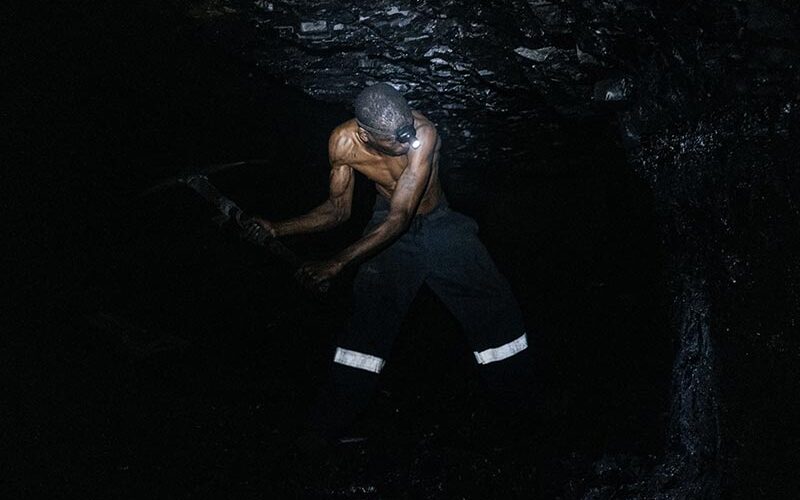
FARAI SHAWN MATIASHE  KNOWN for their rugged ranges, grassy plains and forest waterfalls, the Chimanimani mountains in eastern Zimbabwe have long been a popular destination for tourists - and gold miners hoping to strike it rich. Travel restrictions to slow the spread of COVID-19 have kept the tourists away, although some attractions reopened last month. But illegal mining has surged as miners take advantage of the lack of visitors, leaving a trail of environmental destruction in their wake, say researchers and activists. "The waters are being polluted; the biodiversity poisoned; endemic plants dug up (and) trampled; animals and birds poached;…
Read More
African countries need more air quality data – and sharing it unlocks its benefits

African countries need more air quality data – and sharing it unlocks its benefits

REBECCA GARLAND, Principal Researcher in Climate and Air Quality Modelling Research Group, Council for Scientific and Industrial Research PAUL PLANTINGA, Research Specialist: Digital Strategies and Engagement, Human Sciences Research Council THE harm that air pollution is doing on the African continent seems to be growing. Estimates of premature mortality attributed to air pollution have increased from about 570,000 in 1990 to over 700,000 in 2013. In the same period, premature deaths from unsafe water, unsafe sanitation and childhood malnutrition have decreased across Africa. Many challenges also remain for the continent to reach the Sustainable Development Goals related to air quality.…
Read More
Climate-menaced nations say survival depends on stronger 2020 action

Climate-menaced nations say survival depends on stronger 2020 action

DEVELOPING countries at risk from wilder weather and rising seas urged all governments to meet a deadline to deliver stronger national climate action plans to the United Nations by the end of 2020, stressing that their survival depended on it. About 195 nations committed under the 2015 Paris Agreement on climate change to submit updated plans this year, with a view to boosting so-far inadequate pledges to curb planet-heating emissions and adapt to the impacts of warming. But the health and economic crises caused by the COVID-19 pandemic have thrown climate diplomacy off track and forced a delay of this…
Read More
Climate model shows Saharan heat in much of West Africa within a century

Climate model shows Saharan heat in much of West Africa within a century

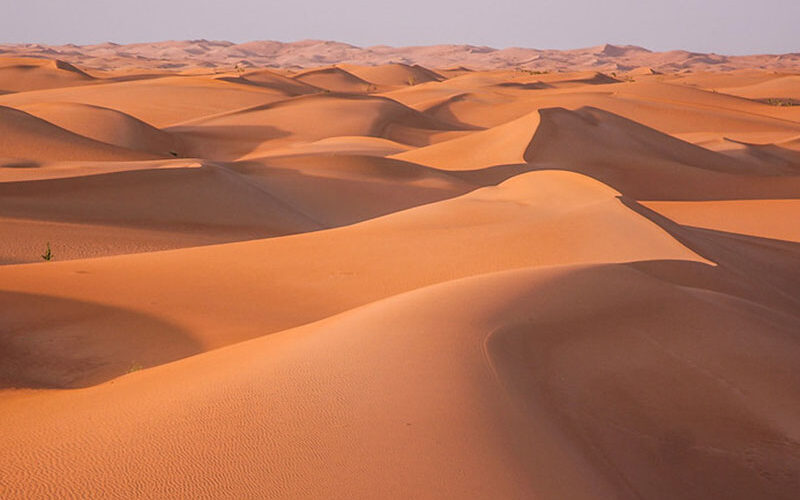
NELLIE PEYTON BY the end of this century, typical daily temperatures in West Africa will be even higher than those registered on the hottest days of the year at present, according to a new study by climate scientists in Britain. The research found that on a typical day in May 80 years from now, temperatures could exceed 50 degrees Celsius (122F) in parts of northern Senegal, southern Mauritania, Mali, Niger and western Chad - seriously affecting health and livelihoods. Minimum temperatures in May could rise to 30C from about 19C today in Niger and central Mali, and to 31C from…
Read More