Our website use cookies to improve and personalize your experience and to display advertisements (if any). Our website may also include cookies from third parties like Google Adsense, Google Analytics, and Youtube. By using the website, you consent to the use of cookies.

Kenyan villagers tap traditional wisdom to save native trees and water

Kenyan villagers tap traditional wisdom to save native trees and water

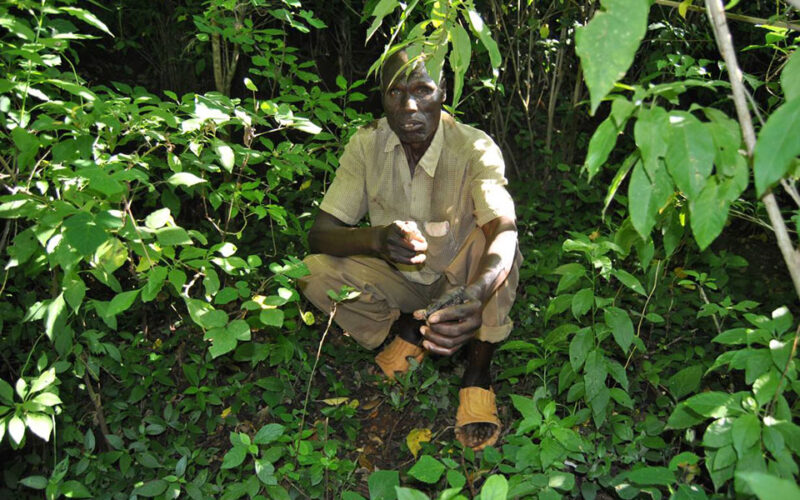
DOMINIC KIRUI WHEN the stream in his village in Kenya's western Kericho County dried up 15 years ago, Wilson Towett had to ferry water each day from another river several kilometres away during the two-year dry spell that followed. But much has changed since then. Using their traditional knowledge, Towett and 14 other elders in Cheplanget village began planting water-retaining indigenous trees along the stream's bare banks and issued local by-laws banning the cutting of bush and trees along the stream. Within two rainy seasons, it was in full flow again. "We learned the hard way 15 years ago... That's…
Read More
Why ocean pollution is a clear danger to human health

Why ocean pollution is a clear danger to human health

OCEAN pollution is widespread, worsening, and poses a clear and present danger to human health and wellbeing. But the extent of this danger has not been widely comprehended – until now. Our recent study provides the first comprehensive assessment of the impacts of ocean pollution on human health. JACQUELINE MCGLADE, Professor of Natural Prosperity, Sustainable Development and Knowledge Systems, UCL PHILIP LANDRIGAN, Professor and Director, Global Public Health Program and Global Pollution Observatory, Schiller Institute for Integrated Science and Society, Boston College Ocean pollution is a complex mixture of toxic metals, plastics, manufactured chemicals, petroleum, urban and industrial wastes, pesticides,…
Read More
One man’s waste is another man’s legacy

One man’s waste is another man’s legacy

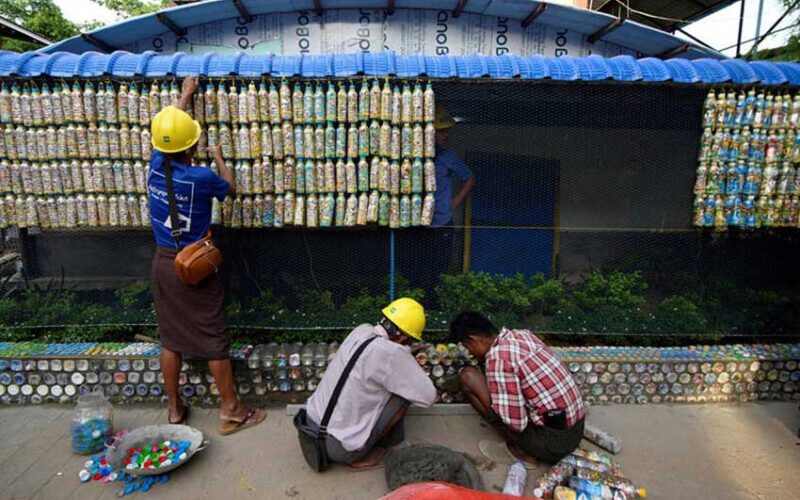
“DO you know where your waste ends up?” This simple yet thought provoking question has driven the growth of Boombadotmobi since its establishment in 2017, turning it into one of South Africa’s most dynamic social enterprises. Boombadotmobi’s impact has been sufficiently significant to land it a place on Digital Africa 1 000 Entrepreneurs, while the company’s Nondumiso Sibiya was named Fairlady Sanlam Rising Star in the 2019 Women of the Future Awards. This success was something founder Sbusiso Shongwe couldn’t have imagined when he took the step that would lead to Boombadotmobi’s inception. Shongwe explains that the seed was planted…
Read More
Fruit famine is causing elephants to go hungry in Gabon

Fruit famine is causing elephants to go hungry in Gabon

THE behaviour and life cycles of the largest animals on the planet are incredibly important for the healthy functioning of our planet’s life support systems. Unfortunately, many big species now face extinction due to their value in the illegal wildlife trade, vulnerability to habitat degradation and because they often come into conflict with humans. EMMA BUSH, Scientist, Royal Botanic Garden Edinburgh (RBGE) KATHARINE ABERNETHY, Professor, University of Stirling ROBIN WHYTOCK, Post Doctoral Research Fellow, University of Stirling The African tropics host many of these remaining megafauna or large animals like gorillas, elephants and hippos, but they are now losing ground.…
Read More
New targets to protect biodiversity must include farmers and agriculture

New targets to protect biodiversity must include farmers and agriculture

THE UN Convention on Biological Diversity is a treaty that aims to develop national strategies for the conservation and sustainable use of a country’s natural resources, or biological diversity. This is a general strategy that all countries must then adopt at the local level. ANJA GASSNER, Global Landscapes Forum science advisor and Senior Scientist, World Agroforestry (ICRAF) PHILIP DOBIE, Senior Fellow, World Agroforestry (ICRAF) TERRY SUNDERLAND, Professor in the Faculty of Forestry, University of British Columbia The Convention – a legally-binding international treaty – is currently negotiating new targets for the next 30 years. Decisions are made by parties to…
Read More
Why African countries must invest more in earth sciences

Why African countries must invest more in earth sciences

THE African continent contains some of the world’s richest mineral resources. For instance, the Democratic Republic of Congo produces most of the world’s cobalt; Rwanda, Ethiopia and Mozambique are major contributors to global tantalum output. These minerals are important constituents in modern electronics. WARWICK WILLIAM HASTIE, Senior Lecturer, University of KwaZulu-Natal The continent also has the bulk of global reserves of platinum and palladium, metals which are critical in the rapidly evolving market for renewable energy and electric vehicles. With such resources to hand, African researchers should be contributing significantly to the academic discipline of earth science – the physical…
Read More
As oceans warm, Zanzibar’s women sea farmers grow sponges to stay afloat

As oceans warm, Zanzibar’s women sea farmers grow sponges to stay afloat

KIM HARRISBERG NASIR Hassan Haji never thought of herself as a farmer or a swimmer, but as she waded into Zanzibar's blue waters with goggles pulled over her headscarf to examine her floating sponge farm, she realised she had surprised herself by becoming both. Alongside 12 other women in Jambiani village on the Indian Ocean coast, Haji has come to rely on the climate-resilient, natural sponges bobbing on thick ropes where they grow for months before the women harvest, clean and sell them to shops and tourists. "I learned to swim and to farm sponges so I could be free…
Read More
‘Seat at the table’: Women’s land rights seen as key to climate fight

‘Seat at the table’: Women’s land rights seen as key to climate fight

RINA CHANDRAN FROM legislative loopholes to cultural norms, women worldwide still face barriers in accessing land, researchers said on Thursday, despite evidence that tenure rights can protect them from the worsening effects of climate change. Women make up more than half the global population that relies almost exclusively on land and natural resources for a livelihood. Yet worldwide, only 14% of agricultural landowners are women - with an even smaller share in Africa and East Asia. Even in countries that recognise women's tenure rights, they often face practical and social barriers such as negative perceptions about their abilities, said a report from…
Read More
Move into government, U.N. official urges young climate activists

Move into government, U.N. official urges young climate activists

LAURIE GOERING A generation of young activists eager to set the agenda on global warming and clean energy should seek government jobs as a way to get lagging climate and energy goals back on track, a top U.N. energy official said on Tuesday. "We can't keep doing things from outside," Damilola Ogunbiyi, co-chair of U.N. Energy and chief executive of Sustainable Energy for All (SEforAll), told an online youth summit on achieving universal clean energy access. With the world falling behind on goals to bring clean, affordable energy to billions more people by 2030, "changing the minds of leaders has to happen…
Read More
Africa indigenous fruit trees offer major benefits. But they’re being ignored

Africa indigenous fruit trees offer major benefits. But they’re being ignored

INDIGENOUS fruits have been collected from the wild for centuries for human consumption and other purposes. Across the African continent, indigenous fruit trees are valuable assets for local communities. ABIODUN OLUSOLA OMOTAYO, Post-Doctoral Research Fellow, North-West University ADEYEMI OLADAPO AREMU, Associate professor, North-West University But the natural habitats of trees are being lost, mainly to widespread deforestation resulting from population growth. Industrial agriculture is also contributing to their loss. Indigenous fruit trees provide vital nutrients that may be scarce in other food sources. They are naturally adapted to local soils and climates, can enhance food and nutrition security and often…
Read More