Our website use cookies to improve and personalize your experience and to display advertisements (if any). Our website may also include cookies from third parties like Google Adsense, Google Analytics, and Youtube. By using the website, you consent to the use of cookies.

Dadaab Voices: What aid cuts mean for Kenya’s refugees

Dadaab Voices: What aid cuts mean for Kenya’s refugees

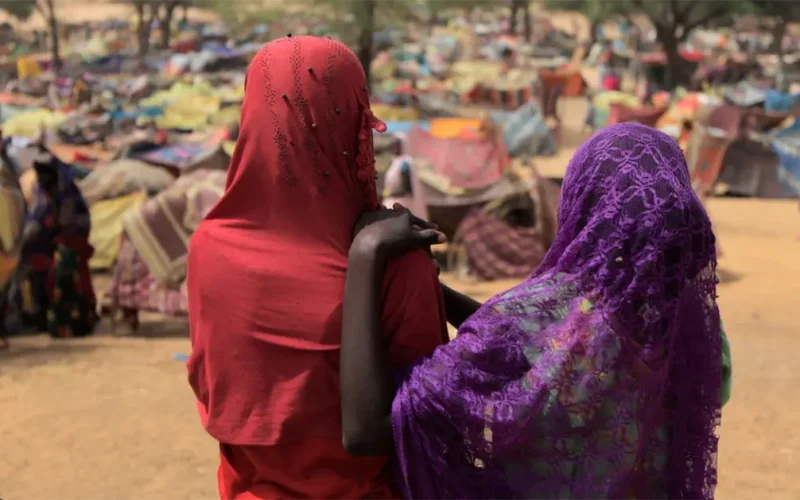
This story was originally published by The New Humanitarian. REFUGEE rights groups in Kenya’s sprawling Dadaab camp complex say they’re facing “one of the worst humanitarian crises in recent history” – the result of a sudden halt to food distribution as well as the longer-term impact of aid cuts by the United States. “Without immediate intervention, the risk of malnutrition, illness, and death increases daily,” warned a statement this week by Dadaab’s Refugee-Led Organisations Network (DARLON). “Refugees are losing hope.” Food distribution to the roughly 500,000 refugees in Dadaab’s three-camp complex lasted only a few days this month before being…
Read More
South Africa and the US have much to gain from working together

South Africa and the US have much to gain from working together

LAST week, I undertook a successful working visit to the United States at the invitation of President Donald Trump to strengthen relations between our two countries.  The delegation that accompanied me included a diverse range of South Africans, with representatives from Government, business, labour and the sporting fraternity, all united in advancing our country’s interests. South Africa has always regarded the United States as a strong investment and trading partner. Our countries and our economies are bound together in many ways. We went to Washington to establish a basis for greater economic cooperation and to address some of the challenges…
Read More
The forgotten heroes: A nation’s debt to its liberation veterans

The forgotten heroes: A nation’s debt to its liberation veterans

The autumn sun cast long shadows across the rural village of Dinokana as hundreds gathered under a white marquee, their voices rising in songs of struggle and liberation. But this was not a celebration - it was a funeral that would expose the cruel irony of post-apartheid South Africa. Inside the coffin lay Tax Rantao, who had left his homeland at eighteen to join the armed struggle against apartheid. Around him stood the living ghosts of that same struggle—men and women who had sacrificed their youth, their families, and their futures for a freedom they would barely taste. Tex Rantao…
Read More
A Diplomatic Assessment: Ramaphosa’s Washington gambit

A Diplomatic Assessment: Ramaphosa’s Washington gambit

HAVING witnessed decades of high-stakes diplomatic theatre from Pretoria to New York, I can state unequivocally that President Cyril Ramaphosa's recent encounter with Donald Trump in the hallowed halls of Washington DC was nothing short of a masterclass in crisis diplomacy. On a scale of 1 to 10, this mission earns a resounding 8 – Excellent. This was no ordinary bilateral meeting. This was South Africa threading the needle in one of the most treacherous diplomatic environments imaginable – facing down a notoriously unpredictable American president amid a storm of manufactured controversy and orchestrated hostility. The Art of Diplomatic Optics:…
Read More
Trump’s Afrikaners are South African opportunists, not refugees: what’s behind the US move

Trump’s Afrikaners are South African opportunists, not refugees: what’s behind the US move

SOUTH Africans are wearily attuned to governments’ Orwellian misuse of language. After all, South Africa is a country where a one-time government passed a law (the Natives Abolition of Passes and Coordination of Documents Act of 1952) which extended rather than abolishing the notorious pass system. This made it compulsory for black South Africans over the age of 16 to carry a passbook. And the same government passed the Extension of University Education Act of 1959, which made it more, not less, difficult for black students to register at “open” (or white) universities. So, perhaps they should not be unduly…
Read More
The end of aid: What The Global South needs to do

The end of aid: What The Global South needs to do

This story was originally published by The New Humanitarian.By Themrise Khan IF the Global South today feels it is reacting to the current aid debacle rather than driving the response to it, that is as much of their own making as it is of the more powerful Global North. Recipient nations have been made to believe they are unable to function without external support, and it is a line they bought unequivocally as long as the money flowed in. This learned dependence is why we need to push for the end of foreign aid. Not a reset. Not a reimagining.…
Read More
A Beacon of Hope: My day at the Kgalema Motlanthe Foundation

A Beacon of Hope: My day at the Kgalema Motlanthe Foundation

I never expected to be moved to tears by a foundation visit, but that's exactly what happened when I stepped through the doors of the Kgalema Motlanthe Foundation (KMF) in Houghton, Johannesburg, South Africa. The moment I arrived, I witnessed something extraordinary: young faces from Forte Secondary School in Soweto and Westbury Secondary School lighting up with possibility as they experienced technologies many had never seen before. Gugu Motlanthe, the foundation's Executive Trustee and wife of former President Kgalema Motlanthe, greeted me warmly. "What drives us," she told me, her eyes reflecting both determination and compassion, "is bridging the educational…
Read More
Lagos slum evictions don’t work: 6 ways city planners can actually help the poor

Lagos slum evictions don’t work: 6 ways city planners can actually help the poor

MILLIONS of people in Lagos live in slums. Slums typically have poor housing infrastructure and sanitation, and limited access to education, health facilities and clean drinking water. These challenges make the people who live in slums vulnerable to health crises, high illiteracy rates and poor standards of living. A central element of the city authorities’ efforts to address the issue has been to evict people. Over the past decade, more than 50,000 people have been evicted from their homes in Lagos slums. As a development economist who has carried out studies on urban poverty in Lagos State and the social…
Read More
Can dialogue with jihadist groups bring peace to the Sahel?

Can dialogue with jihadist groups bring peace to the Sahel?

This story was originally published by The New Humanitarian.By Laura Berlingozzi and Marta Cavallaro INTERNATIONAL diplomacy seems increasingly unable to stem the tide of regional crises. As violence escalates globally, stretching across continents, a sobering truth is emerging: Neither the rhetoric of victory at all costs nor the resort to military solutions alone is paving sustainable roads toward peace. Armed conflicts continue to fuel cycles of radicalisation and extremism, destabilising the international security landscape. From one crisis zone to another, brute force – sometimes clad in high-tech arrogance – has consistently failed to contain the spread of violence. The Sahel,…
Read More
America’s dangerous game: How diplomatic falsehoods undermine South African sovereignty

America’s dangerous game: How diplomatic falsehoods undermine South African sovereignty

IN the arena of international relations, truth is often the first casualty. The United States' recent policy of granting refugee status to Afrikaner families based on dubious claims of "persecution" represents not merely a diplomatic misstep but a dangerous continuation of a troubling pattern - one where falsehoods serve as pretext for undermining the sovereignty of nations that dare chart an independent course. This is not South Africa's first encounter with American diplomatic deception. In 2023, South Africa was forced to formally demarche the US Ambassador after he made explosive and entirely false claims that a South African vessel had…
Read More