Our website use cookies to improve and personalize your experience and to display advertisements (if any). Our website may also include cookies from third parties like Google Adsense, Google Analytics, and Youtube. By using the website, you consent to the use of cookies.

African prisoners made sound recordings in German camps in WW1: this is what they had to say

African prisoners made sound recordings in German camps in WW1: this is what they had to say

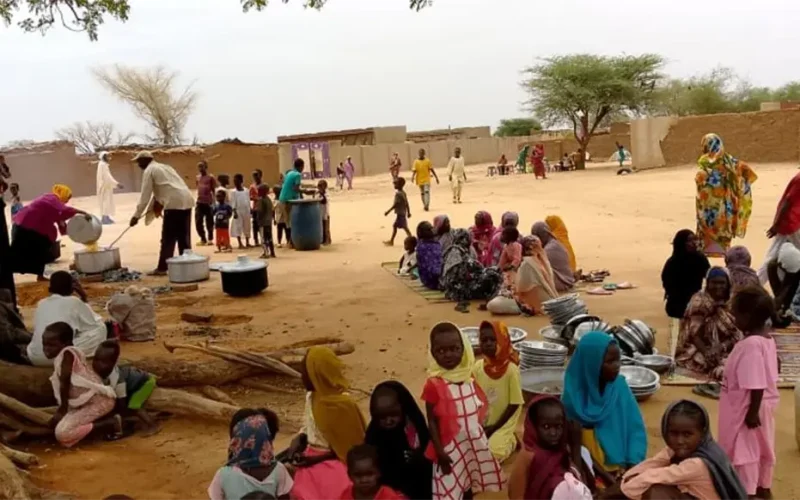
DURING the First World War (1914-1918), thousands of African men enlisted to fight for France and Britain were captured and held as prisoners in Germany. Their stories and songs were recorded and archived by German linguists, who often didn’t understand a thing they were saying. Now, a recent book called Knowing by Ear listens to these recordings alongside written sources, photographs and artworks to reveal the lives and political views of these colonised Africans from present-day Senegal, Somalia, Togo and Congo. Anette Hoffmann is a historian whose research and curatorial work engages with historical sound archives. We asked her about…
Read More
“Farisani was a courageous revolutionary who inspired a generation to reclaim their pride and stand up for their rights”

“Farisani was a courageous revolutionary who inspired a generation to reclaim their pride and stand up for their rights”

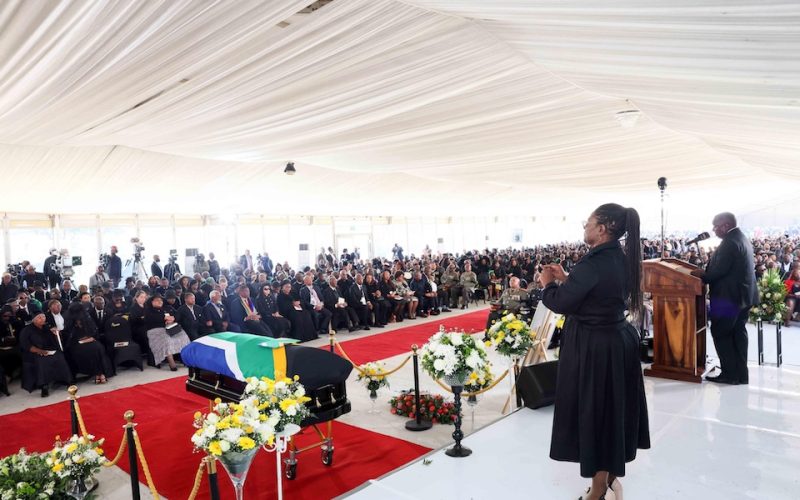
DEAN Tshenuwani Farisani’s life bears witness to the mission of Christ espoused in the Gospel of Luke Chapter 4. “The Spirit of the Lord is upon me, because he has chosen me to bring good news to the poor. He has sent me to proclaim liberty to the captives and recovery of sight to the blind; to set free the oppressed.” We have lost an extraordinary man who led an extraordinary life. He was born in 1948, a year that was a turning point in South Africa’s history. This was the year the National Party swept to power and ushered…
Read More
Rashid Lombard: the photographer who documented both resistance and celebration in South Africa

Rashid Lombard: the photographer who documented both resistance and celebration in South Africa

THE click of a camera shutter and the improvisation of a jazz saxophone may seem worlds apart. Yet, in the hands of South African photojournalist and cultural organiser Rashid Lombard, they became inseparable instruments of resistance and celebration. Born in Port Elizabeth (now Gqeberha) in 1951, Lombard began his journey as a photographer during one of the most turbulent periods in South African history. He documented pivotal moments in the country’s journey towards democracy, including the release of former president Nelson Mandela in 1990 and South Africa’s first democratic elections in 1994. I am an African Studies scholar working at…
Read More
3 things Ngũgĩ wa Thiong’o taught me: language matters, stories are universal, Africa can thrive

3 things Ngũgĩ wa Thiong’o taught me: language matters, stories are universal, Africa can thrive

CELEBRATED Kenyan writer and decolonial scholar Ngugi wa Thiong'o passed away on 28 May at the age of 87. Many tributes and obituaries have appeared across the world, but we wanted to know more about Thiong'o, the man and his thought processes. So we asked Charles Cantalupo, a leading scholar of his work, to tell us more. Who was Ngugi wa Thiong'o – and who was he to you? When I heard that Ngugi had died, one of my first thoughts was about how far he had come in his life. No African writer has as many major, lasting creative…
Read More
Chagos Islands: how Mauritius can turn a diplomatic triumph into real economic growth

Chagos Islands: how Mauritius can turn a diplomatic triumph into real economic growth

THE decades-long Chagos Islands dispute has finally entered a new chapter. The UK officially agreed to return the sovereignty of the archipelago to Mauritius. The Indian Ocean islands are strategically situated near key shipping lanes and regional power hubs. Mauritius was granted independence from British colonial rule in 1968. But not the Chagos Islands, which had been part of Mauritius but became a new colonial territory. The residents of the largest island in the archipelago, Diego Garcia, were forced off the land. This was used as a base to support US military operations. Now Mauritius has regained control over the…
Read More
BRICS at the crossroads of global governance

BRICS at the crossroads of global governance

THE world today is at an inflexion point, faced by a rabidly hostile and vengeful unipolarity, a deepening crisis in multilateralism and respect for international law, rampant greed and odious wealth, grinding poverty and the visible effects of disasters and climate change. In her valuable book, Shock Therapy (2008), Naomi Klein illustrates cogently that none of these developments are accidental. They are, she suggests, manifestations of the practice of “shock and awe”, a strategy of the powerful designed to use war threats and civil conflict to generate sufficient chaos for rampant looting of the resources of developing nations and thus…
Read More
FROM TORTURE CHAMBER TO PARLIAMENT: The unbroken spirit of Dean Tshenuwani Farisani

FROM TORTURE CHAMBER TO PARLIAMENT: The unbroken spirit of Dean Tshenuwani Farisani

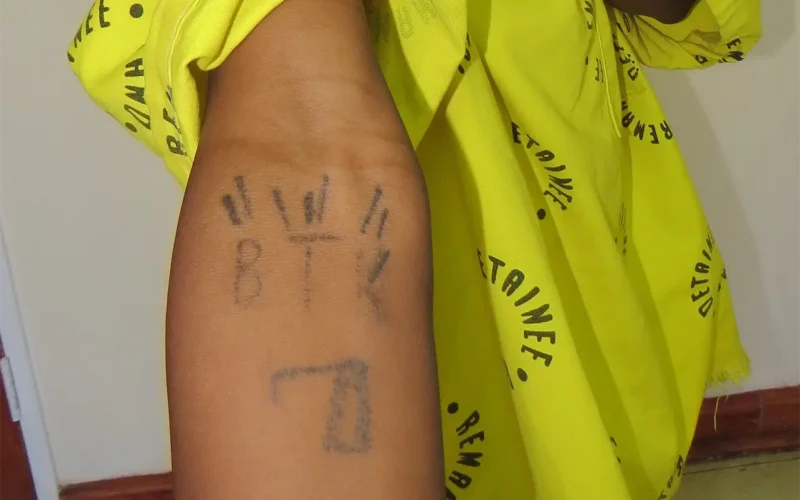
THE sarcasm of the security police captain was quite biting as Dean Tshenuwani Farisani sat handcuffed and manacled to an iron bar at the back of an open van. It was night, it was winter, and it was biting cold. The year was 1977, and he was being taken from Pietermaritzburg to Howick Police Station, which was the torture chamber. The white captain looked at him and said, "Dean, be comfortable. We apologise that the state cannot afford a canopy for this bakkie, as the money goes to combating terrorism. Keep the wind out of the bakkie with your prayers.…
Read More
From here to there: Remembering my friend, Ngũgĩ wa Thiong’o

From here to there: Remembering my friend, Ngũgĩ wa Thiong’o

NGŨGĨ WA THIONG’O was my friend. Two weeks ago, we recorded a video—his reflections on co-authoring The Trial of Dedan Kimathi with Micere Githae Mugo nearly fifty years ago, in 1976. He was radiant. Full of laughter. Still in awe of the fire and fellowship that forged that revolutionary text. Nearly forty years ago, my mother handed me my first Ngũgĩ. It was Weep Not, Child. The year was 1986. That same year, Ngugi’s effigies were being burned across Kenya. Moi’s regime had branded him an enemy of the state. I was a child in primary school, bewildered: I was…
Read More
Five things you should know about Ngũgĩ wa Thiong’o, one of Africa’s greatest writers of all time

Five things you should know about Ngũgĩ wa Thiong’o, one of Africa’s greatest writers of all time

ONE of Africa’s most celebrated authors, Ngugi wa Thiong'o, has passed away. The Kenyan writer and academic was 87 years old. Having published his first novel – Weep Not Child – in 1964, Ngugi pursued a rich and acclaimed career as a writer, teacher and decolonial thinker. His last creative effort was Kenda Muiyuru (The Perfect Nine), a Gikuyu epic that was longlisted for the 2021 International Man Booker Prize. Kenyan academic and writer Peter Kimani sets out five things you should know about a legendary African writer. He understood the politics of his time Ngugi wa Thiong'o is regarded…
Read More
A Decade of Transformation: How the African Development Bank rewrote Africa’s future under visionary leadership

A Decade of Transformation: How the African Development Bank rewrote Africa’s future under visionary leadership

I AM immensely proud that over the past decade, the African Development Bank (AfDB) has served as an accelerator of Africa's development. The Bank's High 5s - to light up and power Africa, feed Africa, industrialise Africa, integrate Africa, and improve the quality of life for Africa's people - have been truly transformational for our continent. In the past ten years, the AfDB's work has directly impacted the lives of 565 million people. This extraordinary reach includes 28 million people gaining access to electricity, 104 million achieving food security, 121 million accessing improved transport, 128 million receiving enhanced health services,…
Read More