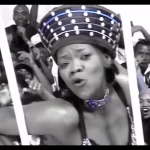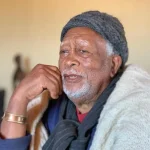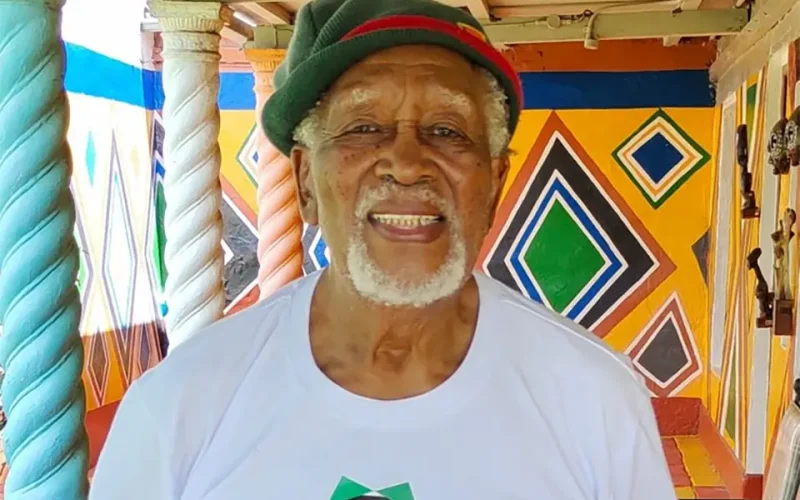
IN one of her offerings, the irrepressible Brenda Fassie says something to the effect that “umtu soze umconfirme”. Indeed, but that does not apply to Ntate Pheto. He is a consummate patriot who gave his all to the liberation of this country for all his life. Ever reliable and committed. His love for his country and its people is unconditional. Askies Brenda, we can confirm Ntate Molefe Pheto as our icon.
Colonialism, whether in its classical form or of the settler variety, is like a python that always seeks to squeeze life out of its victims and swallow them whole. It leaves nothing – skin, horns, meat, bones, and internals. They are all consumed.
The same with colonialism that does not only want to take the land, resources and the labour of its victims for the enrichment of the coloniser, but seeks to take away the soul, culture, dignity and identity of the colonised. It tramples on the religion of the colonised and demands that the victims worship the god of the colonialist.
The late Vuyisa Qunta and I were transiting from Libya to Zimbabwe on one occasion, where we slept in the departure lounge of Athens Airport for a few nights. This happened often because as refugees travelling on UN-issued passports, we were almost always denied visas, even transit ones, to enter various countries.
As we chatted, Vuyisa told me that he had instructed his family not to allow any religious rituals at his funeral. He maintained that as long as we Blacks adhered to Christianity and Islam, we would never truly liberate ourselves from the yoke of foreign oppression. He maintained that societies that worshipped their own gods tend to be more resilient than those who worshipped the gods of the coloniser.
At his funeral in Langa, Cape Town, it became clear that black people don’t know how to mourn their dear departed without a hymn, verse and a preacher. At Vuyisa’s funeral, we were truly befuddled.
To denude your identity, the colonialists demanded that you convert to their religion and take a European name, even if you don’t know what the name means. As a compromise, many black people have both a name and a European label.
In recognition of the devious strategy of the settler-colonialists to take total control of the lives, minds, culture, religion, land and bodies of black people, Black Consciousness embarked on a strategy to not only affirm the arts and culture of black people, but also deploy them as conscientization tools against settler-colonialism.
To drive the point home, lets quote from Ingoapele Madingoane’s poem: Africa my Beginning, Africa my Ending
Africa my Beginning
They came from the west
Sailing to the east
With hatred and disease flowing
From their flesh
And a burden to harden our lives
They claimed to be friends
When they found us friendly
And when foreigner met foreigner
They fought for the reign
Exploiters of Africa
Africa my beginning
Africa my ending
They asked Mugabe
Unataka nini hapa
Wewe mwenyewe…
Africa my beginning
Africa my ending
Suckers of my country
They laid their sponges
Flat on its soil and absorbed its resources
To fit their coffers
Agostinho had spoken in the language of poets
That they went away in multitudes
And forgot their hearts behind
But late is never a bad start
Africa my beginning
Africa my ending
No easy way to freedom
Ten lonely years black hopeful men
Food being their wish
Courage their pay
Until Africa was respected
For a leader had emerged
From the bush of Maputo
Viva Frelimo…….
Africa my beginning
Africa my ending
Azania here I come from apartheid in tatters
In the land of sorrow from that marathon bondage
The Sharpeville massacre the flames of Soweto
I was there will die there
Africa my beginning
Africa my ending
With a background provided by the African drum and the flute, Ingoapele would recite this at political meetings, commemorations and funerals of our martyrs. The Mihloti cultural ensemble, formed and led by our celebrant today, often led the drumming during such performances. Of course, Mihloti engaged in other performances on their own to politicise the people and turned them against settler-colonialists.
Just listening to this poem by Ingoapele, you get all the ugly and cruel elements of colonialism, namely, oppression, exploitation, greed, inhumanity and everything else.
So it was that at gatherings geared at the defeat of settler-colonialism, be it at the DOCC here in Soweto, at Turfloop nearPolokwane, at Ngoye, at the University of Natal Medical School Black Section, at Fort Hare and everywhere in the length and breadth of this beautiful land, fighting poetry by the likes of Strini Moodley, Ben Langa, Mandla Langa, Ujebe Masokoane and others, accompanied political speeches.
Music and drama were the common diet of many such gatherings. Appreciative and adoring audiences feasted at the feet of Dashiki, Malombo, Mihloti, Theatre Council of Natal, or Tecon for short, and got thoroughly politicised in the process.
So, the struggle against settler-colonialism was all-encompassing, and as Bantu Biko would describe it, total involvement.
To fully appreciate the spirit of the time in terms of consciousness, contrast that with today. Black people have their hands on the levers of the state, but are hopelessly unable to use the state for their own upliftment and development. Why? This is because we have regressed enormously in terms of consciousness, solidarity and common purpose.
It is doubtful if the words contemporary and consciousness can be used together in present-day South Africa. The transition from settler-colonialism to neo-colonialism appears to have muddled our minds. We seem to be thoroughly confused and directionless in terms of culture, education, economy, identity and everything else.
Of course, that is the nature of neo-colonialism. It replaces the physical foreign oppressor, who looks different from you, with people who look like you, and bids them to behave like the oppressor. In other words, the physical manifestation of the oppressor is replaced by people who look exactly like you but carry out the wishes, functions and interests of the apparently departed oppressor.
The late intrepid Zimbabwean patriot and freedom fighter, Edgar Tekere, who was at one time Secretary-General of ZANU-PF, is reported to have had a mortal fear of returning home to Zimbabwe from Mozambique at the end of their guerrilla war, because he was afraid of governing under neo-colonial conditions.
Neo-colonialism gives a mirage of freedom when, in fact, you are a slave. The enemy is no longer out there shooting at you, and you are training your weapon on it. The enemy is within and planning with you when in fact he or she is working for the oppressors. This might explain in part why, after 1994, we are an amorphous people, shapeless and not knowing who we are or where we are going.
The public broadcaster should be bristling with relevant dramas, instead of the ones we are subjected to, which are entirely sleaze, skullduggery, violence, thuggery and destructive of the moral fibre of our society. They don’t depict us. Whenever the dramas involve our cultures, be it lobolo, koma, traditional healing, or anything else, they ridicule, caricature or undermine us.
The bookshops are almost completely devoid of books written in indigenous languages. It is as if black people and their languages don’t exist. Are we bothered by this phenomenon? Is the government bothered at all?
Of course, the wigs are back in full force, as well as the skin-lightening creams. We are once more a people running away from ourselves. Such people cannot work in their own interest. That might explain in part why South Africa is crumbling in our hands and we do not seem to be ashamed of this gross ineptitude, incompetence and poor performance.
In my book entitled: We Can Fix Ourselves, I maintain that South Africa is not in this mess because we lack the knowledge and skills to run the country properly, but that we lack consciousness.
Our state-owned enterprise, education system, health system, municipalities, criminal justice system, migration management and others are a mess, not because we don’t have teachers, educationists, doctors, nurses, accountants, managers, engineers, police, etcetera, but because we lack consciousness. We don’t love ourselves and our people enough to serve them with love, dedication, honesty and dignity.
The book is one’s little contribution to the debate about the quagmire we find ourselves in. We better rekindle the spirit, solidarity and totality of involvement that we evinced in the struggle against settler-colonialism.
This is the only country we have. We don’t have any others. So, we should fight for it.
Ntate Molefe Pheto wrote poetry for us; drummed in Alexandra; drummed in London, in Botswana, in Zimbabwe, drummed everywhere; he called us to arms with his drum.
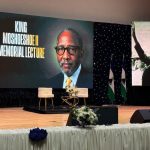
- This is an edited version of a Talk by Mosibudi Mangena at the Soweto Theatre in honour of Poet Extraordinaire Molefe Pheto. Mangena is the Life President of the Azanian People’s Organisation and a former cabinet minister.