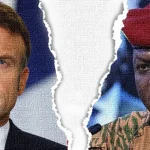
THERE was no siege of an embassy. No burning flag. No emergency evacuation under cover of night. When France’s last diplomats left Ouagadougou late last week, they did so on a scheduled flight, with their bags packed and their paperwork stamped, closing out a relationship that had structured Burkina Faso’s political and economic life for six and a half decades. The French Foreign Ministry confirmed the withdrawal on July 6, and by the following evening, Burkinabè diplomatic staff in Paris were expected to have vacated French soil, in strict reciprocity for the seven-day ultimatum Paris imposed once Ouagadougou announced, on June 26, that it was done.
That bureaucratic tidiness is itself the story. Diplomatic ruptures between former colonial powers and their one-time colonies are usually loud, chaotic and contested. This one was administered like a divorce settlement between parties who had already stopped speaking in every way that mattered. Burkina Faso’s military government, led by Captain Ibrahim Traoré, framed the break as “the choice of responsibility and sovereignty,” insisting the rupture concerned only the institutional architecture of state-to-state relations and not the historical and cultural bonds between the Burkinabè and French peoples. Paris, for its part, called the decision “hostile and unfounded” and accused Ouagadougou of a “worrying drift.” Both statements were exercises in managing an ending each side had seen coming for years.
A WITHDRAWAL FOUR YEARS IN THE MAKING
The July severance was less a rupture than a final formality. Since seizing power in September 2022, Traoré’s junta has systematically dismantled every mechanism of French influence in the country: expelling the French ambassador in 2023, terminating military cooperation agreements, and ejecting the troops that had spent more than a decade fighting jihadist insurgents under Operation Barkhane and its successors. Burkina Faso’s break follows an unmistakable regional sequence — France was forced out of Mali in 2022, out of Burkina Faso’s military bases in 2023, out of Niger later that same year, and out of Chad in early 2025. What is closing in Ouagadougou is not an isolated bilateral quarrel. It is the last formal seal on the collapse of France’s post-independence security architecture across the Sahel.
“The French chapter is closed. What comes next belongs entirely to the Burkinabè people” — that is the framing Ouagadougou wants understood. The evidence on the ground tells a more complicated story.
WHO MOVED INTO THE VACANCY
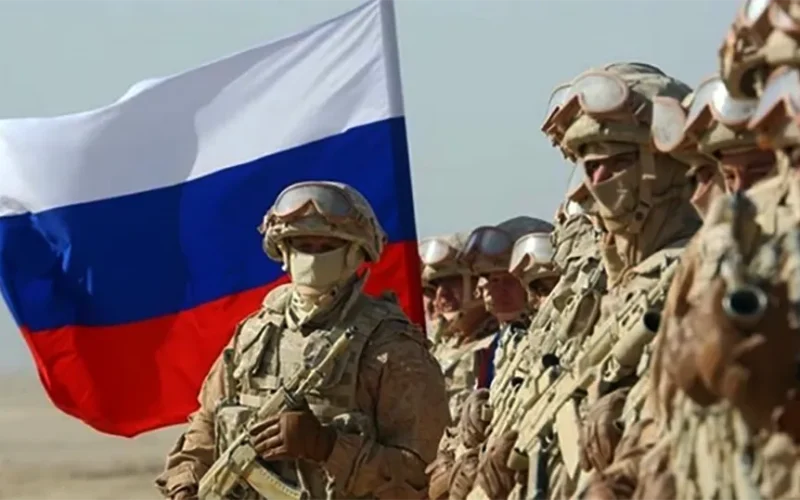
Burkina Faso’s break with Paris was never a retreat into isolation. It was a substitution, and the identity of the replacement has been visible for over two years. Russia’s Africa Corps — the restructured successor to the Wagner Group — established its first military base in Burkina Faso at Loumbila, northeast of Ouagadougou, in March 2024, and now provides personal security for Traoré himself alongside counter-insurgency training. Moscow’s economic footprint has deepened in parallel: Russian miner Nordgold already operates the Bissa and Bouly mines and, in April 2025, was granted an industrial licence for the Niou gold deposit in Kourwéogo province, an eight-year project expected to yield more than 20 tonnes of gold, 85 percent of it flowing through Nordgold’s local subsidiary. Analysts tracking the region estimate that Africa Corps-linked networks now extract roughly $114 million a month from West African gold to help fund Russia’s war in Ukraine — a war being paid for, in part, by minerals pulled from Sahelian soil under the banner of anti-colonial liberation.
Russia is not alone in the queue. Turkey has become one of the Sahel’s four leading arms suppliers, and its Bayraktar TB2 drones — prized for their affordability — are now flown by the same juntas that expelled French forces. China’s state arms manufacturer NORINCO has expanded deliveries of armoured vehicles and artillery into Burkina Faso, alongside a growing programme of training Sahelian officers at Chinese military academies. Iran, too, has been drawn into Ouagadougou’s post-Paris diversification. None of these powers arrived as saviours; each arrived as a supplier, filling a security and resource gap with terms that suit their own strategic interests rather than any neutral notion of Burkinabè sovereignty.
THE UNCOMFORTABLE ACCOUNTING
A rigorous reading of this transition cannot stop at the satisfying optics of a former colonial master packing its bags. Human Rights Watch has documented that Burkina Faso’s military, operating alongside its Russian partners, has been implicated in atrocities against Fulani civilians that investigators say amount to war crimes. Reporting from the wider Sahel has described Africa Corps units accused of civilian killings in Mali, severe enough that even France’s own press has struggled to find precedent for the brutality described. Civilian fatalities attributable to state militaries and their Russian partners in Mali and Burkina Faso have, by some measures, outpaced those caused by the jihadist groups the interventions were meant to defeat. Meanwhile, the jihadist insurgencies these various foreign partnerships were supposed to suppress continue to tighten their grip: insurgents have besieged towns, cut fuel supplies to regional capitals, and forced repeated closures of Niamey’s airport, even as Wagner-turned-Africa Corps forces have been documented prioritising the protection of gold-mining assets over the protection of citizens.
This is the paradox Ouagadougou’s diplomatic communiqués do not resolve. Sovereignty rhetoric and dependency arithmetic are running on separate tracks. Burkina Faso has traded a security relationship structured by a former colonial power for one structured by a state waging its own war and paying its mercenaries substantially in gold concessions. The Alliance of Sahel States — the bloc Burkina Faso has built with Mali and Niger — has withdrawn from ECOWAS and the International Organisation of Francophone Nations in the name of an independent foreign policy “based on the diversification of partnerships” and “strengthened South-South cooperation.” Diversification is real: Moscow, Ankara, Beijing and Tehran are not interchangeable patrons, and none commands the singular grip Paris once held. But diversification of dependency is not the same as its elimination.
WHAT THE EMPTY EMBASSY ACTUALLY MEANS
For ordinary Burkinabè and for French nationals who remain in the country, the practical consequence of a shuttered embassy is a narrower set of institutional channels — fewer consular protections, fewer official avenues for redress, greater reliance on ad hoc arrangements as visa and consular functions are reorganised from a distance. For the wider region, the closure confirms what four years of troop withdrawals had already signalled: France’s role as the Sahel’s dominant external security guarantor is finished, not paused. Whether what has replaced it delivers what Traoré’s government has promised — hospitals, schools, domestically manufactured drones, cheaper cement, functioning sovereignty — is a separate question from whether Paris deserved to be shown the door. The Mirror’s own reporting across the AES states over recent months has documented both halves of that ledger: genuine infrastructure gains trumpeted by juntas keen to demonstrate delivery, and a security and human-rights picture that has, on the available evidence, not improved and in key respects has worsened.
What is certain is that the age of assuming French primacy in Francophone West Africa is over, and no other single power has yet assembled the combination of military presence, economic leverage and political legitimacy France once claimed by default. The contest for what replaces that primacy — fought now in gold concessions, drone contracts and training academies rather than in the language of empire — is the story this diplomatic withdrawal formally opens, not the one it closes.