
The Announcement
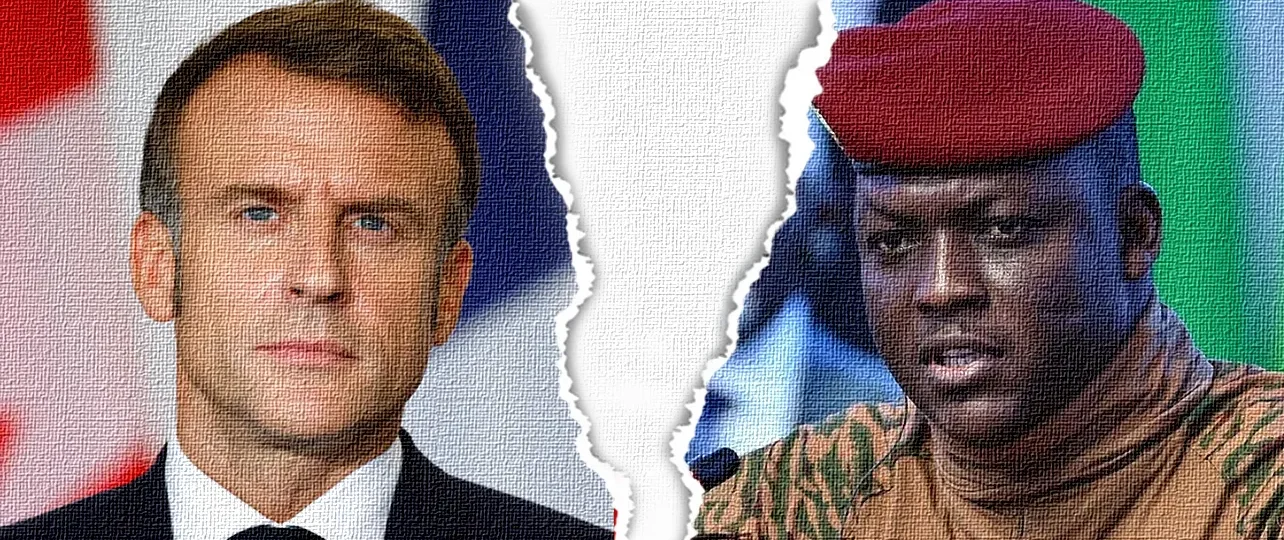
It came on state television, read out in the flat cadence of a formal communiqué. Burkina Faso’s military government informed “the national and international community” that it had decided to sever diplomatic relations with France, effective from Friday, 26 June 2026. Communications Minister Pingdwende Gilbert Ouédraogo told viewers that the conditions for a relationship built on mutual respect and non-interference were no longer present, and accused Paris of harbouring neo-colonial ambitions through what he called active support for “subversive networks and the terrorists” destabilising the country and the wider Sahel. No evidence was offered publicly to support the claim, and France has previously and consistently denied any link to the jihadist groups operating in the region.
Paris’s response arrived within hours, and it was unambiguous. French foreign ministry spokesman Pascal Confavreux said his government regretted what he called a hostile and unfounded decision, and confirmed that France was weighing reciprocal measures while urging French nationals in Burkina Faso to exercise heightened vigilance. What those reciprocal measures will look like, and what becomes of the French embassy in Ouagadougou, remained unclear as of this writing. Burkina Faso’s government, for its part, was careful to frame the rupture narrowly: it said the decision concerned only the formal diplomatic architecture between the two states, and did not extend to the historical, cultural and social ties between the Burkinabè and French peoples. French civilians already in the country, it said, would continue to be protected under national law.
Diplomatically, this is as far as a relationship can go without an act of war. It is several rungs beyond what Burkina Faso had already done to France since the September 2022 coup that brought Captain Ibrahim Traoré to power — beyond the 2023 demand that France recall its ambassador, beyond the 2024 expulsion of three French diplomats accused of subversion, beyond the closure of the French military mission and the banning of French state broadcasters. There is, after Friday, no ambassador, no embassy channel, no formal diplomatic relationship left to downgrade. The two countries that have been entangled — first as coloniser and colony, then as patron and client, then as exasperated partners — for 130 years now have, on paper, no relationship at all.
A Relationship Forged in Conquest
To understand why a diplomatic note read out on a Friday evening matters so much, it helps to recall how the relationship began. What is now Burkina Faso was, before the 1890s, a patchwork of kingdoms and polities, the Mossi kingdoms foremost among them, with their own centuries-old systems of governance. France’s conquest of the territory ran from roughly 1896 to 1904, a sustained military campaign against Mossi, Gurunsi, Gurma, Bobo and Lobi communities, formalised through an Anglo-French convention that drew the borders the country still has today. The colony was administratively folded into French West Africa, dismantled once in 1932 and divided among Ivory Coast, French Sudan and Niger, then reconstituted in 1947 under pressure from local elites and post-war anti-colonial sentiment, before becoming an autonomous republic within the French Community in 1958 and finally gaining full independence, as Upper Volta, on 5 August 1960.
Independence did not mean a clean break. Like most of France’s former West African colonies, Upper Volta retained the CFA franc, a currency whose convertibility is guaranteed by the French Treasury and whose foreign exchange reserves are, to this day, split between a regional central bank and Paris itself. It retained French as its official language, French military cooperation agreements, and a political class drawn heavily from the colonial civil service. The pattern repeated across francophone Africa was given a name by French and African critics alike: Françafrique — an informal but durable system of political, military and economic leverage that allowed Paris to keep its former colonies inside a tightly bounded sphere of influence long after the flags had changed.
Sankara’s Interruption
Burkina Faso has lived through this argument before, and the country’s military government today is unmistakably gesturing back at it. In 1983, a young army captain named Thomas Sankara took power in a popularly supported coup. The following year, he renamed Upper Volta as Burkina Faso — “land of upright people” — and launched one of the most ambitious self-reliance programmes attempted anywhere on the continent: land and mineral nationalisation, mass literacy and vaccination campaigns, a reforestation drive against the encroaching Sahara, and a deliberate, public refusal of French and Western aid on the grounds that it entrenched dependency rather than ending it.
Sankara’s defiance had a price tag attached from the start. At the Organisation of African Unity summit in Addis Ababa in 1987, he urged fellow African leaders to repudiate odious colonial-era debt collectively, warning that creditors would tolerate no single country acting alone. Two months later, on 15 October 1987, he was overthrown and killed in a coup led by his own former ally, Blaise Compaoré, who justified the takeover partly on the grounds that Sankara had jeopardised relations with France and with neighbouring Ivory Coast. Compaoré then systematically reversed the nationalisations, returned the country to the International Monetary Fund’s fold, and ruled for the next 27 years as one of the region’s most reliably pro-French heads of state — a near-perfect inversion of everything his predecessor had stood for.
“We are going to get our mining licences back, and we are going to mine it ourselves.”
— Captain Ibrahim Traoré, on reclaiming Burkina Faso’s gold sector
It is this historical template — a sovereigntist captain cut down, a French-aligned establishment restored — that gives Traoré’s project its emotional and symbolic charge across the region. Supporters routinely describe him as a Sankara for a new generation; critics, and increasingly human rights organisations, note that the comparison conveniently omits the authoritarian turn that did not feature in Sankara’s brief four years in office.
The Captain’s Turn
Traoré did not begin as the figurehead of a continental anti-French movement. He was a junior officer who, in January 2022, watched the country’s elected government fall in a first coup led by Lieutenant-Colonel Paul-Henri Damiba, and who then led a second coup of his own eight months later, in September 2022, deposing Damiba in turn and accusing him of being unable to confront the jihadist insurgency tearing through the country’s north and east. It was in the immediate aftermath of that second coup that the anti-French current crystallised: Traoré publicly suggested Damiba was plotting a counteroffensive from what he called a French base, demonstrators set fire to the French cultural centre in Ouagadougou, and within four months his government had given Paris one month’s notice to withdraw its forces entirely, terminating the bilateral defence accord that had underpinned French counter-terrorism operations since 2014’s Operation Barkhane.
France’s last troops left Burkina Faso in February 2023, marked by a formal flag-lowering ceremony at a military camp outside Ouagadougou. From there, the rupture deepened steadily rather than suddenly. In August 2023, after Burkina Faso publicly backed the coup leaders who had just seized power in neighbouring Niger, France suspended its development and budgetary aid; Ouagadougou retaliated by denouncing its double-taxation treaty with Paris, and Air France suspended its routes to the country. Burkina Faso had already banned Radio France Internationale months earlier over its coverage of a jihadist leader’s threats, and in March 2023, it extended the ban to France 24 after the network aired an interview with an al-Qaeda affiliate’s leadership. By 2024, three French diplomats had been expelled outright on accusations of subversive activity, and the United Nations’ own resident coordinator had been declared persona non grata the previous year. Traoré’s government replaced the departed French military presence with closer security ties to Turkey and, increasingly and more consequentially, Russia.
Gold, Mines and the Search for Economic Sovereignty
If French troops were the first target, gold was the second. Burkina Faso is Africa’s fourth-largest gold producer, and mining accounts for the bulk of its export earnings, yet for decades that wealth flowed largely through Canadian, Australian and London-listed mining houses with comparatively little benefit reaching state coffers or local communities. Traoré’s government began reversing that arrangement almost immediately: it nationalised the Perkoa mine from Canada’s Trevali Mining Corporation in 2022 after a fatal flooding accident, created a new state mining vehicle, the Société de Participation Minière du Burkina (SOPAMIB), and in 2024 adopted a new mining code designed to give the state a binding stake of up to 30 percent in industrial projects and to prioritise local suppliers and expertise over foreign contractors.
The pace accelerated through 2025. SOPAMIB took control of the Boungou and Wahgnion gold mines, formerly held by London-listed Endeavour Mining, in a deal reportedly worth around 80 million US dollars. By October 2025, the government had formally transferred five mining assets — two operating mines and three exploration licences — to state ownership. Traoré was blunt about the rationale, telling the country it no longer needed multinationals to extract its own gold. Tellingly, Russian-linked operators such as Nordgold have continued to receive new licences even as Western and Canadian firms face mounting pressure, a pattern analysts describe as evidence of where the new geopolitical alignment actually runs. The results, so far, are mixed at best: gold output has fallen from 67 metric tons in 2021 to under 48 metric tons by late 2024, even as global prices have risen sharply, and foreign direct investment into the country collapsed from 670 million US dollars in 2022 to just 83 million dollars in 2024.
The CFA Franc and the Monetary Frontier
Sovereignty over gold is, in the AES’s own telling, only half the project; sovereignty over money is the other. Burkina Faso, Mali and Niger remain members of the West African Economic and Monetary Union and continue, for now, to use the CFA franc — a currency convertible against the euro on the strength of a French Treasury guarantee, and therefore, in the bloc’s own framing, the last and most invisible chain still binding the Sahel to Paris. Niger’s government has been the most explicit, declaring that sovereignty begins with currency; Mali and Burkina Faso have moved more cautiously, but in December 2025 the three states jointly launched the Banque Confédérale pour l’Investissement et le Développement de l’AES, a confederal investment bank capitalised at roughly 895 million US dollars, widely read as the first institutional building block for an eventual common Sahelian currency, provisionally referred to in regional reporting as the “Sira.”
The technical obstacles are formidable. Exiting the CFA zone would require Burkina Faso — which hosts UEMOA’s own headquarters — to negotiate the return of its share of foreign exchange reserves currently held in Abidjan and in the French Treasury, to manage existing CFA-denominated public debt in a currency that does not yet exist, and to build, from a near standing start, the institutional credibility that currencies require to avoid runaway inflation. Economists across the political spectrum have flagged the risk; AES officials counter that monetary dependency, in their reading, is simply sovereignty deferred, and that the 2022 freezing of Malian assets by the regional central bank after that country’s coup proved the danger of leaving the safe’s key in someone else’s pocket.
A New Patron: Moscow Replaces Paris
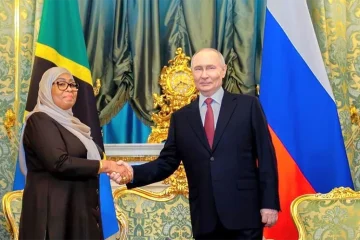
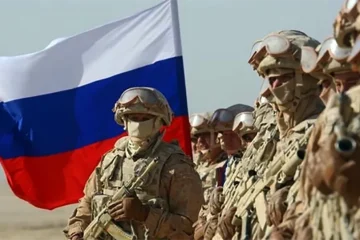
The vacuum left by France’s military withdrawal did not stay empty. Within months of the September 2022 coup, Burkina Faso’s then prime minister was discussing security cooperation with Russian officials and had visited Moscow; by mid-2023, Russian aircraft were landing in the country and Traoré himself had travelled to the Kremlin. Reuters and The New York Times have both reported suspected links between Traoré’s government and the Wagner Group, the Russian mercenary outfit that, following the death of its founder Yevgeny Prigozhin in 2023, was absorbed into a more formal structure under Russia’s defence ministry known as the Africa Corps. Photographs of Traoré at the Kremlin’s Grand Palace in May 2025, during a state visit, have become some of the most widely circulated images of his presidency.
Whether the new patron has delivered is a separate and more troubling question. Researchers tracking the security situation note that Russian instructors and equipment have not measurably reversed the insurgency in any of the three AES states, and that Africa Corps personnel have themselves been implicated in mass civilian killings in Mali. Deaths from jihadist violence across the central Sahel roughly tripled in the years following the Western withdrawal, and the region now accounts for around half of all terrorism-related deaths recorded worldwide. The relationship nonetheless persists, in part because it imposes none of the conditions — on governance, on elections, on human rights — that Western partners typically attach, and in part because it gives Moscow, in turn, a foothold that helps it circumvent international sanctions linked to its war in Ukraine.
Building a New House: The Alliance of Sahel States
Burkina Faso has not pursued this realignment alone. In September 2023, it joined Mali and Niger — both also under military rule following their own coups — in forming the Alliance of Sahel States, a mutual-defence pact one senior official described to the International Crisis Group as modelled on NATO. A confederation treaty followed in July 2024, and in January 2025, all three states made good on a threat first issued a year earlier and formally withdrew from the Economic Community of West African States, the regional bloc whose sanctions over their respective coups, AES leaders argued, had inflicted real hardship on ordinary citizens while doing nothing to address the insurgency. In March 2025, the three countries went further still, withdrawing from the Organisation internationale de la Francophonie, the body promoting the French language and francophone cooperation, on the grounds that it had become a politically manipulated instrument of their critics.
What the AES has built in under three years is, by any measure, substantial: a rotating confederal presidency, a joint biometric passport, a confederal investment bank, a shared television channel, common import tariffs, and a unified military force of roughly 5,000 personnel under Burkinabè command, explicitly designed to operate across all three borders without the donor financing that sustained the earlier G5 Sahel arrangement. What it has not yet built is security. By the alliance’s own founding logic — that elected, Western-aligned governments had failed to defeat the jihadist threat and that military, sovereigntist rule would succeed where they did not — the project remains unproven. Through the first half of 2026, the insurgency that was meant to end has not been pushed back.
‘Ingratitude’: The Rhetorical Breaking Point
If there is a single moment that hardened the personal animosity behind Friday’s announcement, it was a speech President Emmanuel Macron gave to French ambassadors in Paris in January 2025. Sahel nations, he told them, would not even be sovereign today had French forces not deployed against Islamist militants, and he suggested that gratitude for that sacrifice had simply not yet been expressed.
“I think someone forgot to say thank you. It does not matter; it will come with time.”
President Emmanuel Macron, addressing French ambassadors, January 2025
The remark detonated across the continent. Chad’s president called Macron out of touch with the times; Senegal’s prime minister, Ousmane Sonko, reminded him that African soldiers had died fighting for France in two world wars. Traoré’s own response was the most personally wounding, and it has circulated widely since: he said the comments showed that, in Macron’s eyes, Africans were simply not regarded as human beings. Macron’s own special envoy to the continent, Jean-Marie Bockel, had a few weeks earlier insisted that none of France’s African security partners actually wanted French troops to leave — a claim that the subsequent withdrawal announcements from Chad, Senegal and Côte d’Ivoire promptly and publicly contradicted. Macron’s repeated insistence that his country was not being pushed out of Africa but was merely “reorganising” itself has done little, in the year and a half since, to change the trajectory.
Implications and Consequences
A formal diplomatic rupture of this kind reverberates well beyond the two governments directly involved. Several distinct sets of consequences are already visible.
For Burkina Faso’s military government, the rupture is, in the first instance, a domestic political asset. It hands Traoré — already the subject of an extraordinary, partly Russian-amplified online mythology that credits him with everything from defeating jihadists to receiving the endorsement of global celebrities — another chapter in the anti-colonial narrative that underpins his legitimacy at home and his popularity with younger audiences across the African diaspora. What it does not do is address the reason his and Damiba’s coups were originally justified: by various estimates, somewhere between 30 and 60 percent of Burkinabè territory remains outside effective state control, and the United Nations recorded close to 9,400 conflict deaths across the central Sahel in 2025 alone.
For ordinary Burkinabè citizens, the picture is starker still. Human Rights Watch has documented summary executions, abductions and the burning of property by jihadist groups in attacks that continued into 2026, even as the government’s own human rights record has drawn scrutiny — including allegations, found credible by Human Rights Watch last year, of ethnically targeted violence against Fulani communities during counter-insurgency operations. Independent journalists have been detained and, in several documented cases, forcibly conscripted into the military; the national journalists’ association has been dissolved; more than a hundred civil society organisations and NGOs were dissolved or suspended in April 2026 alone; and in January 2026 the government dissolved every political party in the country and seized their assets. Sovereignty, on this reading, has been asserted far more successfully against Paris than it has been extended to Burkina Faso’s own citizens.
For France, the loss is more symbolic than strategic — its troops and ambassador had already left — but it is symbolically significant nonetheless. Burkina Faso becomes the most extreme data point in a continental pattern that already includes military withdrawals from Mali, Niger, Chad, Senegal and Côte d’Ivoire, and it lands at a moment when Macron’s own attempt to recast French Africa policy as a respectful “reset” has been undercut, repeatedly and publicly, by his own rhetoric. The risk for Paris is less a single lost relationship than a hardening continental perception, reinforced by Burkina Faso’s example, that France’s stated change of approach has not been matched by a genuine change in posture.
For the Alliance of Sahel States, the move deepens the ideological glue that holds the three-state confederation together at a moment when its founding security promise has not been delivered. An anti-French, anti-Western identity has, in practice, proved easier for the AES to build than a functioning counter-insurgency, and Burkina Faso’s total rupture with Paris gives Mali and Niger — both of which have gone almost as far, but not quite this far — a new high-water mark to match or exceed.
For the regional and continental order, the rupture lands on top of an already fragmented landscape: ECOWAS lost three of its quindecennial member states in January 2025, the Organisation internationale de la Francophonie lost the same three states two months later, and the African Union and ECOWAS alike have struggled to articulate a coherent response to any of it. Whether the precedent spreads further — to Senegal, whose president has pledged to end all foreign military presence, or to other francophone states weighing their own positions — is, as of this writing, the single most consequential open question for the future shape of West African regional cooperation.
For the wider geopolitical contest under way across the continent, Burkina Faso’s decision is one more marker in a pattern now well established: the retreat of traditional Western influence and the corresponding advance of Russian, Chinese, Turkish and Gulf engagement, each offering partnership on terms that, unlike the old French model, come without public conditions attached to governance or rights — and, so far, without a demonstrated ability to deliver the security that was the original justification for the realignment in the first place.
The Unresolved Question
Strip away the symbolism, and the central question Burkina Faso has yet to answer is the one its own military leaders posed when they seized power: can a sovereigntist, Russia-aligned, anti-French government actually defeat the insurgency that French-aligned, Western-backed governments could not? Four years into the experiment, the honest answer, drawn from the United Nations’ own casualty figures, from Human Rights Watch’s field documentation, and from the World Food Programme’s hunger assessments, is that it has not yet done so. Schools have closed by the thousand. Health facilities serving millions have shut their doors. Cotton production, once the country’s leading agricultural export, has fallen to its lowest level in a decade. None of this is a verdict on whether severing ties with France was the wrong decision — the historical case against Françafrique’s record in the region is, on its own terms, a serious one — but it is a caution against mistaking the closing of an embassy for the reopening of a school, a clinic, or a road.
A Hinge Moment, Not a Conclusion
There is a real and legitimate continental story here, one that resonates well beyond Ouagadougou: the story of African states refusing, after more than six decades of formal independence, to accept that a former coloniser retains a permanent claim on their gold, their currency, their airspace, or their gratitude. That story has deep roots in Burkina Faso specifically, running back through Thomas Sankara’s brief, unfinished revolution to the resistance that met French conquest itself in the 1890s. Captain Traoré and his counterparts in Bamako and Niamey have, with real skill, made themselves the most visible faces of that argument anywhere on the continent today, and Friday’s announcement will be read by many, in Burkina Faso and well beyond it, as a vindication of that project.
But the same accountability that this publication applies to any government in Pretoria, Abuja or Washington must apply here too. A foreign policy built on sovereignty cannot be separated, indefinitely, from a domestic record measured by the same standard — a free press, functioning political parties, protected civilians, and a state able to put its own children back in school. Burkina Faso has, in four remarkable years, rewritten its external relationships almost completely. Whether it can do the same for the conditions of life inside its own borders remains, as the dust settles on this latest and most absolute rupture with Paris, the question history will actually judge it on.