DAWN broke reluctantly over Pretoria Central Prison on October 15, 1985. The first rays of sunlight crept across the austere walls, casting long shadows that seemed to reach toward the cell of Benjamin Moloise. Three days. Just three days remained before the upholsterer-turned-poet from Soweto would meet his fate at the end of a rope.
Inside his cell, Moloise sat quietly, pen in hand. The poems that had become his voice during two years on death row flowed onto paper with renewed urgency. “The storm of oppression will be followed by the rain of my blood,” he wrote, words that would soon echo across continents. At thirty years old, facing execution for a murder he maintained he did not commit, Moloise had found clarity in his final days.
Outside the prison walls, Pretoria bustled with indifference. The white minority government of President P.W. Botha had already denied clemency and rejected appeals for a retrial. To them, Moloise was simply another ANC terrorist, convicted of killing black security policeman Phillipus Selepe. The fact that the ANC in Zambia had publicly stated he was not part of their hit squad mattered little to authorities determined to make an example of him.
As morning turned to afternoon, Pauline Moloise sat in her Soweto home, clutching a letter from her son. Benjamin’s words – expressing his commitment to a free South Africa where black citizens would one day govern – provided little comfort as she confronted the reality of what October 18 would bring. Each passing hour shrank the distance between her son and the gallows.
Across the globe, diplomatic cables hummed with urgent messages. The United Nations Security Council had already passed Resolution 547 urging clemency. The United States, Britain, and numerous other nations had made formal appeals. But the South African government remained unmoved, its resolve hardened by what it perceived as international meddling in domestic affairs.
By evening, activists in Johannesburg, London, Paris, and dozens of other cities were mobilising. Vigils were hastily organised. Banners painted. Speeches drafted. The world was watching, but would it be enough?
As night fell over South Africa, Moloise composed what would be among his final poems: “All the armies that ever marched, all the parliaments that ever sat, have not affected the life of man on earth as that one solitary life… I am proud of what I am…”
Three days later, at 7 a.m. on October 18, Benjamin Moloise walked to the gallows. According to his mother’s belief, he went singing a song honouring the ANC and its exiled leader, Oliver Tambo. The prison warden would later remark on his bravery, though whether he sang his final defiance was never confirmed.
Across the street, Pauline and Robert Moloise waited in a car until prison officials informed them their son was dead. No crowds gathered outside the prison – the government had seen to that, surrounding and tear-gassing a vigil at the Moloise home the night before. Even in grief, the family was denied dignity; prohibited from singing traditional funeral dirges during their prayer in the prison chapel, they defiantly sang “Nkosi Sikelel’ iAfrika” in the parking lot, fists raised in the black power salute.
The authorities refused to return Moloise’s body to his family, opting instead for burial in a government cemetery. Pauline was told to return later to learn the location of her son’s grave – a final indignity in a system built on dehumanisation.
Within hours, South Africa erupted. In Johannesburg, what began as a memorial service at the South African Council of Churches headquarters transformed into four hours of rioting. For the first time, black protesters confronted police in areas designated as white territory. The army was eventually deployed to restore order.
Internationally, the response was swift and forceful. Thousands staged a sit-in outside the South African Embassy in London, throwing bottles and paint, disrupting traffic around Trafalgar Square for hours. In Paris, the militant group Direct Action bombed the offices of two companies with South African ties, citing Moloise’s execution as motivation.
Governments around the world issued condemnations. The White House expressed regret, having made “a number of appeals for clemency” that were ignored. The Soviet Union denounced the execution, while suggesting American complicity. The Nordic countries implemented new sanctions affecting trade, transportation, and investment. French Prime Minister Laurent Fabius observed a minute of silence outside the South African Embassy in Paris.
As Winnie Mandela – herself banned from speaking at public events – addressed Moloise’s memorial service, she captured the sentiment of millions: “The struggle continues.” Her husband, Nelson, remained imprisoned for life on charges of treason and sabotage, but the tide was turning. Each martyr, each act of defiance, each international condemnation chipped away at apartheid’s foundations.
Forty years later, the legacy of Benjamin Moloise stands as testimony to the power of both resistance and remembrance. In the years immediately following his execution, streets in Italy and France were named in his honour. His poetry, written during those two years on death row, found audiences worldwide – simple, powerful words that transcended language barriers to convey the universal yearning for freedom.
Irish poet Desmond Egan drew parallels between Moloise and Patrick Pearse, the Irish nationalist executed in 1916, in his poem “For Benjamin Moloise.” The refrain “so that when they hanged you we all became black” spoke to a shared humanity that transcended racial boundaries, even as it risked oversimplifying the unique brutality of apartheid.
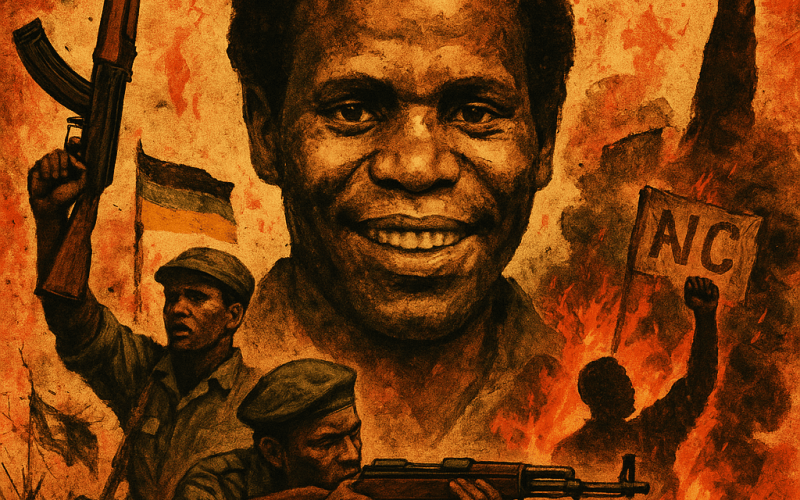
Yet in modern South Africa, Moloise’s memory has not been as prominently preserved as other figures from the struggle. Few photographs remain; his image largely lives on through documentation of the protests his execution sparked. His remains, like those of so many freedom fighters, were buried by the apartheid regime in unmarked graves or locations kept secret from families – a final attempt to deny dignity and erase legacy.
Now, in a long-overdue act of restorative justice, the remains of Benjamin Moloise and Zakhele Mngomezulu will be returned to their families and reburied with the honour befitting heroes of the anti-apartheid struggle. This repatriation represents more than the return of physical remains; it symbolises the reclamation of narrative, dignity, and historical truth.
Mngomezulu, like Moloise, paid the ultimate price in the fight against apartheid. Their stories, though different in detail, share the common thread of sacrifice in service to a vision of equality that seemed impossibly distant in their lifetimes but would eventually reshape a nation.
The reburial ceremony on May 3 will stand as both commemoration and continued commitment – a reminder that South Africa’s democratic journey remains incomplete. Economic inequality still falls largely along racial lines. The promises of the post-apartheid era have been partially fulfilled at best. The words of Moloise’s poetry still resonate with uncomfortable relevance.
As family members receive the remains of their loved ones, the moment transcends personal grief to touch on national healing. Each identified grave, each repatriated hero, helps South Africa confront its painful past with honesty – a prerequisite for genuine reconciliation.
Benjamin Moloise’s legacy endures not only in historical accounts but in the very fabric of South African democracy. The upholsterer who became a poet who became a symbol reminds us that ordinary people, when confronted with extraordinary injustice, can find within themselves the courage to stand firm, even unto death.
“The storm of oppression will be followed by the rain of my blood,” he wrote. “I am proud to give my life, my one solitary life.” Decades later, as his remains finally return home, South Africans and freedom-loving people everywhere can reflect on the terrible price paid for liberty, and the responsibility that comes with inheriting its rewards.
In honouring Moloise and Mngomezulu, modern South Africa honours not just two individuals, but the principle that animated their resistance: that human dignity is not bestowed by governments but is inherent and universal. As their remains return to families who have waited decades for closure, a nation continues its own journey toward becoming the society these heroes envisioned – one where, in Moloise’s prophetic words, South Africa would one day be governed by its black population, and where sacrifices made for freedom would not be in vain.