JOVIAL RANTAO
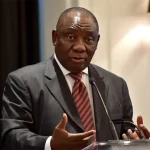
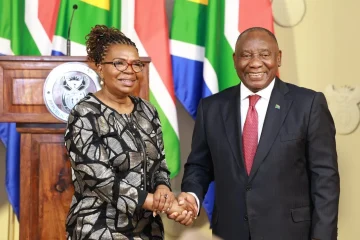
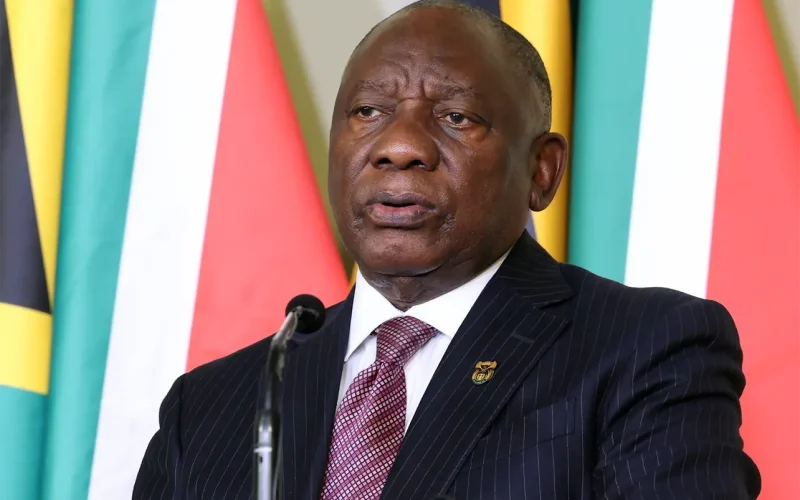
THE mahogany doors of the Union Buildings closed with a soft thud, but the sound reverberated across South Africa with the force of a missed opportunity. President Cyril Ramaphosa had just delivered his response to Lieutenant-General Nhlanhla Mkhwanazi’s explosive allegations of criminal cartel infiltration into the highest levels of law enforcement – and in doing so, may have sealed not just his own political fate, but that of the African National Congress itself.
When Mkhwanazi’s testimony landed like a bombshell, revealing the chilling extent to which drug cartels had captured senior police officers, prosecutors, and judges, South Africa held its breath. Here was Ramaphosa’s moment – the opportunity to demonstrate the decisive leadership that had eluded him throughout his presidency. The nation expected swift, uncompromising action. They expected heads to roll. Most crucially, they expected the Police Minister Senzo Mchunu to be fired.
Instead, they got suspension and another commission of inquiry. Yet another one.
The President’s decision to suspend rather than dismiss the Police Minister represents far more than a procedural choice – it epitomises the very indecisiveness that has come to define his tenure. While Ramaphosa will undoubtedly argue that he was following due process, this misses the fundamental point: South Africa is not facing a normal political scandal. It is confronting an existential threat to the rule of law itself.
Ramaphosa’s legalistic approach, while constitutionally sound, reveals a dangerous disconnect between the Union Buildings and the streets where ordinary South Africans live with the daily reality of crime and corruption. Due process is a luxury that criminal syndicates do not afford their victims. When drug cartels can allegedly control senior officials across multiple institutions, the response cannot be business as usual.
The President’s expression of shock at the revelations, coupled with his measured response, suggests either a troubling lack of intelligence about the state of his own government or a willful blindness that has characterised his administration’s approach to systemic corruption. Either interpretation is damning for a leader who built his political legitimacy on promises of clean governance and institutional reform.
The Pattern of Indecision
This latest episode fits into a troubling pattern that has defined Ramaphosa’s presidency. The litany of ministers who have remained in their posts despite scandals, the endless reshuffles that have become his signature move, the promises of action that have dissolved into committees and investigations – all of it now stands as testament to a leadership style that has frustrated even his most ardent supporters.
The President came to power as a breath of fresh air after Jacob Zuma’s catastrophic tenure, arguably the worst in democratic South Africa’s 30-year history. His steady hand during the COVID-19 crisis and his navigation of complex global geopolitical challenges earned him praise. Yet when it comes to the decisive moments that define presidencies, Ramaphosa has consistently chosen the path of least resistance.
The ANC’s Electoral Reckoning
The political implications of this missed opportunity extend far beyond Ramaphosa’s personal legacy. The ANC’s support has already plummeted to just 40 percent in the recent national and provincial elections – the party’s worst performance since 1994. Political observers fear that the President’s tepid response to the police scandal could be the final nail in the coffin for a party that has governed South Africa since democracy’s dawn.
The timing could not be worse for the ANC. With coalition politics now a reality and opposition parties gaining ground, the governing party desperately needed to demonstrate that it was serious about cleaning house. Instead, Ramaphosa’s response reinforces the perception of a party that talks tough on corruption but lacks the will to act decisively when it matters most.
The Message to Criminal Syndicates
Perhaps most dangerously, the President’s measured response sends entirely the wrong message to the criminal networks that Mkhwanazi described with such chilling clarity. These syndicates operate with ruthless efficiency, showing no regard for due process or constitutional niceties. They respond only to strength and decisive action.
By choosing suspension over dismissal, by opting for another inquiry over immediate consequences, Ramaphosa has signaled that even the most serious allegations of state capture will be met with procedural delays and political calculations. This is not the language that criminal cartels understand or respect.
The nation’s reaction to Ramaphosa’s response reveals a deeper truth about South Africa’s current moment. Citizens who have watched their communities ravaged by crime, their institutions hollowed out by corruption, and their faith in democracy steadily eroded, are desperate for authentic leadership. They want to see consequences that are swift, visible, and proportionate to the crimes committed.
The President’s constitutional argument about due process, while legally sound, misses the political and psychological moment entirely. South Africans are tired of eloquent speeches followed by tepid action, of moral outrage that dissipates into procedural delays. They wanted their President to show the criminal syndicates – and the world – that he is in charge.
The Crossroads
South Africa stands at a crossroads where the rule of law itself hangs in the balance. If drug cartels can indeed control senior police officers, prosecutors, and judges, then the very notion of justice becomes a cruel joke. The President’s response will be remembered not for its constitutional correctness, but for its failure to match the severity of the crisis with the boldness of the remedy.
The ANC’s swift response in summoning ministers to face an integrity committee represents a political lifeline for Ramaphosa, but it also underscores the party’s own complicity in creating the conditions that allowed such rot to take hold. The integrity committee, much like the President’s previous responses to misconduct, risks becoming another forum for political theater rather than genuine accountability.
The Verdict of History
As the dust settles on this missed opportunity, the verdict seems clear: Ramaphosa had his moment to demonstrate the kind of decisive leadership that South Africa’s crisis demands, and he chose the familiar path of measured responses and procedural propriety. While this approach may preserve short-term political stability, it may have cost him – and the ANC – the trust of a nation desperate for leaders who will match their rhetoric with bold action.
The mahogany doors of the Union Buildings may have closed on this chapter, but they have opened onto a future where South Africa’s democracy must find new ways to defend itself against the forces that would corrupt and capture it. Whether that future includes Cyril Ramaphosa as President may well depend on whether he can learn to seize the moments that matter – before they slip away forever.