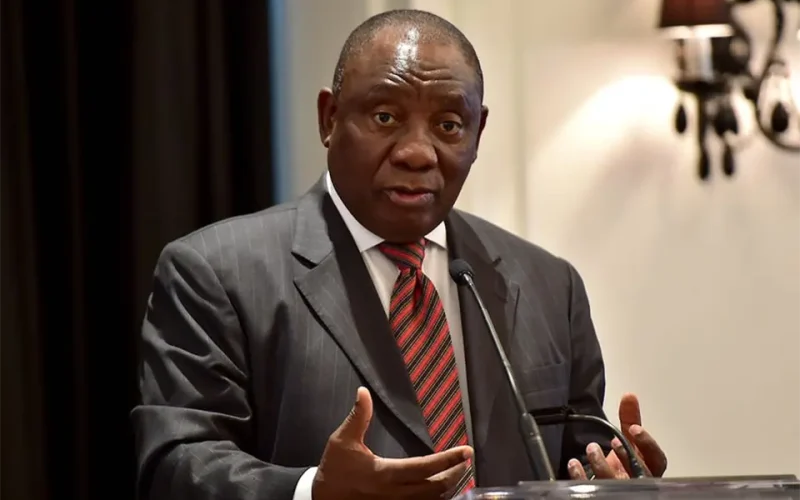
SIXTY-ONE million South Africans are holding their breath as President Cyril Ramaphosa prepares to deliver on his promise of harsh action against anyone found to have violated the law in what has emerged as the most explosive corruption scandal since the dawn of democracy. “This is a matter of grave national security concern that is receiving the highest priority attention. It is vital that the integrity of the country’s security services is safeguarded and that the rule of law is affirmed,” the President declared, his words carrying the weight of a nation’s expectations as he confronts allegations that a powerful drug cartel has infiltrated the highest levels of government.
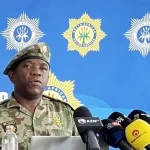
The President’s promise comes in response to bombshell revelations by KwaZulu-Natal Police Commissioner Lieutenant General Nhlanhla Mkhwanazi, who has exposed what investigators describe as a criminal network so sophisticated and far-reaching that it controls top police officials, prosecutors, judges, and politicians currently sitting in Parliament.
The magnitude of Ramaphosa’s commitment cannot be overstated. In stating that this is a matter of “grave national security concern that is receiving the highest priority attention,” he has placed his presidency—and his legacy—squarely on the line. His declaration that “it is vital that the integrity of the country’s security services is safeguarded and that the rule of law is affirmed” has resonated across a nation hungry for justice and accountability.
From the townships of Soweto to the boardrooms of Sandton, from the corridors of Parliament to the streets of Cape Town, South Africans are united in their demand for action. The President’s promise of harsh consequences for lawbreakers has ignited hope that this time will be different – that the powerful will finally be held accountable for their crimes.
The Bombshell That Shook the Nation: Commissioner’s Courage Sparks Hope
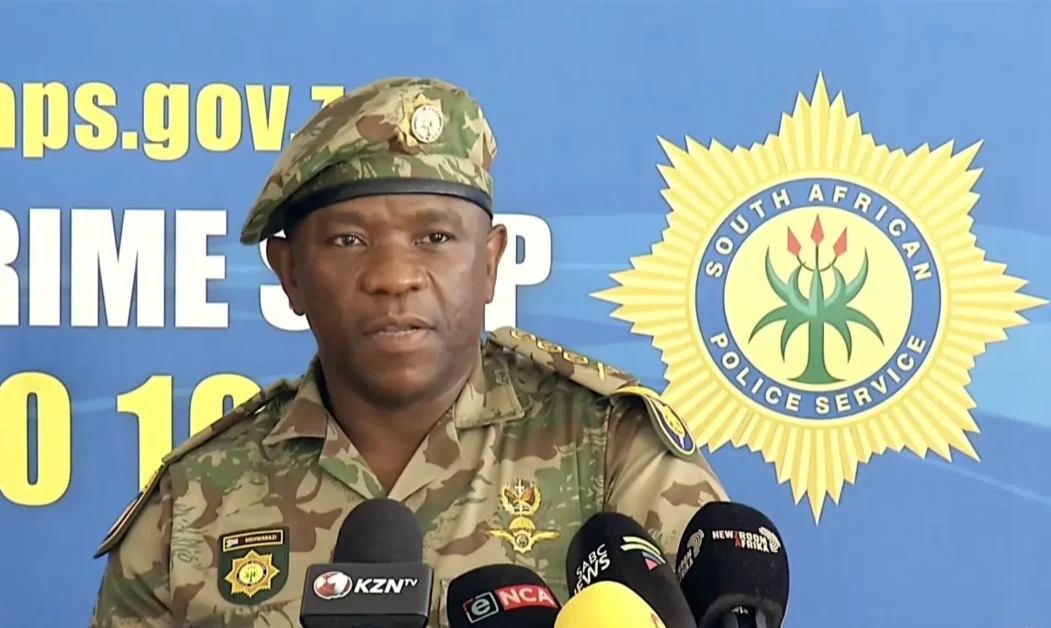
The catalyst for this national moment of reckoning came through the extraordinary courage of Commissioner Mkhwanazi, who risked everything to expose what he describes as a criminal conspiracy reaching the highest levels of government. In a media briefing that will be remembered as a watershed moment in South Africa’s fight against corruption, Mkhwanazi revealed the existence of a powerful drug cartel in Gauteng that allegedly controls top police officials, prosecutors, judges, and politicians currently sitting in Parliament.
The revelations, described by political analysts as among the most significant in post-apartheid South Africa, have given President Ramaphosa the opportunity to demonstrate the decisive leadership that many have been waiting for. The President’s strong response suggests he views this not as a political crisis to be managed, but as a defining moment to restore faith in South Africa’s institutions.
The Smoking Gun: 121 Suppressed Case Dockets
At the heart of Mkhwanazi’s explosive allegations lies a trail of 121 case dockets that were mysteriously removed from a specialized police unit and shelved at police headquarters in Pretoria. These dockets, compiled by the now-disbanded Political Killings Task Team, contained detailed evidence of a national criminal syndicate with tentacles reaching into the highest echelons of government.
The commissioner revealed that among these suppressed files were actual arrest warrants for key perpetrators—warrants that were never executed despite containing compelling evidence against high-ranking officials. The systematic burial of these cases points to what investigators describe as one of the most sophisticated obstruction of justice operations in South Africa’s democratic history.
“These dockets didn’t just disappear,” Mkhwanazi declared, his voice heavy with the weight of his revelations. “They were deliberately removed and shelved under orders that came from the very top of our police hierarchy.”
Resistance From Within: The Forces Arrayed Against Justice
Even as President Ramaphosa prepares to deliver on his promise of harsh action, powerful forces within the system are mobilizing to protect their interests. Police Minister Senzo Mchunu has categorically denied the allegations against him, reportedly daring Commissioner Mkhwanazi to follow through on his threats to act. Sources close to the minister describe him as “confident that the allegations will not stand up to scrutiny,” a stance that puts him directly at odds with the President’s promise of accountability.
Adding to the institutional resistance, National Police Commissioner General Fanie Masemola has called for “business as usual” within the police force, a response that many interpret as an attempt to downplay the severity of the allegations at the very moment when the President is promising decisive action.
This internal resistance only underscores the magnitude of the challenge facing Ramaphosa. The fact that senior officials are pushing back against the investigation suggests the depth of the criminal network’s penetration into South Africa’s institutions. However, their defiance also provides the President with a clear test of his commitment to the rule of law.
“I Am Combat Ready” – A Provincial Commissioner’s War Declaration
In a moment that will be etched in South African law enforcement history, Mkhwanazi declared himself “combat ready” and stated his willingness to “die for the badge.” This wasn’t mere rhetoric—it was a declaration of war against a criminal network so powerful and entrenched that it has successfully captured key institutions of state.
The commissioner’s courage in speaking out cannot be overstated. In a country where whistleblowers often face dire consequences, Mkhwanazi’s willingness to expose the conspiracy knowing full well the risks involved demonstrates the gravity of the situation and the extent of the criminal network’s reach.
The Web of Alleged Corruption: How Deep Does It Go?
The evidence compiled by the disbanded task team paints a picture of corruption that defies comprehension. The drug syndicate’s influence extends far beyond street-level operations, reaching into:
The Judiciary: Judges allegedly compromised and influenced by the cartel, potentially affecting the outcome of crucial cases and undermining the independence of the courts.
The Police Force: Top police officials allegedly on the cartel’s payroll, manipulating investigations, protecting criminal operations, and eliminating rivals through selective enforcement.
The Prosecution Service: Senior prosecutors allegedly compromised, ensuring that cases against the syndicate never see the light of day or result in meaningful convictions.
Parliament: Current MPs allegedly implicated in the network, using their positions to influence legislation and protect the syndicate’s interests.
The multidisciplinary approach of the Political Killings Task Team—involving SAPS, the National Prosecuting Authority, State Security, and Correctional Services—enabled investigators to uncover these high-level connections. Their work revealed a criminal enterprise so sophisticated and well-connected that it operates with virtual impunity.
International Connections: The Global Supercartel
The revelations become even more alarming when viewed in the context of South Africa’s role as a hub for international drug trafficking. Investigations have uncovered connections between local officials and what experts describe as a global “supercartel” operating throughout South Africa.
Recent high-profile drug busts, including an R2-billion methamphetamine laboratory seizure in Limpopo with international suspects, highlight the scale and sophistication of these operations. The fact that such massive operations can function suggests protection from the highest levels of government and law enforcement.
A Nation United in Anticipation: The Ramaphosa Test
What makes this moment unprecedented is the rare unity of purpose that has emerged across South Africa’s political spectrum. Opposition parties, civil society organizations, and ordinary citizens have found common ground in their demand for justice. The Democratic Alliance’s John Steenhuisen, typically critical of Ramaphosa, has expressed cautious optimism: “If the President follows through on his promise of harsh action, he will have our full support. This is not about politics—it’s about saving our democracy.”
Even the Economic Freedom Fighters, often at odds with the ruling party, have struck a measured tone. EFF leader Julius Malema stated: “The President has made a commitment to the nation. We will judge him by his actions, not his words. If he acts decisively against these criminals, regardless of their political affiliation, he will earn our respect.”
This unprecedented political unity reflects the gravity of the situation and the faith that South Africans are placing in their President to rise to the occasion. Civil society leader Mavuso Msimang captured the national mood: “For the first time in years, we have a President who has looked the nation in the eye and promised justice. Sixty-one million South Africans are counting on him to deliver.”
The Evidence That Demands Action: 121 Dockets of Corruption
The foundation of President Ramaphosa’s promised action rests on the explosive evidence compiled by Commissioner Mkhwanazi’s disbanded task team. The 121 case dockets that were systematically suppressed contain detailed evidence of criminal activity reaching the highest levels of government. These files, which include actual arrest warrants for key perpetrators, provide the President with the legal ammunition needed to fulfil his promise of harsh consequences.
The systematic suppression of these dockets—allegedly orchestrated by senior police officials and the Police Minister himself—has given Ramaphosa a clear mandate for action. The President’s characterization of this as a national security issue provides him with the legal and political justification to take extraordinary measures to restore the rule of law.
The Stakes: Democracy in the Balance
The implications of these revelations extend far beyond individual careers or political parties. At stake is the very foundation of South Africa’s democratic institutions and the rule of law. If the allegations are true, South Africa faces a crisis of state capture that dwarfs even the Zuma years.
The systematic suppression of evidence, the protection of criminal networks, and the compromise of key institutions represent a direct threat to constitutional democracy. The question is no longer whether corruption exists within South Africa’s institutions—it’s whether those institutions can survive the level of criminal infiltration that has been exposed.
Opposition Demands Action
Opposition parties and civil society organizations have already begun mobilizing, demanding swift action to restore integrity and accountability. The Democratic Alliance, Economic Freedom Fighters, and other opposition parties are calling for parliamentary investigations, while civil society groups are demanding that Ramaphosa choose between his political allies and the rule of law.
The pressure is mounting from all sides, with some calling for a complete overhaul of the police leadership and others demanding a new commission of inquiry into the captured institutions.
The Moment of Truth: A President’s Legacy in the Balance
As President Ramaphosa prepares to return from the BRICS Summit in Brazil, the weight of 61 million expectations rests on his shoulders. His promise of harsh action against anyone found to have violated the law has transformed this from a political crisis into a national referendum on his leadership and South Africa’s commitment to justice.
The President’s declaration that “this is about national security” has elevated the stakes beyond partisan politics. By framing the issue in these terms, he has positioned himself as the defender of South Africa’s democratic institutions against criminal infiltration. This bold stance has earned him unprecedented support across the political spectrum, but it has also made failure unthinkable.
Constitutional law expert Professor Pierre de Vos observes: “Ramaphosa has made a commitment that goes to the heart of his presidency. If he fails to act decisively against the implicated officials, regardless of their political connections, he will lose all credibility as a leader. But if he follows through, he could emerge as the president who finally broke the back of state capture.”
The nation watches with bated breath as Ramaphosa prepares to outline the specific actions he will take. His promise has ignited hope that this time will be different—that the powerful will finally be held accountable, that the rule of law will be restored, and that justice will prevail over political expediency.
Commissioner Mkhwanazi’s courage in exposing the criminal network has provided the President with the opportunity to demonstrate decisive leadership. The question now is whether Ramaphosa will seize this moment to cement his legacy as the president who chose justice over politics, or whether he will join the long list of leaders who promised much but delivered little.
The battle for South Africa’s soul has begun, and for the first time in years, the nation believes it has a president ready to fight for justice. The eyes of Africa—and the world—are watching as President Ramaphosa prepares to prove that in the new South Africa, no one is above the law.
Time will tell whether this moment marks the beginning of a new era of accountability, or whether it becomes another broken promise in South Africa’s long struggle for justice. But for now, 61 million South Africans dare to hope that their President will deliver on his promise of harsh action against those who have betrayed their trust.