Our website use cookies to improve and personalize your experience and to display advertisements (if any). Our website may also include cookies from third parties like Google Adsense, Google Analytics, and Youtube. By using the website, you consent to the use of cookies.

How women in academia are feeling the brunt of COVID-19

How women in academia are feeling the brunt of COVID-19

KEYMANTHRI MOODLEY, Director, The Centre for Medical Ethics & Law, Stellenbosch University AMANDA GOUWS, Professor of Political Science and SARChi Chair in Gender Politics, Stellenbosch University THE COVID-19 pandemic and the consequent public health response of lockdown has brought into sharp relief the constraints faced by women across the board. We have been keeping a keen eye on the impact it’s having on women in academia – our field of work and research. What we’re observing, and what’s being backed up by research, is that women are facing additional constraints as a result of COVID-19. These range from the added…
Read More
How Igbo women used petitions to influence British authorities during colonial rule

How Igbo women used petitions to influence British authorities during colonial rule

BRIGHT ALOZIE, Lecturer in History, West Virginia University SELECTED petitions and written correspondence between Igbo women and British officials between 1892 and 1960 shed fresh light on how women navigated male-dominated colonial institutions and structures of the time. African women acted in varied and complex ways to the situations they found themselves in. This ranged from subtle to overt opposition, and sometimes violent resistance. One response was through petition writing as women took to the pen to articulate their concerns. In my research, I examined several petitions written by Igbo women to British officials during the colonial period. I found…
Read More
Repression in Zimbabwe exposes South Africa’s weakness

Repression in Zimbabwe exposes South Africa’s weakness

ROGER SOUTHALL, University of the Witwatersrand SOUTH African President Cyril Ramaphosa’s despatch of envoys to Zimbabwe in a bid to defuse the latest crisis, in which the government has engaged in a vicious crackdown on opponents, journalists and the freedoms of speech, association and protest, has been widely welcomed. Such has been the brutality of the latest assault on human rights by President Emmerson Mnangagwa’s regime that something had to be done. And, as the big brother neighbour next door, South Africa is the obvious actor to do it. It may be guaranteed that Ramaphosa’s envoys – Sydney Mufamadi, a…
Read More
State of democracy in Africa: changing leaders doesn’t change politics

State of democracy in Africa: changing leaders doesn’t change politics

NIC CHEESEMAN, Professor of Democracy, University of Birmingham FOR the last few years the African political landscape has been dominated by high profile changes of leaders and governments. In Angola (2017), Ethiopia (2018), South Africa (2018), Sudan (2019) and Zimbabwe (2018), leadership change promised to bring about not only a new man at the top but also a new political and economic direction. But do changes of leaders and governments generate more democratic and responsive governments? The Bertelsmann Transformation Index Africa Report 2020 (BTI), A Changing of the Guards or A Change of Systems?, suggests that we should be cautious…
Read More
Former president of South Africa Kgalema Motlanthe pays tribute to liberation stalwart

Former president of South Africa Kgalema Motlanthe pays tribute to liberation stalwart

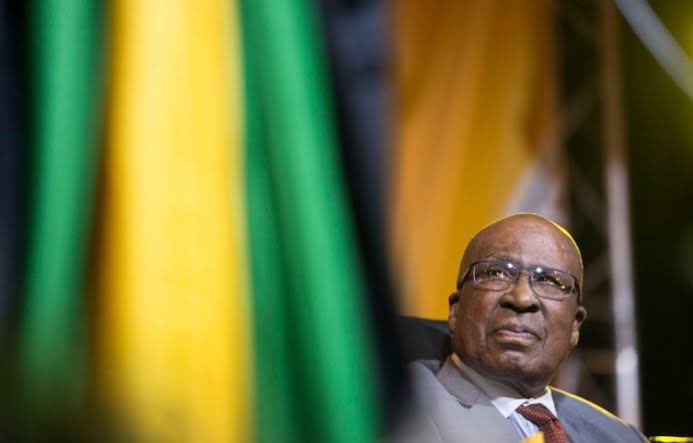
I join millions in our country and across the world in paying tribute to Isithwalandwe/Seaparankwe; a hero of the working class and a champion of the progressive trade union movement in our country: Ntate John Kgwana Nkadimeng, who has been laid to rest. I convey my heartfelt condolences to Mama Nkadimeng, the children and grandchildren, the entire Nkadimeng family, relatives, friends and loved ones.  Ntate Nkadimeng dedicated himself selflessly to a higher purpose in life: the betterment of the human condition. His was a life-long commitment to human dignity, social justice, equality and fairness.  We count Ntate Nkadimeng among that…
Read More
“There’s light in the horizon but difficult days lie ahead”

“There’s light in the horizon but difficult days lie ahead”

CYRIL RAMAPHOSA IT has been an immensely difficult five months, and the COVID-19 pandemic has taken a heavy toll – on the health of our people, on families and communities, on the public health system, on the economy and on people’s everyday lives. During this difficult period what all of us have longed for as South Africans most of all is to be healthy, restore our livelihoods and rebuild our economy. We are making progress in our fight against COVID-19. Over the last three weeks, the number of new confirmed cases has dropped from a peak of over 12 000…
Read More
Who are our agents for change, if we don’t turn this hour into a South African Kairos moment?

Who are our agents for change, if we don’t turn this hour into a South African Kairos moment?

KHULU MBATHA The English and the Boers fought a war that was called the Anglo-Boer War, but in actual fact, it involved everyone – especially Africans, and it is now known as the South African War. After this experience of a very devastating battle, there was no way that any defeated group could venture to take up arms against Britain. Left out of the deal of settlement, it is one of the main reason that when the founders of the African National Congress (ANC) came together in 1912, they made a clarion call to all Africans to come together to…
Read More
#45 at this year’s General Assembly

#45 at this year’s General Assembly

Harris Gleckman, Phd, is a former UN staff member and currently Senior Fellow, Center for Governance and Sustainability, UMass-Boston and member of the Advisory Board of the Foundation for Global Governance and Sustainability (FOGGS).  Author of Multistakeholder Governance and Democracy: A Global Challenge, 2018 Routledge. He can be reached at [email protected] An Open Letter to Friends of the United Nations HARRIS GLECKMAN The only head of state so far committed to physically addressing the opening of the new UN General Assembly session is US President Trump. As the rules for COVID-19 allow only one of the six seats of each…
Read More
Plans for a dam across the Nile triggered a war in 1956: will it happen again?

Plans for a dam across the Nile triggered a war in 1956: will it happen again?

MIKE MULLERM, Visiting Adjunct Professor, University of the Witwatersrand OVER the past decade, observers have watched with trepidation as tensions increased between Egypt and Ethiopia over the construction of the Great Ethiopian Renaissance Dam on the Blue Nile River. Egyptian politicians have publicly threatened war to defend what they see as their existential interest – Egypt’s right to use most of the Nile’s water. Over 80% of the water that reaches Egypt comes from Ethiopia. It has been suggested that Egypt has been encouraging separatist movements in Ethiopia to weaken Ethiopia’s government and discourage the project. Egypt has long defended…
Read More
Mali’s predictable coup leaves an unclear path to civilian rule

Mali’s predictable coup leaves an unclear path to civilian rule

BRUCE WHITEHOUSE, Associate Professor, Lehigh University SOLDIERS have ousted Mali’s President Ibrahim Boubacar Keïta who has now resigned, alongside the country’s prime minister. Moina Spooner from The Conversation Africa asked Bruce Whitehouse, who has carried out studies on coups and violent extremism in Mali, to share his thoughts on what brought on this coup, and what needs to happen next to ensure stability in the country. What laid the ground for the recent coup in Mali and who led it? There are many long-term factors, but the immediate reason for the coup was Ibrahim Boubacar Keïta’s dismal performance as president.…
Read More