Our website use cookies to improve and personalize your experience and to display advertisements (if any). Our website may also include cookies from third parties like Google Adsense, Google Analytics, and Youtube. By using the website, you consent to the use of cookies.

Mali president Keita vowed to end coups. Now he’s been toppled too

Mali president Keita vowed to end coups. Now he’s been toppled too

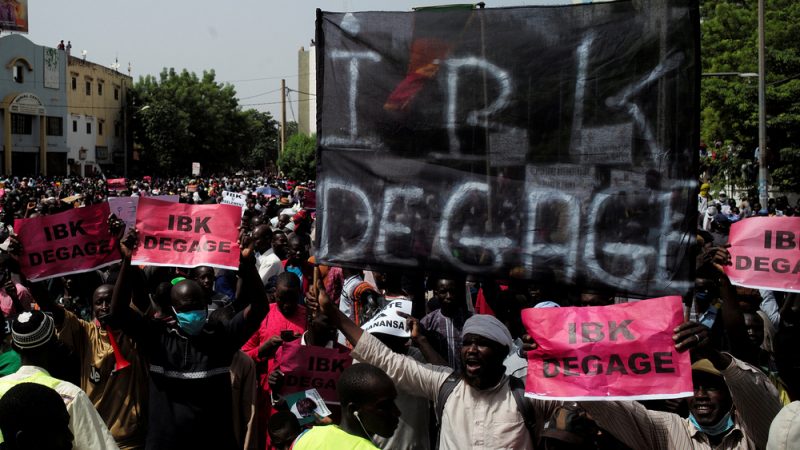
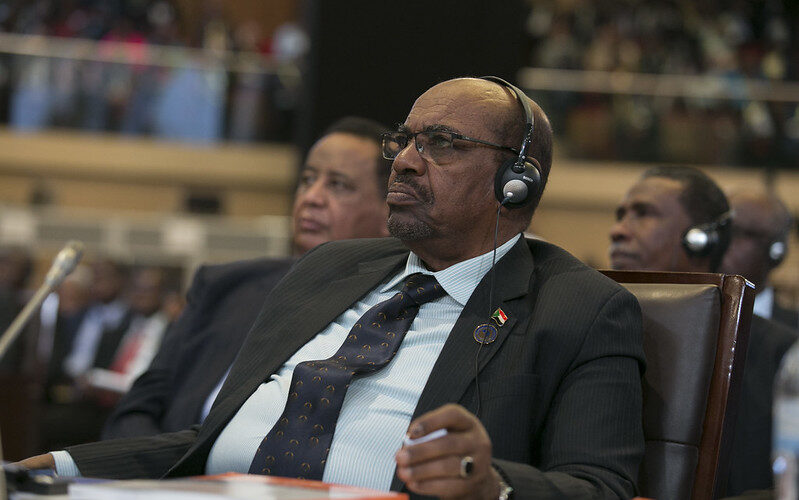
AARON ROSS  A month after becoming president of Mali in 2013, Ibrahim Boubacar Keita declared that the days of mutinous soldiers undermining the power of government in the capital Bamako were over. "Kati will no longer scare Bamako," he said, referring to the Kati military base outside the capital where a mutiny the previous year had toppled then-President Amadou Toumani Toure. Seven years later, Keita, 75, has suffered a similar fate. He was overthrown on Tuesday by a military coup that began with a mutiny in Kati. Within hours, the putschists, firing shots in the air, drove into town, detained…
Read More
How corruption in South Africa is deeply rooted in the country’s past and why that matters

How corruption in South Africa is deeply rooted in the country’s past and why that matters

STEVEN FRIEDMAN, Professor of Political Studies, University of Johannesburg WHEN South Africans express shock at corruption, few seem to know that it is perhaps the country’s oldest tradition. Citizen anger about corruption, a constant theme in South African political debate, reacts to a very real problem. This was underlined recently by news that well-connected people had enriched themselves at the expense of efforts to contain COVID-19. What is not real is the widespread belief that corruption is both new and easy to fix. Reactions to corruption portray it as a product of African National Congress (ANC) rule (or majority rule…
Read More
Towards Wakanda – Chadwick Boseman’s passing and the power and limits of Afrofuturism

Towards Wakanda – Chadwick Boseman’s passing and the power and limits of Afrofuturism

CLARE CORBOULD, Associate Professor, Deakin University IF you’re not a comics fan, you may have been surprised at the extent of the heartfelt grief expressed following the death of actor Chadwick Boseman. One explanation lies in the extraordinary power of the 2018 movie Black Panther, in which Boseman starred as T’Challa/Black Panther, to address racist stereotypes about Africa and Africans. Boseman’s character was heir to the hidden kingdom of Wakanda, a mythical African nation free of European colonisation. The film’s subtext explores African Americans’ varying identifications, past and present, with Africa and a global Black diaspora. Dark continent Westerners’ ideas…
Read More
The importance and role of communication during epidemics in Africa

The importance and role of communication during epidemics in Africa

PHUMLA WILLIAMS THE absence of a COVID-19 vaccine elevates prevention measures as a country’s first line of defence against the onslaught of the virus. To create awareness of these measures and effect behaviour change, reliable information needs to be shared with citizens so that they can make informed decisions on protecting themselves and their families. Communication that provides accurate, useful, and up-to-date information has become an essential tool in a country's mitigating strategy. The pandemic has however changed the way that many governments engage with their citizens as face-to-face interactions are limited due to the nature of the virus.  At…
Read More
I HAD A DREAM…

I HAD A DREAM…

VUSI MAVIMBELA whispers into the ear of Ramaphosa and Mbeki: ‘Save the ANC and the Country’ Dear Cyril Ramaphosa and Thabo Mbeki,  I had a once-in-a-lifetime dream yesternight. As a Marxist social scientist, I do not believe that dreams are divine revelations on the road to a Damascene emancipation. I think most of one’s dreams are latent thoughts buried under one’s subconscious mind. They often come out handy when one has to be reminded that one is choking because one is not sleeping properly, or when one who is fast asleep needs to be alerted that they need to empty…
Read More
Why South Africa’s new plan to fortify its borders won’t stop irregular migration

Why South Africa’s new plan to fortify its borders won’t stop irregular migration

INOCENT MOYO, Senior Lecturer and Head of Department of Geography and Environmental Studies, University of Zululand SOUTH Africa has just passed a new law in response to growing concerns in the country about its porous borders. The socioeconomic and security dangers posed by having large numbers of undocumented migrants have become key political issues in the country in recent times. It’s difficult to ascertain how many undocumented migrants there are in the country, leading to exaggerated estimates. According to Statistics South Africa figures from 2011, legal migrants were about 4.2% of the total population, or about 2.1 million people. Over…
Read More
Why South African opposition’s policy on racial inequality is out of sync with reality

Why South African opposition’s policy on racial inequality is out of sync with reality

STEVEN FRIEDMAN, Professor of Political Studies, University of Johannesburg CLAIMING, as South Africa’s official opposition the Democratic Alliance (DA) does, that policy must ignore race in South Africa, is like insisting that economic inequality should have been ignored in nineteenth-century Europe. The party resolved at a recent policy conference to oppose policy that uses race and gender as a criterion. This aims to set it apart from the governing African National Congress, which endorses affirmative action as a means of addressing the inequities created by centuries of minority white rule. Although this decision must still be ratified by the federal…
Read More
‘Africa, a continent of more than a billion people, must have a permanent seat at the UN Security Council’

‘Africa, a continent of more than a billion people, must have a permanent seat at the UN Security Council’

CYRIL RAMAPHOSA THE United Nations will this week begin the 75th session of its General Assembly, where the nations of the world gather to seek collective solutions to global challenges. In any other year, heads of state and government would travel to the UN headquarters in New York to address the General Assembly. But this year, because of the coronavirus pandemic, this gathering is taking place virtually, using technology to bridge the distance between the capitals of the world. This is an important moment for the United Nations. It is 75 years since its formation following the destruction of the…
Read More
America’s inflection point: four key things Africa must watch for

America’s inflection point: four key things Africa must watch for

JOHN J STREMLAU, Honorary Professor of International Relations, University of the Witwatersrand AFRICAN scholars and policymakers face a tough challenge in analysing how the US presidential election on 3 November might affect Africa-US relations. This is because of the extreme polarisation of politics that has been growing for decades in the US. Simultaneous national crises have made matters worse. These suddenly erupted over the handling of the coronavirus pandemic, its impact on the economy, and fresh evidence of white racism towards black Americans. In deeply divided America, four clusters of political political conflicts arise over issues of national identity, sustainable…
Read More
A great tree has fallen …

A great tree has fallen …

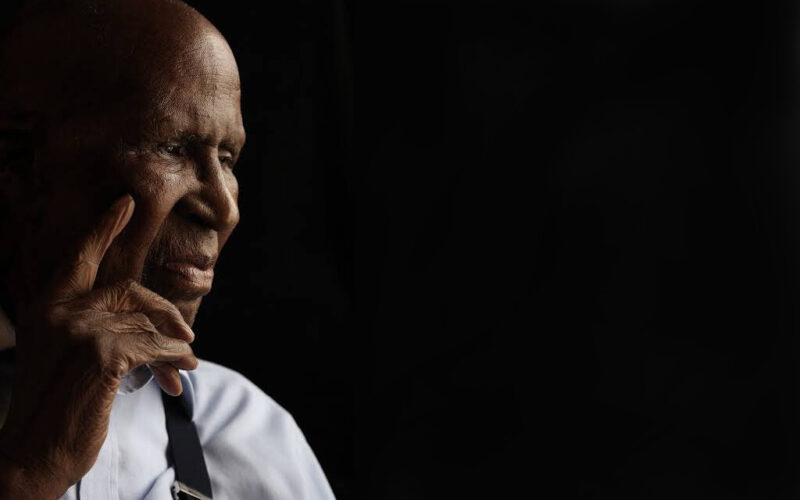
CYRIL RAMAPHOSA THERE are very few in our society of whom it can be said that they inspired an entire generation to follow in their footsteps. It is not many who are of such distinguished reputation that they are known simply by their first name, not just in their own social circle but to the entire country. It is only the rarest of individuals upon whom the title ‘champion of the oppressed’ is bestowed. George Bizos was such a man. A great tree has fallen.  A tree that gave shade to the patriots that founded our great nation and sheltered…
Read More