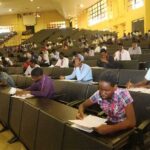

POSTGRADUATE education is good for a country. Thriving economies need people with advanced academic degrees to enhance research productivity. Research and innovation capability have a positive impact on the competitiveness of a country.
The South African government has developed an extensive financial support programme for undergraduate (first degree) education in the form of the National Student Financial Aid Scheme (NSFAS). However, this doesn’t extend to postgraduate programmes. Postgraduate education, therefore, remains a luxury for many students, even though the National Development Plan aims to have over 25% of university enrolments at the postgraduate level by 2030.
As academics in the Faculty of Economic and Management Sciences at the University of the Western Cape, we examined the impact of students receiving financial aid for postgraduate study. The students in our research were new postgraduate students who registered at the faculty in 2019 (the last normal academic year before COVID-19).
Fewer than half the students received financial aid. We found that aid appeared to have an impact on completion of the study programme, especially for the postgraduate diploma. We think there’s a case for greater investment in support for postgraduate education.
Statistics South Africa’s Quarterly Labour Force Survey data shows that job seekers with only a matric (grade 12 school leaving qualification) have a 35% probability of being jobless. The unemployment rate is much lower at 12% among job seekers with first degrees. And it is only 5% among those with postgraduate qualifications. What’s more, our calculations from quarterly labour force data show that postgraduates on average, earn about 38% more than those with only first degrees.
Who got financial aid
We analysed the students’ demographic characteristics, financial aid receipt status and academic results. A total of 623 new postgraduate students enrolled at the faculty: 186 for the postgraduate diploma, 275 for honours, 133 for master’s and 29 for doctorate programmes.
Some important findings emerged from the study.
Firstly, only 45.8% of these new postgraduate students received some form of financial aid. In contrast, almost all undergraduate students in this faculty receive NSFAS support. Out of all four postgraduate levels, the proportion of students receiving financial aid was the highest at the postgraduate diploma level (50.5%). It was lowest at the doctoral level (37.9%).
Secondly, for those who received financial aid, the university’s internal financial aid was the dominant funding source (35.8% of students received this aid). This was followed by National Research Foundation (16.8%) aid and Finance and Accounting Services Sector Education and Training Authority bursaries (15.1%, mainly for Accounting students).
Thirdly, the mean amount of financial aid received for 2019 (in 2025 December prices) was about R55,000 (about US$3,400) for postgraduate diploma and honours students. It was higher at R110,000 (US$6,800) at master’s level and R225,000 (almost US$14,000) at doctorate level.
Fourthly, the majority of financial aid recipients were Africans at all four postgraduate levels. This is in line with the social justice theory that previously disadvantaged population groups should get support.
Various factors can have an impact on academic performance, such as previous academic experience, residence on campus, and whether parents and students themselves are employed.
But the fifth and most striking finding was about the impact of receiving financial aid.
- It made the greatest positive impact on postgraduate diploma students: 81% of the financial aid recipients eventually completed their studies, as against 71% of non-recipients.
- Similarly, for the honours students, 91% of financial aid recipients completed their studies; 89% of non-recipients did so.
- At the postgraduate diploma level, on average, it took 1.51 years for financial aid recipients to complete their studies, but it took an additional semester for non-recipients to do so (1.94 years).
- Among the honours students, financial aid recipients took 1.33 years on average to complete their studies. Non-recipients took slightly longer (1.45 years) to do so.
These findings suggest financial aid had a positive impact on study completion and on the time taken to complete studies. The impact was mainly at the postgraduate diploma level.
Recommendations
We have three recommendations.
First, policymakers and higher education institutions must consider expanding financial aid beyond undergraduate programmes. This would be a strategic investment in educational equity and academic excellence.
It could be a tough ask, given South Africa’s fiscal deficit situation. Even private sector institutions may have dwindling funds available from firms’ profits, given the current economic climate.
Greater investment into postgraduate funding, at a level similar to that of the National Student Financial Aid Scheme, is a strategy worth pursuing to alleviate the country’s poverty, inequality and unemployment and to uplift human capital, productivity and even international competitiveness.
Secondly, it is important to determine whether postgraduate diploma and honours students have been overlooked in the provision of financial support. They form the foundation for further studies.
Lastly, a wide range of indicators should be considered to determine if a university has produced enough postgraduates to meet the skills needs in the country’s labour market. These indicators may include:
- The mean years taken to complete studies
- completion rate (what share of students complete studies)
- throughput rate (how long it takes to complete)
- percentage of academic staff with doctorate degrees (which indicates staff capacity to supervise postgraduate students)
- percentage of postgraduate programmes that are also offered on a part-time basis. If students are also working they are more likely to struggle with their studies and take more time to complete.
DEREK YU; CHRISTIE SWANEPOEL; ROCHELLE BEUKES; RONALD ARENDSE, and SHAUN PATHER
Derek Yu, Professor, Economics, University of the Western Cape;
Christie Swanepoel, Senior lecturer, University of the Western Cape;
Rochelle Beukes, Lecturer, University of the Western Cape;
Ronald Arendse, Lecturer, University of the Western Cape,
and
Shaun Pather, Professor, Department of Information Systems
- This article is republished from The Conversation under a Creative Commons license. Read the original article.