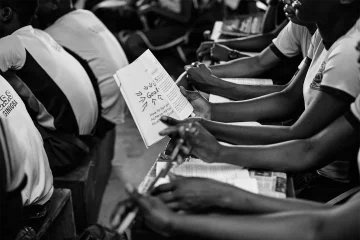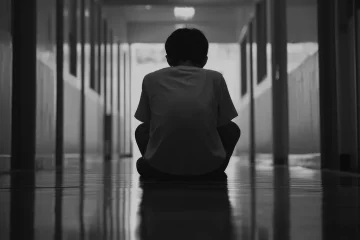

THERE is a particular kind of childhood arithmetic that no Grade 7 learner should ever have to perform: how long can I hold on, how fast can I get there, and how loud will the door not lock behind me. At Vuka Primary School in the rolling hills above Wartburg, that calculation used to run quietly through almost every school day. “Most of the Grade R and Grade 1 learners really struggle using the toilets,” Nandi Ndlovu, a Vuka learner, said. “I have never felt safe using them.”
It is a sentence a child should never have cause to say. It is also, in eleven words, the truest summary of what has just changed for 1,403 learners and 42 educators across three schools in the Umgungundlovu district – Vuka Primary, Bruynshill Primary and Swayimana High.
Down the road at Swayimana High School, Principal Sthobile Gwala has spent years carrying a version of that same arithmetic, multiplied by hundreds. Before this month, 849 learners and 24 educators at her school shared just four pit toilets between them – a ratio that no health inspector, anywhere, would sign off on. “Toilets are not sufficient for the number of learners,” she said. “Female learners and staff suffer from infections, and educators end up absent from work.”
Strip away the calm delivery, and Gwala is describing a school where the toilet block quietly dictated the timetable: who could risk drinking water in the morning, who skipped the school day altogether, who fell ill from facilities that were failing faster than anyone could fix them. It is the unglamorous, unseen underside of the access-to-education story – the one that rarely makes it into a Department of Basic Education annual report, but shapes a child’s entire relationship with school.
“Our toilets are not sufficient. Female learners and staff suffer from infections, and educators end up absent from work.”
Sthobile Gwala, Principal, Swayimana High School
It is fitting, and not at all accidental, that this transformation lands in June – the month South Africa marks Youth Month, and this year, fifty years since the children of Soweto walked into gunfire on 16 June 1976, demanding an education system that treated them as human beings worthy of dignity. The 1976 placards were about language and Bantu Education, not plumbing. But the thread connecting that generation to this one is the same: the insistence that a child’s dignity is not a negotiable line item in someone else’s budget. Half a century on, the unfinished business of freedom has migrated from the classroom blackboard to the cubicle door – and for the learners of Vuka, Bruynshill and Swayimana, that door now finally locks.
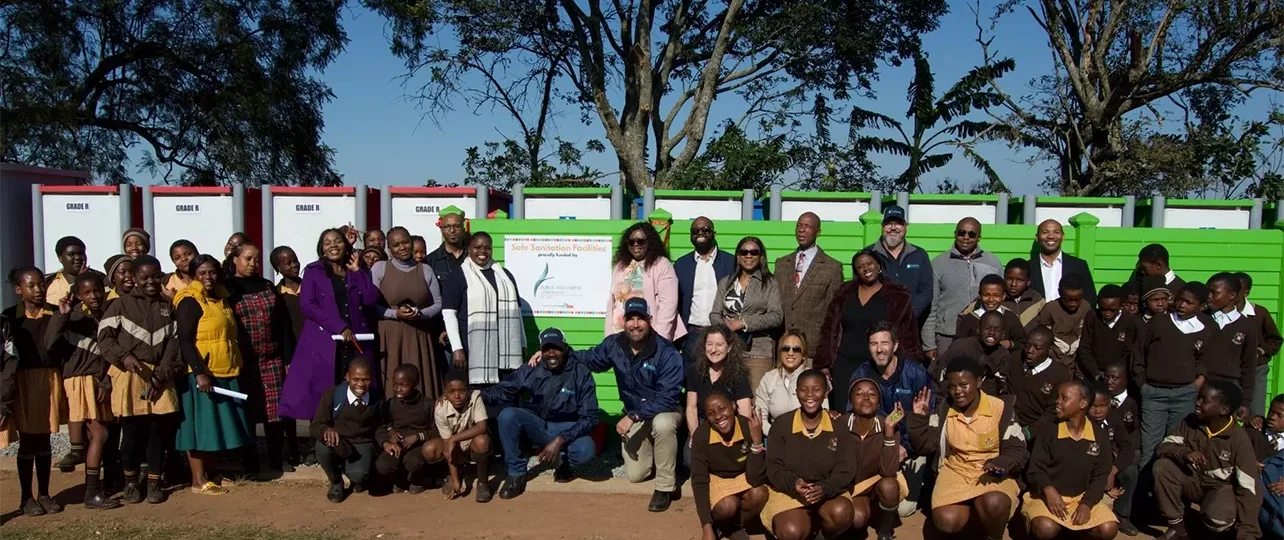
The intervention behind it is a R4-million investment by the Public Investment Corporation (PIC), South Africa’s state-owned asset manager, delivered in partnership with Breadline Africa, a non-profit organisation with an established track record in school sanitation infrastructure across the country. The three schools have each received modern sanitation blocks: flush toilets, handwashing stations, disability-accessible facilities, and separate, secured toilets for boys, girls and educators. Sustainable waste management systems are built in, and – critically, in a country littered with abandoned infrastructure projects – so is a five-year operations and maintenance plan designed to stop these new facilities from ever sliding back into the disrepair they were built to replace.
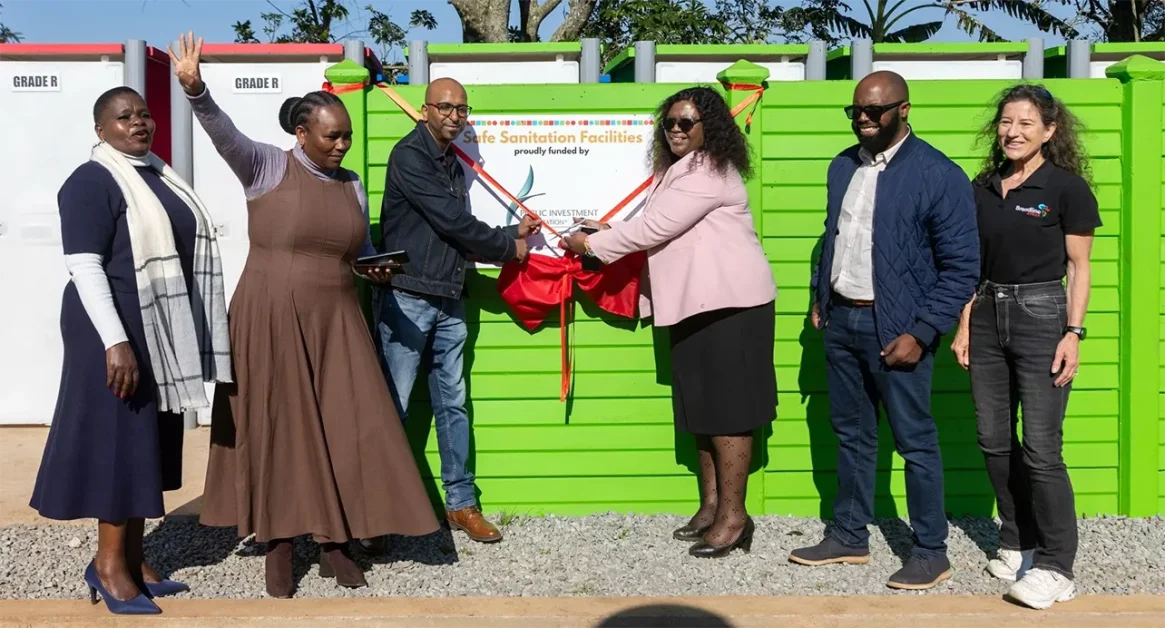
“As the PIC, we consider it a great privilege and opportunity to restore the dignity of these students through the provision of toilet facilities,” said Sekgoela Sekgoela, the PIC’s senior media relations specialist. “We believe that this will go a long way to enhance the students’ learning experience.”
Sekgoela was blunt about what the PIC team encountered on the ground in Umgungundlovu. “Proper sanitation is not just a matter of convenience, but has more to do with one’s dignity. This was evident during these past two days, when we handed over the sanitation facilities at Swayimana, Vuka and Bruynshill schools,” he said. “We heard stories of students who missed classes because they could not stomach the idea of using the toilets, particularly during rainy days and when they were going through their menstrual cycles. We also heard stories of diseases that students contracted in large numbers from unsanitary and collapsing toilet facilities.”
Those stories are borne out in the numbers. A baseline assessment conducted before the upgrade found that learners across the three schools routinely avoided using the toilets because they considered them unsafe – and that forty percent of learners had missed school altogether over sanitation-related concerns. None of the three schools had running water at their sanitation facilities. None had soap available. For girls in particular, there were no private facilities for managing menstruation, and no proper means of disposal – a gap that, study after study has shown, quietly pushes adolescent girls out of rural classrooms across the continent.
The new structures have been engineered to last: precast reinforced concrete for durability, Agrément-approved polymer doors and frames designed to be both child-safe and vandal-resistant, high-density plastic fittings chosen for hygiene and practicality, and secure screen walls and fencing for privacy. It is, in other words, infrastructure built for a rural South African school day – not a showroom.
At Bruynshill Primary School, the new block arrives after years of patience tested almost to breaking point. The school had been waiting for a sanitation upgrade since 2020, and as the old pit toilets deteriorated beyond use, it was parents – not contractors, not officials – who stepped in, digging replacement pits and repositioning toilet structures by hand simply to keep the school doors open. It is a small, largely undocumented act of community resilience that says as much about Bruynshill as any policy document could: a generation of parents quietly filling a gap that should never have existed, so that their children would not have to.
At Vuka Primary, where the youngest learners had been most exposed and most afraid, the new sanitation block changes the texture of an ordinary school day in ways that are easy to overlook from a distance and impossible to overstate up close. Fewer learners holding on through a lesson. Fewer absences. Better hygiene habits formed early. And, for a six-year-old walking into Grade R, a toilet that does not feel like a small daily ordeal.
Breadline Africa Chief Executive Officer Marion Wagner framed the stakes in terms that go well beyond bricks, pipes and polymer doors. “Safe sanitation is often viewed as an infrastructure issue, but for learners it affects health, attendance, privacy and dignity every day,” she said. “When children are worried about whether a toilet is safe to use, it becomes harder for them to focus on learning.”
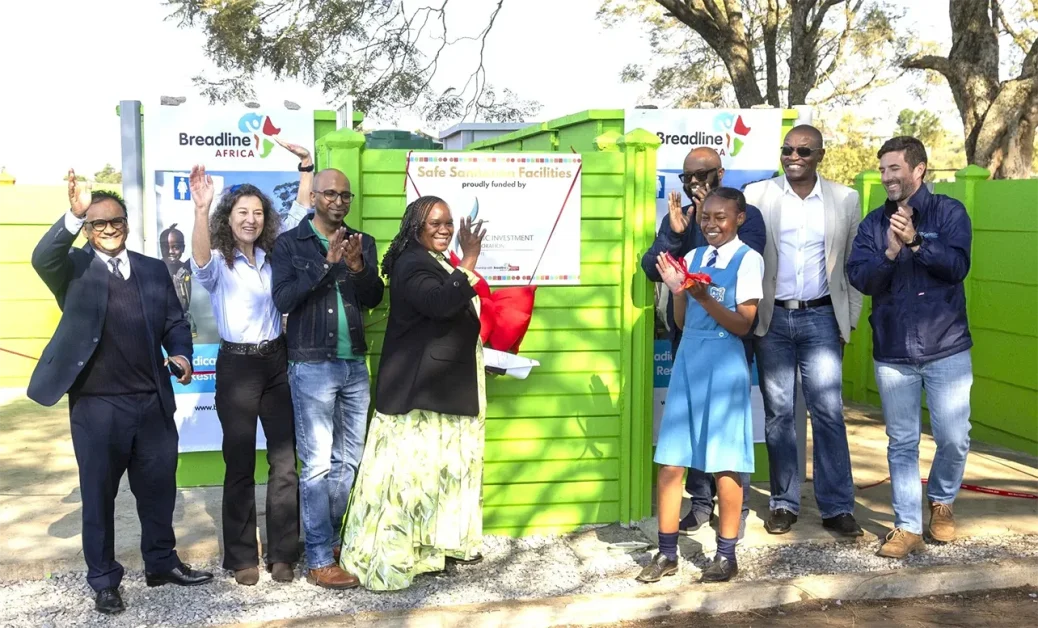
Wagner’s observation lands at the heart of why this story matters beyond Umgungundlovu. A school toilet is never just a toilet. It is a child protection issue, a public health intervention, a gender equity measure and a statement of institutional care, all folded into one unglamorous structure at the edge of the playground. Get it wrong, and a school silently loses attendance, dignity and trust in equal measure. Get it right, and a child is freed to simply be a learner again.
The reach of this PIC-funded programme is already widening. With the earlier addition of 250 learners at Zakhele Primary School, the 2026 sanitation investment has now improved conditions for more than 1,650 learners across KwaZulu-Natal — a number that will keep climbing as the model proves itself and, one hopes, attracts the kind of replication that rural schools across the province, and the country, urgently need.
There is something quietly profound in the timing of all this. As South Africa pauses this Youth Month to remember the young people who died on the streets of Soweto in 1976, the country is once again being asked what it owes its children. The honest answer has never been only classrooms and textbooks. It is the right to move through an ordinary school day — to learn, to play, to grow — with safety, privacy, and dignity intact. For the children of Vuka, Bruynshill and Swayimana, that right has finally arrived. It came, fittingly, in the same month their country remembered why it should never have taken this long.