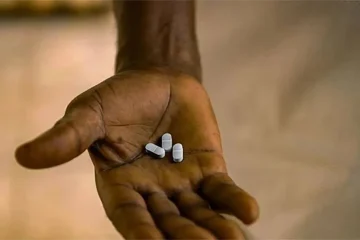
AFRICA’S overwhelming dependency on imported pharmaceuticals poses a serious threat to the continent’s health security and economic resilience, with 70 to 80 percent of medical products consumed on the continent coming from overseas despite annual spending exceeding $65 billion, the head of the African Union Development Agency has warned.
Nardos Bekele-Thomas, CEO of the African Union Development Agency-NEPAD (AUDA-NEPAD), delivered the stark assessment during opening remarks at the 7th Biennial Scientific Conference on Medical Products Regulation in Africa (SCoMRA VII) in Mombasa on Tuesday, calling for urgent action to strengthen local manufacturing capacity and regulatory harmonisation across the continent.
“This level of dependency exposes our health systems to global market volatility and leaves us vulnerable during crises – as we experienced profoundly during the COVID-19 pandemic and other public health emergencies,” Bekele-Thomas said in remarks delivered virtually to the conference.

The CEO emphasised that achieving health sovereignty is critical not only for public health but for Africa’s broader economic transformation. “If Africa is to achieve health sovereignty, it must be able to produce the medical products it needs, and it must also have strong, harmonised, and trusted regulatory systems to guarantee their safety, quality, and efficacy,” she stated.
“This is not only a public health matter – it is a matter of economic development, industrialisation, and strategic continental resilience,” Bekele-Thomas added, linking the initiative to Agenda 2063, Africa’s long-term vision for inclusive growth.
The conference, held under the theme “Regulatory Harmonisation: Unlocking Africa’s Potential in Health Product Manufacturing and Trade,” comes at a pivotal moment as the continent transitions from the African Medicines Regulatory Harmonisation (AMRH) Programme to the newly operational African Medicines Agency (AMA).
Major Gains in 16-Year Harmonisation Journey
Bekele-Thomas highlighted significant progress achieved since AUDA-NEPAD established the AMRH Programme 16 years ago, describing it as “one of the most successful continental health initiatives of the African Union.”
The programme has strengthened nine National Regulatory Authorities to WHO Maturity Level 3 and established six regional medicines regulatory harmonisation initiatives across the continent. It has also harmonised regulatory standards and enabled joint regulatory activities, “helping to make Africa a more predictable and attractive market for pharmaceutical investment and cross-border trade,” she said.
In a significant milestone, the Continental Pilot for the Listing of Human Medicines, launched in 2023, has resulted in the approval of 12 medicines and four Mpox diagnostics. “This initiative was first conceived during the 6th SCoMRA and forms the foundation for the full operationalisation of the African Medicines Agency,” Bekele-Thomas noted.
Multi-Pronged Strategy to Boost Local Production
AUDA-NEPAD is spearheading several coordinated initiatives to reduce dependency on imported medical products and strengthen health systems across the continent.
The agency is leading implementation of the Pharmaceutical Manufacturing Plan for Africa (PMPA), alongside the Priority 24 Health Products Roadmap, “which together guide investment and expand local pharmaceutical production capacity across the continent,” according to Bekele-Thomas.
Through the Programme for Investment and Financing in Africa’s Health Sector (PIFAH), AUDA-NEPAD is working with governments to strengthen domestic health financing and structure sustainable investment pipelines.
The organisation has also launched the Demographic Dividend and Sexual and Reproductive Health (A2DSRH) Programme to support member states and Regional Economic Communities in expanding access to quality sexual and reproductive health services, particularly for young people.
Additionally, the AU Smart Safety Surveillance Initiative (AU3S) is strengthening pharmacovigilance systems “to ensure the safety and quality of medical products circulating within our markets,” the CEO said.
AMA Represents “Next Chapter” for Continental Health Security
Bekele-Thomas described the transition to AMA, now operational in Kigali, Rwanda, as “a powerful symbol of Africa’s growing confidence and capacity to shape its own health future.”
“AMA is not just a new organisation; it signifies the next chapter of a journey that began with a shared dream. A dream of a harmonised regulatory environment that promotes innovation, attracts investment, and ensures that no African is left behind when it comes to access to quality medicines,” she stated.
AUDA-NEPAD “remains deeply committed to working hand in hand with the Secretariat of the Agency to ensure a smooth transition of the technical work of the AMRH,” Bekele-Thomas said, pledging continued collaboration with AMA to sustain support for member states and Regional Economic Communities during the transition period.
The CEO emphasised that a strong and unified regulatory system is essential for Africa’s health security and “a key driver of the African Continental Free Trade Area.”
In her closing remarks, Bekele-Thomas praised the SCoMRA platform for evolving beyond a gathering of experts into “a community and a movement dedicated to ensuring that every African has access to safe, effective, and quality-assured medical products.”
“This is what makes SCoMRA special: it is not just a conference; it is a catalyst for collective action,” she said.
Addressing development partners, the CEO expressed deep appreciation for their support of the AMRH journey and called for continued collaboration as the continent transitions to AMA. “Together, we are proving that Africa is not waiting for the future — Africa is building it,” Bekele-Thomas concluded.
The conference, hosted by the Government of Kenya in Mombasa, brings together regulatory experts, policymakers, and stakeholders to discuss strengthening local manufacturing, advancing digital regulatory solutions, and combating substandard and falsified medical products.