FOR more than a century, Africa has been a pharmaceutical colony – dependent on distant manufacturers for the medicines that determine whether its children survive malaria, whether its mothers live through childbirth, and whether its populations can withstand the next pandemic. This week in Mombasa, that colonial relationship faces its most significant challenge yet.
The Seventh Scientific Conference on Medical Products Regulation in Africa (SCoMRA VII), convening November 11-13 at the PrideInn Paradise Beach Resort & Spa, represents far more than another gathering of health officials and regulators. It is the crystallisation of sixteen years of painstaking institution-building, the unveiling of a continental regulatory architecture, and potentially the inflexion point where Africa’s pharmaceutical future pivots from dependence to self-determination.
The Anatomy of Dependence
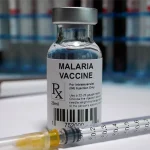
The statistics are staggering and shameful. Africa currently imports between 70-90% of its medicines despite shouldering 25% of the global disease burden. Even more striking: less than 1% of vaccines administered to African populations are produced on the continent. When COVID-19 struck, this dependency became deadly. Supply chains fractured, vaccine nationalism flourished, and African nations found themselves at the back of every queue, negotiating from positions of desperate weakness.
But the vulnerability extends beyond emergencies. Every day, Africa’s pharmaceutical dependency drains capital, suppresses industrial development, exposes populations to substandard and falsified products, and subjects the continent’s 1.4 billion people to a healthcare system built on the goodwill and profit calculations of foreign manufacturers. For a continent whose pharmaceutical market is projected to reach $65 billion by 2030, the question is no longer whether Africa can afford to build its own pharmaceutical capacity—it’s whether it can afford not to.
The Architecture of Change
The journey to this week’s conference began in 2009 with the establishment of the African Medicines Regulatory Harmonisation (AMRH) initiative. Implemented through Regional Economic Communities, the AMRH recognised a fundamental truth: Africa’s pharmaceutical weakness stemmed not just from manufacturing deficits but from fragmented, underdeveloped regulatory systems that couldn’t assure quality, facilitate trade, or attract serious investment.
Over sixteen years, the AMRH has systematically built the scaffolding for continental pharmaceutical capacity. Regional harmonisation initiatives have taken root in the East African Community, the Economic Community of West African States, the Economic Community of Central African States, and the Inter-Governmental Agency for Development. In 2024 alone, two additional initiatives were launched in the Arab Maghreb Union, plus Egypt and the Common Market for Eastern and Southern Africa, demonstrating accelerating momentum.
The initiative has worked on multiple fronts simultaneously: adopting harmonised standards and guidelines for regulating medical products, supporting legislative reforms aligned with the AU Model Law on Medical Product Regulation, conducting joint regional assessments and inspections of manufacturing sites, and systematically strengthening capacity through Regional Centres of Regulatory Excellence. Continental Technical Committees now coordinate across different regulatory functions, creating the connective tissue of a truly continental system.
This groundwork proved substantial enough that in 2016, the AU Executive Council mandated the African Union Commission, AUDA-NEPAD, and the WHO to establish a single regulatory agency for the continent. The result was the African Medicines Agency Treaty, adopted in 2019 and entering into force in 2021.
With 29 African Union member states having ratified the AMA Treaty as of late 2024, and Ghana’s Dr. Delese Mimi Darko appointed as the agency’s inaugural Director-General, the momentum for continental regulatory convergence is building. The agency, headquartered in Kigali, Rwanda, officially launched earlier this year, transforming what was once an aspiration into an operational reality.
Leadership and Vision
The conference brings together a who’s-who of Africa’s health leadership, signalling the political commitment behind pharmaceutical self-sufficiency. The opening ceremony will be officiated by Aden Duale, Cabinet Secretary for Health of Kenya, with keynote addresses from several continental leaders, including Dr Nardos Bekele-Thomas, CEO of AUDA-NEPAD; Dr Delanyo Dovlo, Director General of the African Medicines Agency; and Dr Jean Kaseya, Director General of the Africa Centre for Disease Control.
Dr Bekele-Thomas has framed the stakes clearly: “SCoMRA is more than a conference because it is a collective commitment to Africa’s health independence.” This language—health independence, sovereignty, self-sufficiency—marks a rhetorical shift from technical capacity-building to existential imperative.
The conference structure reflects this ambition. More than 300 policymakers, regulators, researchers, and industry leaders will engage across plenary and parallel sessions covering nine critical sub-themes: from strengthening harmonised regulatory oversight and leveraging local manufacturing investments, to the role of AMA and regional initiatives in advancing pooled procurement and intra-African trade through the African Continental Free Trade Area.
Notably, the agenda extends beyond traditional regulatory concerns to embrace emerging frontiers: the role of artificial intelligence and digitalisation in the pharmaceutical ecosystem, environmental sustainability in manufacturing and distribution, and strategies for countering substandard and falsified medical products through technology and innovation.
Expected Transformations
The conference aims to deliver specific, actionable outcomes that could fundamentally reshape Africa’s pharmaceutical landscape. First, establishing a shared understanding of the approach and collective action needed to advance regulatory science across the continent—creating alignment among the diverse stakeholders whose cooperation is essential.
Second, repositioning regulatory systems, strengthening and harmonization to directly support local manufacturing, trade, and pooled procurement. This represents a crucial evolution: regulatory capacity no longer as an end in itself but as an enabler of industrial policy and economic transformation.
Third, developing strategies for promoting innovation, technology adoption, and digitalisation throughout the pharmaceutical ecosystem. In a world where AI is transforming drug discovery and digital systems are revolutionising supply chain management, Africa cannot afford regulatory frameworks stuck in analogue paradigms.
Fourth, strengthening multi-sectoral and multi-stakeholder partnerships in regulatory science. The complexity of modern pharmaceutical development demands collaboration across governments, the private sector, civil society, academia, and international partners—partnerships this conference is designed to catalyse and deepen.
Finally, creating a shared vision for the future of medical products regulation in Africa as the African Medicines Agency becomes operational. This transition from the AMRH initiative to AMA represents a qualitative leap in institutional capacity and authority, but one that requires careful management to preserve momentum while expanding capability.
The Integration Imperative
What makes this moment potentially transformative is the convergence of multiple continental initiatives. The AMA doesn’t exist in isolation but connects to the Pharmaceutical Manufacturing Plan for Africa, the Platform for Harmonised African Health Product Manufacturing, the Africa Collaborative Initiative to Advance Diagnostics, and crucially, the African Continental Free Trade Area.
Regulatory experts have noted that “The establishment of AMA and regulatory harmonisation promotes faster introduction of new and advanced medical products into the market, hence quicker access by patients at a lower cost”—but the benefits extend far beyond efficiency. Harmonised regulation enables pooled procurement, creating demand aggregation that makes local manufacturing economically viable. It facilitates intra-African trade in medical products, allowing specialisation and economies of scale. It provides the quality assurance that attracts both domestic and international investment in pharmaceutical manufacturing.
The conference explicitly addresses this integration, with dedicated sessions on how AMA, regional harmonisation initiatives, and national regulatory authorities can advance pooled procurement and intra-African trade. This represents a sophisticated understanding: regulatory harmonisation isn’t a technical nicety but a prerequisite for economic integration and industrial development.
The Preparedness Dimension
Recent experience has elevated another conference priority: strengthening medical products regulation to rapidly respond to emergencies, evolving disease patterns, and emerging public health priorities. COVID-19 demonstrated catastrophically the costs of pharmaceutical dependency during crises. The recent mpox emergency reinforced the lesson.
The conference will facilitate knowledge exchange on best practices for managing future health emergencies, building on hard-won lessons. This includes not just surge capacity in manufacturing but regulatory agility—the ability to accelerate approval processes without compromising safety, to coordinate responses across borders, to leverage regional and global partnerships while maintaining sovereignty over critical decisions.
The Path Forward
As one conference document notes, “Africa’s pharmaceutical renaissance is not a distant aspiration but an achievable goal requiring coordinated regulatory action, political will, and collective commitment to continental health sovereignty”. Mombasa this week will test whether that political will and commitment translate into concrete action.
Success isn’t inevitable. Sixteen years of institution-building, 29 treaty ratifications, and elaborate conference agendas don’t automatically produce pharmaceutical factories or skilled regulatory workforces. Vested interests—both external manufacturers comfortable with captive markets and internal actors benefiting from the status quo—will resist transformation. Resource constraints, capacity gaps, and the sheer complexity of building continental systems present formidable obstacles.
But for the first time, Africa has the institutional architecture, political alignment, and economic imperative to make pharmaceutical self-sufficiency possible. The journey from Mombasa will be long, but the destination—a continent that produces its own medicines, regulates its own markets, and protects its own populations—has never been clearer or more achievable.