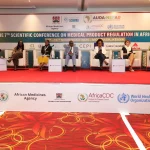
THE air in Mombasa, Kenya, was thick with the promise of change. It was November 2025, and the 7th Scientific Conference on Medical Product Regulation in Africa (SCoMRA) was in full swing. But this was more than just a conference; it was a continental convocation, a pivotal moment in Africa’s journey toward health sovereignty.
The theme, “Regulatory Harmonisation: Unlocking Africa’s Potential in Health Product Manufacturing and Trade,” was a direct response to a stark, long-standing vulnerability: over 90% of the continent’s medicines are imported. The COVID-19 pandemic had brutally exposed the fragility of this dependence, turning external supply chains into choke points and leaving millions at the mercy of global politics and logistics. Now, under the guiding hand of the African Union Development Agency-NEPAD (AUDA-NEPAD) and the framework of the African Continental Free Trade Area (AfCFTA), the continent was defining a unified regulatory future. The goal was clear: to foster local manufacturing, streamline trade, and build a resilient health ecosystem that could stand on its own. This was the spirit of SCoMRA 2025 – a powerful, collective push to transform health from a social imperative into a powerful economic engine, directly advancing the aspirations of Agenda 2063: The Africa We Want.
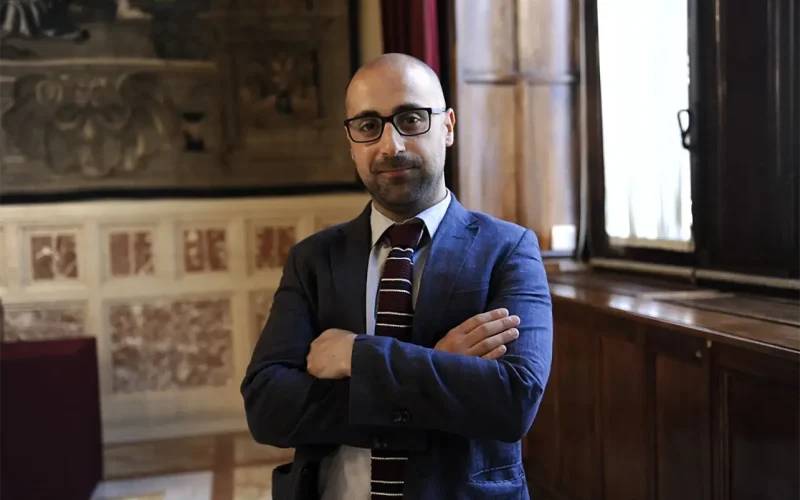
Amidst the high-level discussions on the transition from AMRH to the African Medicines Agency (AMA), a quieter, yet equally profound, conversation was taking place – one focused on bridging the gap between continents in the fight against a silent epidemic: cancer. At the heart of this effort was a man who saw systems not as static structures, but as connections waiting to be made: Dr. Davide Integlia.
The Connector: Dr Davide Integlia’s Mission
Dr Integlia is not a man who merely studies systems; he connects them. Introduced at SCoMRA as a “remarkable voice in global health innovation,” his career has been dedicated to building bridges between science, policy, and the people who ultimately benefit from better health systems. He is the Founder and General Manager of Integrated Strategies for Health Enhancing Outcomes (ISHEO ), based in Italy, where he works at the nexus of research, regulation, and real-world impact. He also serves as General Manager at Clinical Research Education and Services (CRES), shaping the next generation of clinical research excellence, and is the President of the Data Intermediary Alliance Association, championing responsible health data use.
But it is his personal motivation that truly defines his presence in Mombasa. For Dr. Integlia, the push for access to treatment and medicines is not an abstract policy goal – it is “one of the most crucial topics for the future of Africa.” His passion is palpable, rooted in a deep respect for the continent’s history and a recognition of the strong commitment shown by its institutions to strengthen regulatory systems. For someone who designs clinical studies and works to accelerate patient access to innovative treatments, being at SCoMRA, witnessing the birth of the AMA, was profoundly meaningful. He believes that advancing health outcomes in Africa has a “special meaning,” a moral and professional imperative that transcends borders. He is a thinker who has turned his passion for reducing health disparities into a blueprint for continental collaboration.
From Local Bridge to Global Alliance
The blueprint for this collaboration is the Europe-Africa Oncology Alliance, an ambitious initiative that grew from a seed planted in Italy. Since 2021, Dr Integlia’s team has been running the “Bridge the Gap” project, which focuses on reducing disparities in access to appropriate treatments, healthcare services, and monitoring for oncology and blood cancer patients within Italy.
The Alliance is the natural, necessary evolution of that work. It moves beyond Italy to create a broader, structured network connecting research centres, hospitals, patient associations, and all key stakeholders involved in oncology and haematology care across both Europe and Africa. The challenge it addresses is the urgent need to increase collective capacity to respond to the unmet medical needs of cancer patients, particularly as Africa must now focus on improving treatment for non-communicable diseases.
The Alliance is designed as a two-way street, a strategy Dr Integlia believes is mutually beneficial. For European centres, it offers access to a larger, more diverse patient population for clinical trials and a broader scope for data collection and evidence generation. This is vital for understanding the real-world impact of therapies and technologies. For African centres, the benefits are transformative: developing stronger expertise in clinical trial management, increasing participation in cutting-edge studies, and, most critically, offering patients the opportunity to access innovative treatments that might otherwise be unavailable. The Alliance aims to build a structured connection that elevates cancer care and research on both continents simultaneously.
The Digital Nexus: A Platform for Shared Growth
To facilitate this massive undertaking, the Alliance is building a digital platform that will serve as the central nervous system for the entire network. This is not a static repository of documents, but a vibrant, shared meeting space, complemented by live events held in both Europe and Africa.
The platform’s mission is to bring together a diverse ecosystem of actors: researchers, physicians, institutions, health managers, advocacy groups, faith-based organisations, and community leaders. It is designed to be a dynamic engine for learning and collaboration, a place where knowledge is not just stored, but actively exchanged and created.
In practice, the platform will function as a comprehensive digital nexus:
• Knowledge Exchange: Hosting webinars and advisory boards to facilitate interactive discussions and collaborative sessions among experts.
• Resource Hub: Providing essential literature, expert opinions, and documentation to keep all partners abreast of the latest developments in oncology and haematology.
• Data and Research Tools: Offering data-sharing tools to enable the secure and ethical exchange of information, which is crucial for evidence generation and mutual growth.
• Capacity Building: Facilitating the design of training courses to increase skills in critical areas such as clinical research study management, health technology assessment, and patient and health stakeholder engagement.
• Study Incubation: Serving as a space to design and launch proposals for new clinical studies, ensuring that research is relevant and impactful for both European and African populations.
By creating this structured, continuous sharing platform, the Alliance is ensuring that the connection between hospitals and research centres is not just a handshake, but a constant, productive dialogue.
The Continental Significance: The 3% Imperative
The urgency behind the Europe–Africa Oncology Alliance is underscored by a single, shocking statistic: Africa currently represents only about 3% of global clinical trials. This is a profound disparity, given that the continent harbors some of the highest unmet medical needs in the world. This low participation rate means that the innovative treatments being developed globally are often not tested on, or tailored for, African populations, leading to gaps in efficacy, safety data, and ultimately, access.
The Alliance seeks to change this by empowering African doctors and institutions to engage with the most advanced technologies and research methods. Increasing Africa’s participation in oncology research and clinical trials is crucial for several reasons:
1 Equity and Access: It ensures that African patients are not left behind and have the opportunity to access cutting-edge, innovative treatments.
2 Data Relevance: It provides essential, context-specific data that is necessary for regulatory bodies like the future AMA to make informed decisions about the safety and efficacy of medicines for their populations.
3 Local Capacity: It builds local expertise, strengthening the entire health system through training and involvement in high-level international research.
Dr Integlia’s vision is one where all entities involved benefit from data sharing, collaboration, and mutual growth, all contributing to the common goal of expanding access to innovative, appropriate, and safe treatments within a stronger and more resilient regulatory system. The 3% figure is not just a number; it is a call to action, a reminder of the immense potential waiting to be unlocked.
Hope and Momentum: The Shared Future
Looking forward, the momentum of the Europe-Africa Oncology Alliance is focused and deliberate. The immediate next step is the creation of the digital platform – the shared space where the work will live. Simultaneously, the Alliance is focused on mapping and engaging more research centres, hospitals, and treatment facilities dedicated to non-communicable diseases, oncology, and haematology.
But the work extends far beyond the clinical setting. Dr Integlia recognises that to truly succeed, the Alliance must address the cultural side of healthcare. This involves engaging a broader spectrum of stakeholders: patient associations, advocacy organisations, faith-based groups, local leaders, and traditional authorities. Their involvement is essential for improving disease awareness, overcoming cultural and informational barriers, and helping communities understand the importance of participating in clinical studies.
Furthermore, the Alliance is actively involving biotech and pharmaceutical companies that invest in innovative therapies. The goal is to help them better understand the African research landscape – its challenges and its immense opportunities – thereby facilitating the design and launch of new clinical studies and organising training programs for local capacity building. This multi-stakeholder, multidisciplinary approach is the key to fostering a truly sustainable change.
The journey toward health sovereignty in Africa is long, but the path is now clearer. The work being done at SCoMRA 2025 – the regulatory harmonisation, the establishment of the AMA – provides the essential foundation. The Europe-Africa Oncology Alliance is building the next layer: a human-centred, collaborative bridge that connects expertise, resources, and, most importantly, hope. It is a testament to the shared future of Europe–Africa collaboration, a future where health is a right, not a privilege, and where the promise of innovative care is accessible to all. The Mombasa moment is over, but the momentum has just begun.
- TEKO NHLAPO is the Communications and Advocacy Officer at AUDA-NEPAD