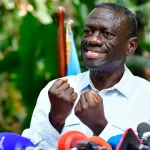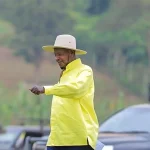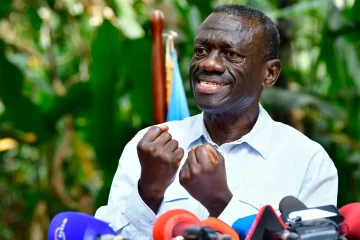
IN the corridors of power where loyalty once flourished, betrayal now casts its longest shadow. Dr. Kizza Besigye, once a trusted physician who tended to President Yoweri Museveni’s health, now finds himself the target of the very state machinery he once served. Their transformation from allies to adversaries tells the story of Uganda’s democratic decay – and of one man’s extraordinary courage in the face of overwhelming state power.
The irony cuts deep: the man who once saved Museveni’s life now threatens his political survival. Besigye, who served as Museveni’s personal doctor and close confidant during the bush war that brought the current president to power, has become the embodiment of everything Museveni fears most – principled opposition that cannot be bought, intimidated, or silenced.
For nearly four decades, Museveni has ruled Uganda with an iron fist disguised in democratic rhetoric. But as the 2026 elections loom, two names haunt his sleepless nights: Kizza Besigye and Bobi Wine. These men represent different generations of resistance, yet they share an unshakeable commitment to the very democratic ideals Museveni has systematically dismantled.
The Abduction: When States Become Kidnappers
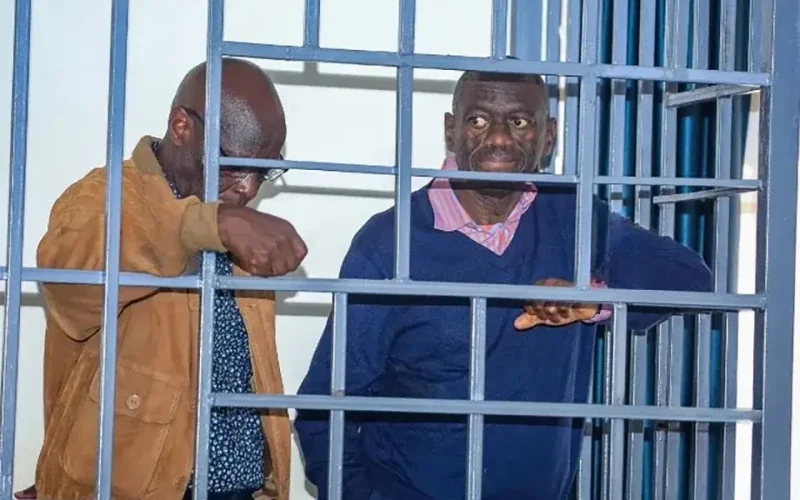
November 2024 marked a new low in Museveni’s war against dissent. In a move that would make authoritarian regimes worldwide take note, Besigye was lured to Nairobi under the pretence of meeting financial backers. Instead, he walked into a trap orchestrated across international borders. Men posing as Kenyan police seized him in broad daylight, rendering him across borders without due process – a brazen violation of international law that exposed the lengths to which Museveni would go to silence his critics.
The abduction sent shockwaves through East Africa. Here was a former presidential candidate, a man who had challenged Museveni in four consecutive elections, disappearing from a foreign capital only to resurface in a Ugandan military prison. The message was clear: nowhere is safe for those who dare oppose the regime.
The Hunger Strike: When the Body Becomes the Battlefield
Thrown into military detention and charged with treason – a crime punishable by death – Besigye faced a choice that would define his legacy. He could capitulate, accept the sham proceedings, and hope for mercy from his former friend. Instead, he chose defiance.
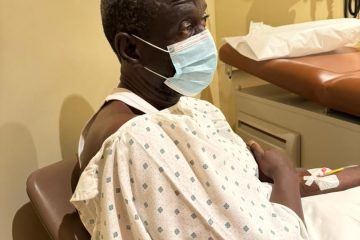
His hunger strike was not merely a protest; it was a declaration of war against injustice waged with his own body as the weapon. Day by day, as his health deteriorated and international pressure mounted, Besigye’s weakening frame became the most powerful indictment of Museveni’s authoritarian drift. Every pound lost was a pound of moral weight gained.
The sight of this once-robust physician, now wheelchair-bound and requiring medical intervention, became a rallying cry for the opposition. His physical frailty paradoxically amplified his political strength, transforming him from a detained politician into a living symbol of resistance against tyranny.
The Nightmare Duo: Besigye and Bobi Wine
Together with Bobi Wine – the pop star turned politician who captured the imagination of Uganda’s youth – Besigye represents Museveni’s worst nightmare: a two-generational alliance that spans the political spectrum. While Wine energises the young with his music and charisma, Besigye commands respect through his medical background, political experience, and unwavering principles.
This alliance terrifies Museveni because it cannot be dismissed as the work of foreign agents or tribal politics. Besigye’s credentials as a bush war veteran and former insider give him unassailable nationalist credentials, while Wine’s grassroots appeal makes him impossible to ignore. Together, they represent both the old guard’s institutional knowledge and the new generation’s energy – a combination that could finally end Museveni’s nearly four-decade stranglehold on power.
The State Machinery Unleashed
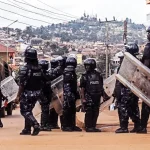
The response has been swift and brutal. Military courts – traditionally reserved for soldiers – suddenly found themselves trying civilians. Internet restrictions choked off digital dissent. Journalists faced arrest for “malicious information,” while social media critics disappeared into detention centres. The entire apparatus of the state, from intelligence services to the military, has been repurposed into Museveni’s personal protection force.
Uganda’s Supreme Court ruling that civilians cannot be tried by military courts should have been a victory for the rule of law. Instead, it merely forced the regime to find new ways to persecute its opponents. Besigye’s case was transferred to civilian courts, but he remains imprisoned without bail, his detention extending indefinitely under the pretence of “security concerns.”
The Unbreakable Man
What makes Besigye’s story extraordinary is not just his suffering, but his refusal to break. At 68, wheelchair-bound and facing charges that could cost him his life, he remains unbowed. His hunger strike may have ended, but his resistance has not. Every court appearance becomes a platform for exposing the regime’s illegitimacy. Every health crisis becomes a moment that rallies the opposition and embarrasses the government internationally.
Besigye understands what authoritarian leaders fear most: the power of moral authority. His willingness to sacrifice his health, his freedom, and potentially his life for democratic principles transforms him from a political opponent into something far more dangerous—a martyr in the making whose influence grows with every injustice inflicted upon him.
The Succession Question
Behind Museveni’s increasingly desperate crackdown lies a darker truth: this is not just about the 2026 elections. At 80, Museveni faces his own mortality, and with it, the question of succession. Reports suggest he may be grooming his son, Muhoozi Kainerugaba, to inherit power – a dynastic succession that would complete Uganda’s transformation from democracy to autocracy.
Besigye and Wine represent the greatest threat to this plan. Their very existence proves that Ugandans yearn for genuine choice, not inherited rule. Their continued resistance demonstrates that democratic aspirations cannot be imprisoned, no matter how many opposition leaders disappear into military detention.
The cost of standing against Museveni has been enormous. Besigye has spent years in prison, faced countless charges, and watched his health deteriorate under the weight of state persecution. His family has endured harassment, his supporters have faced intimidation, and his political movements have been systematically undermined.
Yet every sacrifice has only strengthened his moral position. In a political landscape where many have been co-opted or silenced, Besigye’s consistency stands as a rebuke to those who chose personal comfort over principle. His former friend may control the army, the courts, and the media, but Besigye controls something more powerful: the narrative of resistance.
The International Dimension
Besigye’s persecution has transcended Uganda’s borders, drawing condemnation from human rights organisations, regional bodies, and international watchdogs. His forced rendition from Kenya violated not just Ugandan law but international norms, making his case a symbol of authoritarian overreach across Africa.
This international attention serves a dual purpose: it protects Besigye from the worst excesses of state power while exposing Museveni’s regime to global scrutiny. Every international statement, every diplomatic protest, every human rights report erodes the legitimacy Museveni desperately needs to maintain power.
The Living Symbol
Perhaps Besigye’s greatest victory lies in his transformation from politician to symbol. His physical frailty has become a metaphor for Uganda’s battered democracy, while his mental resilience represents the indomitable spirit of those who refuse to surrender their rights. He has become larger than any political party or electoral campaign – he is the embodiment of the democratic dream that refuses to die.
In choosing to remain in Uganda despite knowing the risks, in accepting imprisonment rather than exile, in maintaining his hunger strike despite his deteriorating health, Besigye has written himself into the pantheon of freedom fighters who chose principle over comfort, moral victory over physical safety.
The Enduring Nightmare
For Museveni, approaching his 80th birthday with his grip on power increasingly precarious, Besigye represents his greatest failure: the inability to destroy the democratic spirit he once claimed to champion. The former personal physician who once healed the president’s body now exposes the cancer eating away at Uganda’s political soul.
As 2026 approaches, Besigye may be behind bars, but his influence permeates every aspect of Uganda’s political discourse. He has proven that authoritarian power, no matter how complete it appears, cannot ultimately defeat the human spirit’s yearning for freedom. In trying to destroy Besigye, Museveni has only made him more powerful – transforming a political opponent into a living testament to the proposition that some principles are worth any sacrifice.
The man who once saved Museveni’s life may yet prove to be the one who ends his political career. In the contest between power and principle, between the machinery of the state and the strength of the human spirit, Kizza Besigye stands as proof that sometimes, the most powerful weapon against tyranny is simply the refusal to surrender.