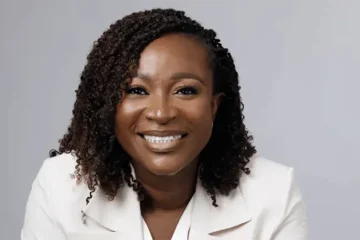
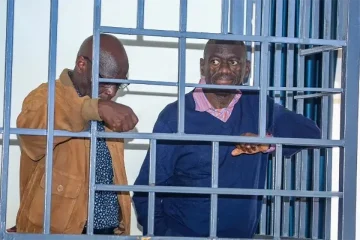
WHEN Winnie Byanyima rushed to a medical clinic in the early hours of January 20th to find her husband shaking with fever and guarded by six prison officers and a concealed military intelligence agent, the scene crystallised what human rights observers have long documented: Uganda’s treatment of political opposition has crossed from suppression into life-threatening territory.
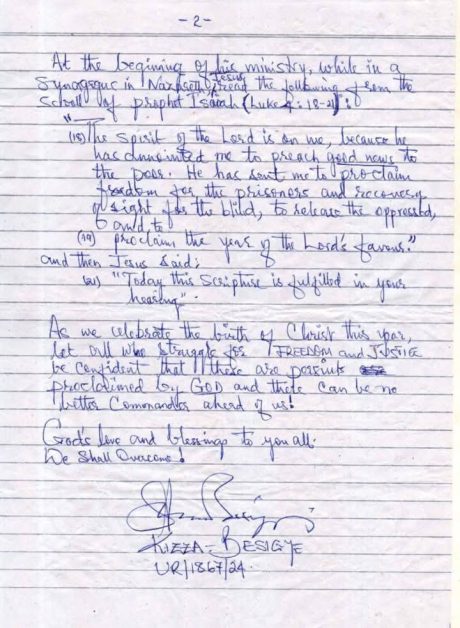
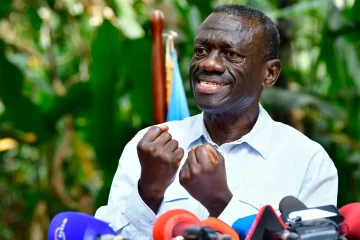
Dr. Kizza Besigye, the country’s most prominent opposition figure, has now spent over a year in detention following his November 2024 abduction from neighboring Kenya, a cross-border seizure that violated international law and set the stage for what his wife describes as “choreographed cruelty” designed to break political dissent.
The immediate crisis centers on Besigye’s deteriorating health and what appears to be a coordinated effort to control both his treatment and the narrative surrounding his condition.
On January 20th, prison spokesperson Frank Baine publicly stated that Besigye “was not ill” and had merely attended a “routine medical check-up.” Twenty-four hours later, the same Prison Service informed the court that Besigye could not appear because he was too sick to attend, forcing a postponement until February 24th.
This contradiction, documented in real-time through official statements, reveals either catastrophic incompetence or deliberate deception. Neither option inspires confidence in the state’s custodial care.
When Byanyima finally gained access to her husband on January 21st after “more than two hours of haggling” with prison authorities, she found him “extremely weak,” unable to walk without significant leg pain, and subsisting on soup, an egg, and bread over an eight-hour period. His personal doctor reported that test results showed the infection was worsening, not improving.
Prison authorities have refused to transfer Besigye to a fully equipped private hospital, instead proposing Murchison Bay Prison Hospital – a facility Byanyima describes as “notorious for neglect and preventable deaths.” Besigye has refused this option, unwilling to place his medical care under military control.
The standoff raises a critical question: Why would prison authorities deny a high-profile detainee access to proper medical care when his deteriorating condition is documented by medical professionals?
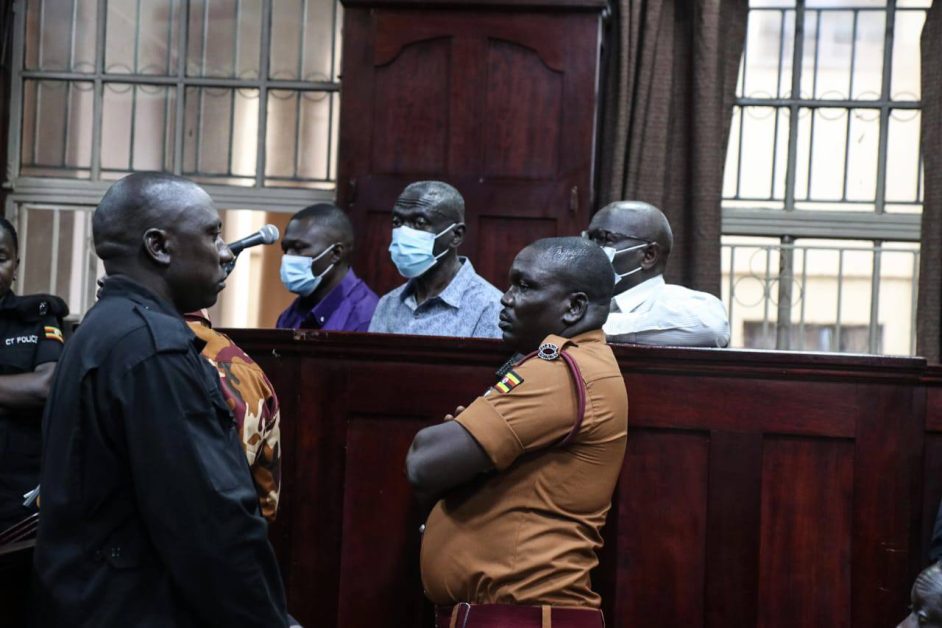
A Pattern of Systemic Abuse
Besigye’s detention conditions extend beyond the current medical crisis. According to Byanyima’s detailed account, her husband has endured:
- Solitary confinement with prohibitions on speaking to other prisoners
- Denial of Sunday worship services available to other inmates
- Confinement to a small, poorly ventilated cell in extreme heat
- A bedbug-infested mattress
- Prohibition from basic physical exercise, including sports
- Minimal sunlight exposure
Bail has been denied four times over the course of a year while prosecutors have struggled to produce evidence supporting treason charges, charges filed after Besigye was illegally abducted from Kenyan territory.
Human rights law is clear: pre-trial detention should be exceptional, time-limited, and conducted in conditions that respect human dignity. Besigye’s year-long remand in degrading conditions while the state “fumbles to fabricate evidence”, as Byanyima puts it, violates multiple international conventions to which Uganda is a signatory.
Besigye’s case cannot be understood in isolation. It represents the apex of a pyramid of repression affecting ordinary Ugandans whose only offense is political opposition to President Yoweri Museveni’s 40-year rule.
Uganda’s 2021 elections saw widespread violence against opposition supporters, internet shutdowns, and what international observers described as a climate of intimidation. The pattern has continued: journalists beaten for unfavorable coverage, students disappeared after online criticism, vendors arrested for wearing opposition colors, and farmers whose land is seized for supporting wrong candidates.
Besigye has become the symbol of this broader persecution precisely because of his prominence. As a four-time presidential challenger who has consistently rejected both violence and capitulation, his treatment sends a clear message about the costs of sustained political opposition.
That he was abducted from a neighboring country demonstrates the lengths to which authorities will go to silence dissent. That he has been held for over a year without trial demonstrates the hollowing out of judicial independence. That he is now being denied adequate medical care demonstrates that opposition leaders exist outside the protection of law entirely.
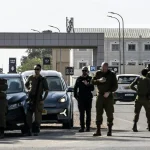
Particularly troubling is the military’s apparent control over Besigye’s detention. Byanyima describes a military intelligence officer, identity concealed, present during her husband’s medical treatment. When confronted, the officer fled rather than identify herself.
This militarization of what should be civilian prison authority raises serious concerns. Uganda’s military has a documented history of extrajudicial detention, torture, and disappearances. Safe houses run by military intelligence have been sites of abuse that rarely face accountability.
The insistence that Besigye receive treatment only at Murchison Bay Prison Hospital, where the military would maintain control, rather than at a private facility under prison guard suggests authorities prioritize control over care.
Uganda’s treatment of Besigye has drawn international condemnation, but criticism has yielded little change. Western donors continue providing aid despite systematic rights violations. Regional bodies like the East African Community condemned the cross-border abduction but took no concrete action.
This impunity has consequences. If a prominent opposition leader with international connections and a spouse who heads UNAIDS can be abducted, detained indefinitely, and denied medical care without meaningful consequences, what protection exists for ordinary citizens?
The Question of Legacy
President Museveni came to power in 1986 as a liberation fighter promising democracy and term limits. He has now ruled longer than most Ugandans have been alive, having removed constitutional term limits and overseen increasingly militarized, non-competitive elections.
Byanyima’s appeal challenges Museveni to consider his historical legacy: “What will history remember? The torture chambers? The stolen elections? The bodies in the Nile? The wife begging for her husband’s life?”
These are not rhetorical questions. Leaders from Mobutu to Mugabe have learned that monuments and propaganda fade, but the documented abuses endure in historical memory.

The Immediate Crisis
Beyond the political analysis lies an immediate humanitarian crisis: a sick man denied adequate medical care while his condition worsens. Prison authorities confirmed to the court that Besigye is too ill to appear, yet they refuse to transfer him to a facility equipped to treat him properly.
International law is unambiguous: states have a duty of care toward detainees. Deliberate denial of medical care to a prisoner can constitute torture under the UN Convention Against Torture. When that denial appears politically motivated—designed to pressure or punish a detainee—it becomes an egregious human rights violation.
What Happens Next
Three scenarios appear possible:
First, authorities could release Besigye for medical treatment, either dropping charges or granting bail pending trial. This would demonstrate that some limits on political persecution still exist.
Second, they could transfer him to adequate medical care under prison guard, allowing proper treatment while maintaining detention. This would show that even political opponents retain basic human rights.
Third, they could maintain current conditions, gambling that Besigye will accept Murchison Bay treatment or that his illness will resolve without intervention. This risks his death in custody—an outcome that would cement Uganda’s international pariah status and potentially trigger domestic upheaval.
The choice reveals whether Uganda retains any pretense of being a state governed by law, or has fully transitioned to a system where political opponents exist outside legal protection entirely.
Byanyima’s appeal to President Museveni represents more than a wife’s desperate plea for her husband’s life. It is a test of whether four decades of centralized power have extinguished every check on executive abuse, every institutional protection for human rights, every vestige of accountability.
Her statement that “his life is in danger, and the responsibility will lie squarely with those who continue to deny him care” is both warning and prophecy. If Besigye dies in custody, it will not be an unfortunate accident but the foreseeable consequence of deliberate policy choices.
The world is watching. More importantly, ordinary Ugandans are watching—and taking note of what happens to those who dare challenge power. The lesson being taught will shape Uganda’s political future long after the current crisis resolves.
For now, a sick man sits in a hot cell, denied adequate care, while his wife begs for mercy and his country holds its breath. What happens next will define not just Besigye’s fate, but Uganda’s trajectory as a nation.