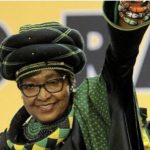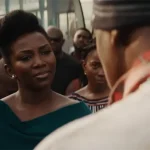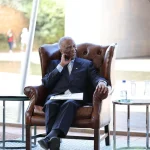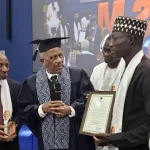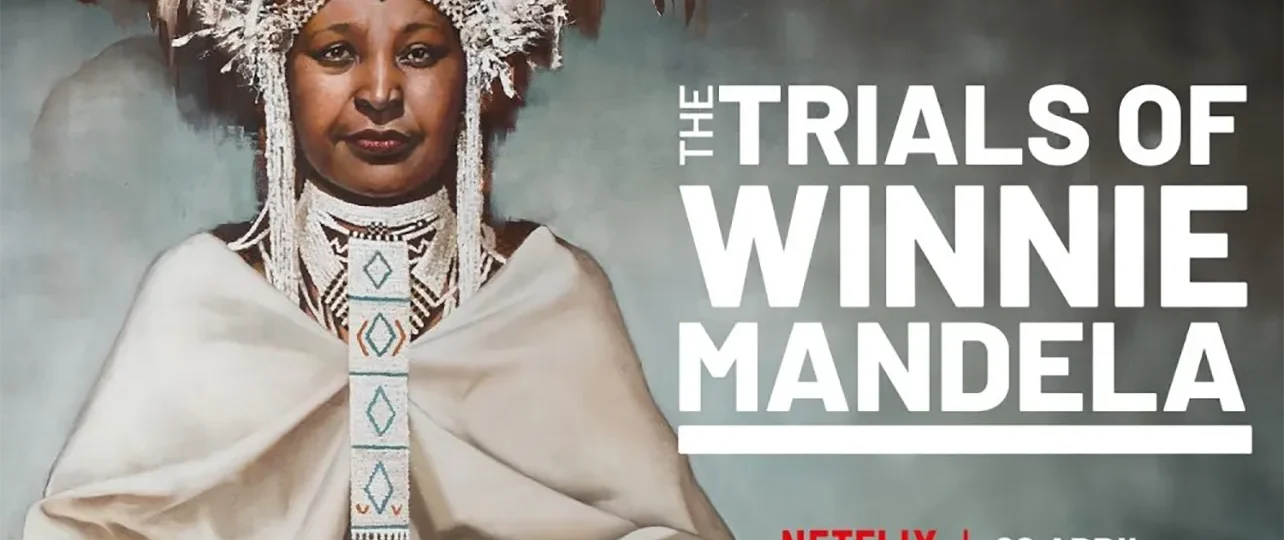

THERE is a principle that should govern every society that has lived through fire: a nation that does not record its own history is condemned to forget it — or worse, to have it written for them by those with an interest in distortion. The Netflix documentary on Winnie Madikizela-Mandela – The Trials of Winnie Mandela – does not merely record history. It insists upon it. It demands that we sit with it, wrestle with it, and emerge from it changed.
Let this reviewer state plainly, from the outset: this is one of the most important pieces of documentary filmmaking to emerge from the African continent in years. Not because it flatters its subject. Not because it resolves the contradictions that made Winnie so incendiary in life and in death. But precisely because it does neither of those things.
“I am surprised that people are surprised at what the system made me to be…”
In that single sentence, delivered in her characteristic cadence — part defiance, part exhaustion, part irony — Winnie Madikizela-Mandela captures the entirety of her story. She is not asking for pity. She is issuing a challenge: if you are shocked at what I became, then you were not paying attention to what was done to me.
ONE WOMAN AGAINST A STATE
The apartheid state did not merely imprison Nelson Mandela. It set out, with calculated and well-funded precision, to destroy his wife — the woman who refused to let the world forget him, who kept the flame of the struggle burning in the streets of Soweto when every other light had been extinguished by decree, by detention, by terror.
What the directors and writers of this documentary have achieved, with great skill and moral seriousness, is the restoration of the full picture. The apartheid government deployed guns, bombs, banning orders, forced removals, solitary confinement, and an effectively unlimited security budget against one woman. They disrupted her sleep. They arrested her daughters. They banished her to a barren small town far from everything and everyone she loved. They tapped her phones, turned her neighbours into informants, and — in one of the documentary’s most chilling revelations — a security police officer left a case of beer on the doorstep of a woman the state had made completely and deliberately lonely.
The system did not leave Winnie to alcohol by accident. It was policy. And in this, as in so much else, the system succeeded.
That Winnie Madikizela-Mandela, subjected to this monumental and unrelenting barrage, still walked out of prison in 1990 alongside Nelson Mandela — still upright, still fighting, still herself — speaks to a quality of character that goes beyond courage. It is something for which the English language barely has a word.
TOLD THROUGH THE EYES OF HER BLOOD
The documentary’s greatest formal achievement is its decision to tell this story through the eyes of Winnie’s granddaughters. It is a choice of profound and poignant wisdom. In this framing, the film does not merely recount events — it traces inheritance. It follows the way that memory, trauma, strength, and love travel down through generations, mother to daughter to granddaughter, altered but unbroken.
Winnie herself speaks in the documentary of the lessons she received from her own mother and grandmother — the roots from which she drew her extraordinary reserves of endurance. She passed those lessons on to daughters who were raised in the most impossible of circumstances: police raids at dawn, a mother constantly under arrest or under banning orders, a father imprisoned for twenty-seven years on Robben Island. And now those daughters, and their daughters, are the ones bearing witness.
The effect is to humanise not only Winnie, but the struggle itself. This is not history as abstraction. This is history as inheritance. These women are not looking at old footage. They are looking at themselves.
THE COURAGE NOT TO SANITISE
What elevates this documentary above hagiography — and what will inevitably attract its harshest critics — is that the granddaughters do not flinch. They confront, with remarkable candour, the harder chapters of Winnie’s life: her relationship with a younger man while Nelson was imprisoned; her increasingly complicated relationship with alcohol; the controversies that shadowed her later years.
This is not betrayal. This is love of a more serious and honest kind. The documentary understands that to sanitise Winnie would be to diminish her — to reduce a full, complex, wounded, magnificent human being to a commemorative stamp. The granddaughters refuse that reduction. They claim her whole.
And in doing so, they do something quietly radical: they connect the personal damage to its political source. The alcoholism was not a character flaw that existed in a vacuum. It was, in significant part, the product of a deliberate programme of social and psychological destruction. The apartheid state made loneliness into a weapon and delivered it to Winnie’s doorstep in a bottle. One cannot judge the consequences of that cruelty without accounting for the cruelty itself.
“IF THIS IS HOW MUCH THEY FEAR YOU…”
“You learn to accept that way of life in the belief that if this is how much they worry about you, then you must be some kind of force they must be afraid of.”
There are many remarkable moments in this documentary, many instances of Winnie’s singular gift for language — a language forged in fire and tempered in prison. But this observation is among the most luminous. It is a philosophy of survival. It is how one person, stripped of almost everything, reconstructs dignity from the very evidence of her own persecution.
And the apartheid state was afraid of her — viscerally, operationally afraid. They did not devote the resources and the cruelty they deployed against Winnie Madikizela-Mandela because she was a nuisance. They did it because she was, in the words of one of the documentary’s contributors, a force — not merely political, but existential. She was proof that the system could not win completely. She was the living refutation of apartheid’s claim to total control.
Azhar Cachalia, in perhaps the documentary’s most analytically precise contribution, offers what may be the most succinct description of Winnie’s paradox: that she was simultaneously the toughest person in the room and among the most profoundly vulnerable. Both things were true. Both things were real. The apartheid system exploited the second relentlessly, and was still unable to extinguish the first.
THE GRACE OF FORGIVENESS
One of the documentary’s most unexpected and deeply moving threads concerns Paul Erasmus — a former security policeman who had been part of the apparatus that tormented Winnie for years. By the end of his service to apartheid, Erasmus had been cast aside by his former masters, discarded as that regime always discarded those who did its dirtiest work.
Winnie took him in. She welcomed him into her home, with his children.
It is difficult to think of a more powerful real-world demonstration of the meaning of reconciliation — not the reconciliation of press conferences and handshakes, but the reconciliation that happens when a person who has suffered genuine and deliberate harm chooses, nonetheless, to see the humanity in the one who inflicted it. Winnie, of all people, had every reason not to. She chose otherwise. The documentary holds this moment with the gravity it deserves.
ON THE MIXED REVIEWS: THE SYSTEM’S ENDURING DIVIDEND
This documentary, like Winnie herself, has attracted fierce and divided opinion. Some of that division is honest: reasonable people can disagree about aspects of her legacy. But some of it is something else — and the documentary, by laying out so carefully the systematic, funded, deliberate effort to destroy Winnie’s reputation alongside her spirit, makes this visible.
The apartheid state did not only try to break Winnie. It tried to define her — to fix in the public mind an image of her that would endure beyond the struggle, beyond the elections, beyond her death. They invested millions in what activists called “Project Winnie.” Every South African who today reflexively reaches for the most negative possible description of her is, in a very real sense, still spending that investment. The dividends continue to pay out.
This is not to argue that Winnie was without fault — the documentary itself does not argue this. It is to argue that the lens through which we view her was, in part, crafted by those who wished her gone, and that we owe it to ourselves and to her to be aware of that.
Even in death, Winnie Madikizela-Mandela continues to provoke, continues to divide, continues to force questions that too many would prefer to leave unasked. This is not a failure of her legacy. It is the proof of it.
VERDICT
This documentary does something that very few biographical films achieve: it gives its subject back to herself. It restores Winnie Madikizela-Mandela’s identity as a liberation hero in her own right — not an appendage to the man she married, not a cautionary tale, not a cause for embarrassment — but a full, fierce, complicated, foundational figure of the South African freedom struggle.
She was the face of the suffering of millions of women, daughters, and granddaughters across South Africa — those who never made headlines, whose names we will never know, who endured precisely what Winnie endured without the visibility that made her a global figure. In this sense, Winnie was never only herself. She was them.
Watch this documentary. Watch it with your daughters. Watch it with your grandchildren. Tell them who this woman was, and what was done to her, and what she refused to let be done to her spirit. Tell them what she said: I am only human. Like all of you.
And remember: a nation that does not record its own history will eventually find that someone else has recorded it for them. This film refuses that fate for Winnie. It insists she will be remembered as she was — not as her enemies wished her to be.
She was not a saint. She was a soldier. And the war is not yet over.