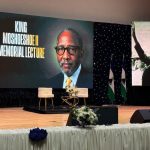
IT is both a privilege and a profound honour to stand before you in Dakar – a city whose name occupies a distinguished place in the history of South Africa’s struggle for democracy, and in Africa’s enduring quest for peace, dialogue and reconciliation.
Today, on Nelson Mandela Day, we celebrate the birth of Nelson Rolihlahla Mandela, one of Africa’s greatest sons.
This day is far more than a commemoration of his birth. It is a call to service. It reminds us that leadership is measured not by the power we hold, but by the lives we change; not by the offices we occupy, but by the difference we make.
There is no more fitting place to reflect on Mandela’s legacy than here in Senegal, the homeland of Léopold Sédar Senghor – statesman, scholar, poet and one of the great architects of modern African thought.
Mandela and Senghor belonged to different generations, yet they shared a common belief: that leadership must be rooted in humanity, dignity and service. Both understood that political power is never an end in itself. It is a sacred trust, exercised on behalf of the people.
South Africa and Senegal share more than diplomatic ties. We share history. Nearly forty years ago, this city became the setting for one of the most important conversations in South Africa’s journey to democracy.
The Dakar Conference of 1987 was much more than a meeting between South Africans. It was an act of political courage. It demonstrated that dialogue is stronger than division, that listening is more powerful than shouting, and that even the deepest conflicts can begin to be resolved when people have the courage to engage one another.
Long before South Africans stood together at the ballot box in 1994, bridges were already being built here in Dakar. History reminds us that lasting change seldom begins with dramatic events. It begins with courageous conversations.
The South African miracle of 1994 did not happen by chance. It was the result of extraordinary leadership, immense sacrifice and the willingness of people with profoundly different views to imagine a future greater than their differences.
When millions of South Africans cast their votes in our first democratic election, the world witnessed something extraordinary. A nation that many believed would descend into civil war chose peace instead. A prisoner became President. The oppressed chose reconciliation over revenge. The victors chose inclusion over exclusion. The world rightly called it a miracle.
Yet miracles do not sustain themselves. They require constant renewal through principled leadership, strong institutions and an unwavering commitment to the people.
Nelson Mandela understood this better than anyone. After twenty-seven years in prison, he emerged without bitterness. He did not seek revenge against those who had imprisoned him. Instead, he invited them to become partners in building a democratic South Africa.
He understood that reconciliation is not an act of weakness. It is an act of extraordinary courage. In doing so, Mandela liberated not only those who had suffered under apartheid, but also those imprisoned by fear, prejudice and hatred. He reminded us that a nation cannot build its future while remaining captive to its past.
After serving only one term as President, Mandela voluntarily stepped down from office. Years before him, President Senghor had done the same. Both men understood a lesson that remains as relevant today as it was then. Leadership is not measured by how long we remain in power, but by what we leave behind.
The true legacy of leadership is not monuments, titles or personal wealth. It is stronger institutions. It is a greater opportunity. It is hope.
Following our democratic transition, South Africa adopted one of the world’s most admired constitutions—a Constitution built on human dignity, equality, freedom and the rule of law. It sought not merely to replace one government with another, but to create a society founded on justice, accountability and constitutional democracy. It remains one of our nation’s greatest achievements.
Our democratic journey also brought significant progress. Millions of South Africans gained access to housing, healthcare, education, electricity, clean water and social protection. A generation that had been denied opportunity began to experience the promise of freedom. These achievements deserve recognition.
But the values of Mandela also demand honesty. Democracy is not judged only by the ideals we proclaim. It is judged by the lives we improve. The greatest test of leadership is not the quality of our policies. It is our ability to implement them effectively. That is where South Africa, like many nations, has faced challenges.
Experienced administrators who possessed valuable institutional knowledge were too often lost from public service. Professional competence was sometimes weakened by political considerations. Institutions came under pressure. Service delivery suffered. Public confidence declined.
Then corruption entered our national life. It did not arrive suddenly. It grew gradually, weakening institutions, diverting public resources and damaging the trust between government and citizens.
The cost of corruption is not measured only in money lost. It is measured in opportunities denied. It is measured in unemployed young people. It is measured in schools not built. Hospitals not equipped. Communities left behind. Corruption is not merely a financial crime. It is a betrayal of the hopes of ordinary people.
Thirty years after our democratic breakthrough, South Africa continues to confront difficult challenges: slow economic growth, unemployment, inequality and public frustration. But our democracy has also demonstrated its resilience. The people have spoken. Political realities have changed. The emergence of a Government of National Unity reminds us that democracy is never static. It evolves according to the will of citizens.
There is an important lesson here—not only for South Africa, but for every nation represented in this room. No political movement, regardless of its history, receives a permanent mandate from its people. Trust must continually be earned through ethical leadership, competent government and visible delivery. History may inspire confidence. Performance sustains it.
The journey of democracy is never complete. It is renewed by every generation. And this is why gatherings such as this one matter. Because leadership is not only about reflecting on where we have come from. It is about asking where we must go next.
No nation succeeds in isolation. The lessons we have learned in South Africa are, in many respects, lessons for our continent. Africa has travelled a remarkable journey. For generations, our people endured colonialism, exploitation and foreign domination. Across the continent, brave men and women sacrificed everything so that future generations might live in freedom and dignity. We honour those sacrifices.
But history also teaches us that political liberation is only the beginning. Freedom must continue to expand. It must move from the ballot box into the daily lives of our people. True freedom is realised when our citizens live with dignity, find meaningful work, educate their children, enjoy good healthcare, feel safe in their communities and believe that tomorrow will be better than today. Freedom must therefore be measured not only by political rights, but by the opportunity to prosper.
Power must always be earned through service. Not sustained through slogans. Not protected through fear. Not justified by past achievements alone.
Our citizens are increasingly asking simple but important questions. Are our children receiving quality education? Are our economies creating jobs? Are our institutions honest and capable? Are public resources serving the people? These are the questions that define successful leadership.
Corruption remains one of Africa’s greatest enemies. It steals opportunity from the poor. It discourages investment. It weakens institutions. Above all, it destroys trust—the foundation upon which every successful society is built.
Likewise, populism may attract applause for a season, but it cannot build roads, educate children, generate employment or create sustainable prosperity. Hungry people cannot eat speeches. Young graduates cannot build their futures on promises. Businesses cannot invest where uncertainty replaces certainty.
Africa’s future will not be secured by louder rhetoric. It will be secured by stronger institutions, ethical leadership and the courage to act.
Yet despite our challenges, I remain profoundly optimistic. I have travelled across our continent. I have seen the creativity of our entrepreneurs. I have met young innovators whose ideas can compete with the very best in the world. I have witnessed the determination of African farmers, scientists, engineers, educators and business leaders.
Africa is not a continent defined by its problems. It is a continent defined by its possibilities. We possess the world’s youngest population. We possess extraordinary natural resources. We possess fertile land, expanding markets and a generation that is increasingly connected to the global economy. But our greatest resource has never been beneath our soil. It is our people.
The next chapter of Africa’s story must therefore be written not only around what we possess, but around what we create. Not around the extraction of raw materials, but around the development of human potential. Not around dependency, but around innovation. Not around fragmentation, but around integration.
The question before us is no longer whether Africa has potential. The question is whether we have the collective leadership, vision and determination to unlock it.
Ladies and gentlemen, the world is entering a period of extraordinary transformation. Artificial intelligence, biotechnology, advanced manufacturing, digital infrastructure and other frontier technologies are reshaping the way we live, work and solve problems.
These technologies offer immense possibilities. They can expand access to education. They can improve healthcare. They can strengthen scientific research. They can create new industries and new opportunities for millions of young people.
But every great technological transformation also presents profound questions. Who will shape these technologies? Whose values will guide them? And will the benefits of this new era be shared broadly, or will they deepen existing inequalities?
Africa must engage these questions with confidence and purpose. Our history teaches us an important lesson. Political liberation was never simply about removing one form of domination. It was about ensuring that Africans would have the power to determine their own destiny. That principle remains relevant today.
In the twenty-first century, sovereignty is not only about political independence. It is also about having a meaningful voice in the technologies that will shape our economies, our societies and our future.
The generation before us fought to ensure that Africans could govern themselves. Our generation must ensure that Africans also have a voice in shaping the technological systems that will influence the world.
This does not mean turning away from partnership. Africa has always been open to cooperation. But partnership must be built on mutual respect, shared benefit and recognition of our contribution.
Africa and the wider Global South possess assets that are central to the technological future. We have growing markets. We have a young and talented population. We have critical minerals. We have scientific potential. We have creativity, entrepreneurship and ideas. The world needs Africa. And Africa needs the world.
The future will not be shaped only by those who design algorithms or build computing infrastructure. It will also be shaped by those who provide the resources, talent, markets and human values that determine how these technologies are developed and used.
This is why Africa must recognise the strength that comes through unity. A fragmented Africa will always struggle to influence global decisions. A united Africa can engage the world with confidence. Together, our markets create influence. Together, our resources create strategic importance. Together, our shared values create a voice.
We should not see ourselves merely as consumers of technology. We should see ourselves as partners in defining its future. This is the power of the demand side.
Too often, developing nations compete against each other to attract investment on terms determined elsewhere. But Africa’s strength lies in recognising what we bring to the table. Our markets matter. Our resources matter. Our people matter. Our ideas matter.
When Africa works together, we can help shape fairer partnerships and ensure that technological progress creates opportunities for our people. This is why African integration is not simply an economic ambition. It is a strategic necessity.
Our six-pillar vision for Africa’s renewal begins with deeper cooperation. We must expand intra-African trade, investment and entrepreneurship so that African economies grow together rather than separately. A continent of more than a billion people represents not only a market opportunity but a source of collective strength.
The second pillar is cooperation in frontier technologies. Artificial intelligence, biotechnology, advanced manufacturing, digital infrastructure and space science will define the economies of the future. Africa cannot afford to stand outside these transformations. But our ambition is not merely to copy others. Our ambition is to contribute. We must develop African solutions to African challenges. We must encourage innovation from our universities, research institutions, entrepreneurs and young people. We must ensure that technology becomes a tool for empowerment rather than another source of exclusion.
The third pillar is innovation and industrial development. For too long, Africa has exported raw materials and imported finished products. That pattern cannot deliver the prosperity our people deserve. Our resources must create industries. Our industries must create jobs. Our jobs must restore dignity. Industrialisation is not only about economic growth. It is about giving our young people the opportunity to build their futures at home.
The fourth pillar is financial cooperation and capital mobilisation. Africa possesses significant financial resources, yet too much African capital finances development elsewhere. We must mobilise investment that builds African infrastructure, supports African businesses and creates African jobs.
The fifth pillar is strategic diplomacy. Africa’s voice is strongest when it speaks with confidence, clarity and unity. We must engage the world not as a continent seeking charity, but as a continent ready for partnership. We welcome investment. We welcome cooperation. But our partnerships must be based on mutual respect and shared prosperity. Africa is open for partnership. Africa is not for sale.
The sixth pillar is human capital development. The greatest investment any nation can make is in its people: Education. Skills. Research. Innovation. Health. Leadership. These are the foundations upon which prosperous societies are built.
These six pillars are interconnected. Technology without education deepens inequality. Investment without integrity benefits only a few. Industrialisation without integration limits opportunity. Diplomacy without unity weakens influence. Leadership without accountability eventually loses public trust.
If Africa is to realise its promise, we must strengthen the institutions that transform vision into reality. Good governance is not an abstract ideal. It is the bridge between aspiration and achievement. It is the difference between hope and progress. It is the foundation upon which prosperous societies are built.
As we embrace the opportunities of new technology, we must also accept the responsibility that comes with it. Artificial intelligence has the potential to improve human life on a scale we have never experienced. But technology must always remain guided by humanity.
The question before us is not whether we should embrace innovation. We must. The question is whether innovation will be guided by values that protect dignity, peace and human security. This is where Africa has a unique contribution to make. Our contribution is not only our resources. It is our philosophy.
Ubuntu. “I am because we are.” Ubuntu reminds us that no individual, no nation and no technology exists in isolation. Our destinies are connected. In the age of artificial intelligence, this wisdom has profound relevance.
If technology advances but leaves millions behind, humanity is diminished. If technology threatens peace and security, all nations are affected. If the future is to belong to everyone, responsibility for that future must also belong to everyone.
Ubuntu offers a powerful alternative to a world where technology is driven only by competition and control. It reminds us that the purpose of progress is not simply greater power. It is greater humanity.
Africa’s voice in the global technology conversation must therefore not only be a demand for access. It must be a contribution of values. We must advocate for innovation that is ethical. For progress that is inclusive. For technology that strengthens peace. For systems that place human dignity at their centre.
This is the spirit in which Africa must enter the technological age. Not as a continent waiting to be shaped by others. But as a continent ready to help shape the future.
South Africa comes to this moment with a particular responsibility. Not because we have all the answers. Not because our own journey is complete. But because our history has taught us lessons that the world continues to need.
We know what happens when human dignity is denied. We know the consequences of allowing prejudice and exclusion to become the foundation of a society. We know the courage required to rebuild trust after decades of division. And we know that reconciliation, justice and inclusion are not signs of weakness. They are the foundations of lasting peace.
South Africa’s greatest contribution to the world has never been only our political transition. It has been the values that guided that transition. The belief that even the deepest conflicts can be overcome. The belief that former enemies can become partners. The belief that the future can be greater than the pain of the past.
These values remain relevant as humanity confronts the challenges of our time. The same spirit that guided our journey from apartheid to democracy must now guide our response to the technological revolution. Artificial intelligence must not become another source of exclusion. It must become a tool for expanding human possibility.
South Africa has a responsibility to contribute to building a global technology order that reflects human dignity, fairness and responsibility. We must work with nations across Africa and the Global South to ensure that the future is shaped through cooperation rather than division.
We must ensure that the resources, markets and talents of our continent become foundations for development, innovation and opportunity. We must ensure that our young people are not simply preparing to use the technologies of tomorrow. They must be empowered to create them.
This is the true meaning of technological sovereignty. It is not isolation. It is not a rejection of global partnership. It is the ability to participate meaningfully in shaping the systems that affect our lives. It is the confidence to engage the world as an equal partner. It is the belief that Africa’s ideas, values and contributions matter.
Ladies and gentlemen, the vision of a united, prosperous and confident Africa is not new. Kwame Nkrumah reminded us that Africa’s destiny would ultimately be secured through unity. Léopold Sédar Senghor taught us that Africa’s contribution to the world would be measured not only by its resources, but also by its ideas, its culture and its humanity. Nelson Mandela showed us that reconciliation, constitutional democracy and ethical leadership are not signs of weakness. They are the foundations of lasting peace and progress.
Their dreams remain unfinished. The responsibility for completing them now belongs to our generation.
Forty years ago, Dakar became a place where difficult conversations helped shape a democratic future for South Africa. Perhaps history is calling Dakar to play that role once again.
I therefore call for a new Dakar Conference – not simply to remember history, but to help shape Africa’s future. Let it bring together political leaders, business leaders, academics, scientists, innovators, young Africans and civil society. Let it be a gathering not only of governments, but of ideas. Not only of institutions, but of imagination. Not only of those who hold power today, but of those who will inherit responsibility tomorrow.
Let it ask the difficult questions. How do we deepen African integration? How do we strengthen democratic institutions? How do we create jobs for a growing young population? How do we ensure that Africa’s natural resources become the foundation of industrialisation and prosperity? How do we harness technology while protecting human dignity? How do we ensure that artificial intelligence serves humanity rather than threatens it? And above all: How do we build a generation of leaders who place service before self?
This must not become another gathering remembered only for fine speeches and forgotten resolutions. It must become a platform for practical commitments, measurable progress and enduring partnerships.
The challenges before us are immense. But Africa has faced greater challenges before. Our ancestors confronted colonialism. Our liberation movements confronted injustice. Our leaders confronted division. And our people chose hope.
Today, we face a new generation of challenges: Climate change. Economic inequality. Technological disruption. Threats to peace and security. But we also possess new opportunities. A young population full of energy. Entrepreneurs full of ideas. Scientists capable of innovation. Communities full of resilience. A continent rich in resources and possibility.
The choice before us is clear. We can remain spectators in the making of history. Or we can become authors of the future. We can allow others to define Africa’s place in the world. Or we can confidently define it ourselves. We can accept dependency. Or we can build partnerships based on mutual respect. We can allow technology to divide humanity. Or we can ensure that technology strengthens our shared humanity.
On this Nelson Mandela Day, we do more than celebrate the birth of an extraordinary man. We recommit ourselves to the values by which he lived: Service before self. Justice before expediency. Unity before division. Hope before despair.
Mandela often reminded us that what counts in life is not simply that we have lived, but the difference we have made to the lives of others. That is the true meaning of Nelson Mandela Day. It is a call to each of us to serve. To lead with integrity. To build with courage. To leave Africa stronger than we found it.
Ladies and gentlemen, Africa does not need another century of lamentation. Africa needs another generation of builders: Builders of institutions. Builders of trust. Builders of economies. Builders of peace. Builders of opportunity. Builders of a future where every African child can believe that their dreams are possible.
Let future generations say that when Africa stood at another crossroads, her leaders gathered here in Dakar – not merely to honour the past, but to shape the future. Let them say that we chose: Cooperation over division. Integrity over corruption. Innovation over dependency. Human dignity over indifference. Hope over despair. Action over complacency.
As we celebrate the life and legacy of Nelson Mandela today, let us resolve to build an Africa worthy of his sacrifice and worthy of the generations yet to come. An Africa united in purpose. Confident in its own destiny. Prosperous through honest leadership. Innovative through the genius of its people. Guided by the wisdom of Ubuntu. And at peace with itself.
Thirty years ago, South Africa gave the world a miracle. Today, let Africa give the world its next miracle.
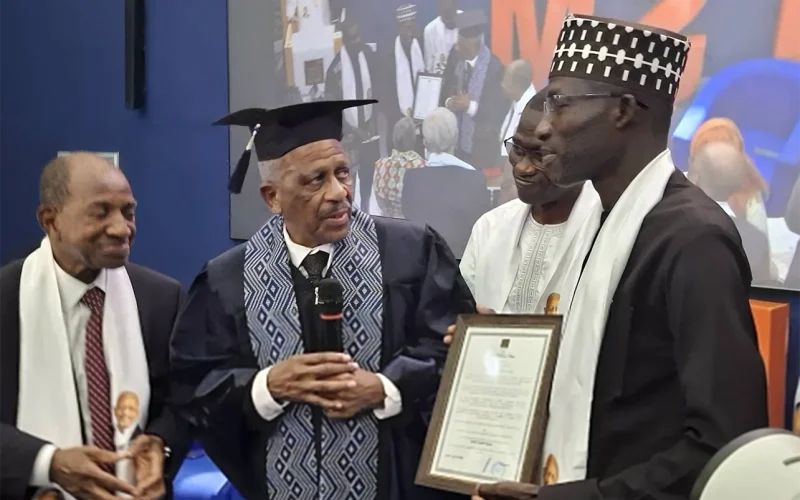
- Dr Mathews Phosa is a struggle veteran, former Premier of Mpumalanga, and businessman. He delivered this address, “Nelson Mandela Day: Renewing Africa’s Promise,” on 18 July 2026 at the Institut Supérieur de Management (ISM) in Dakar, Senegal, on the occasion of being awarded an honorary doctorate.