ACCRA, Ghana’s capital, is a noisy cosmopolitan city of almost three million people. Its active nightlife, commercial markets and factories create a deafening mix of sound trails day and night. These synthetic sounds have practically drowned out the natural everyday sounds of Accra. And the most important of these is the steady drone sound of the sea, now usually subdued to a mere background hush.
As the local Ga people say, Ga efee hoo (“Accra has become noisy”). The Ga, who are made up of Ga Mashie, Osu, La, Teshie, Nungua, Tema, and Kpone people, belong to the Ga-Dangme group of people found in the Greater Accra region of Ghana.
Once every year, between May and September, the Ga impose a ritual ban on noise-making and funeral rites in Ga towns for a period of one month so as to commemorate their annual harvest festival known as Hↄmↄwↄ (pr. hor-mor-wor). By activating the ban, Ga towns enforce the suspension of mundane sound sources, particularly those blaring from radios, public address systems, automobiles, churches, mosques, megaphones and factories. All synthetic sounds at this time must stop and make room for the sounds of the sea during the one month of communal reflection and renewal. Even fishing in lagoons must stop during this period, to allow aquatic life to recuperate.
According to Ga oral tradition, the celebration of Hↄmↄwↄ dates back centuries. It is the best-known and celebrated Ga festival and a vital part of traditional Ga culture. The name Hↄmↄwↄ translates as “to hoot at hunger” (hↄmↄ means hunger and wↄ means hoot). The festival marks the shift from the lean season of scarcity to the season of bounty, a moment of introspection, and promotes sociality. Its aim is to revitalise the social, political, and religious lives of Ga towns in Accra.
Despite its ancient heritage, Hↄmↄwↄ’s tradition of a peaceful interlude in the city has become increasingly associated with clashes between the Ga Traditional Council and Christian churches that want to continue worshipping in their usual “noisy” way.
I am conducting research into some elements of the Hↄmↄwↄ festival as part of my doctoral studies. I have also previously published on the festival. My findings suggest that the Ga code is about more than provoking conflict or settling scores. I argue that the ritual code of silence presents Ga communities with the opportunity for introspection because it invites them to focus on their indigenous notions of sound, silence, noise, and even death.
It is, to borrow from anthropologist Victor Turner, a frame within which Ga society is able to inspect itself.
The Sea and Hↄmↄwↄ
“In Ga metaphor”, as the prominent sociolinguist Kropp Dakubu notes
the Ga people are frequently linked with the sea.
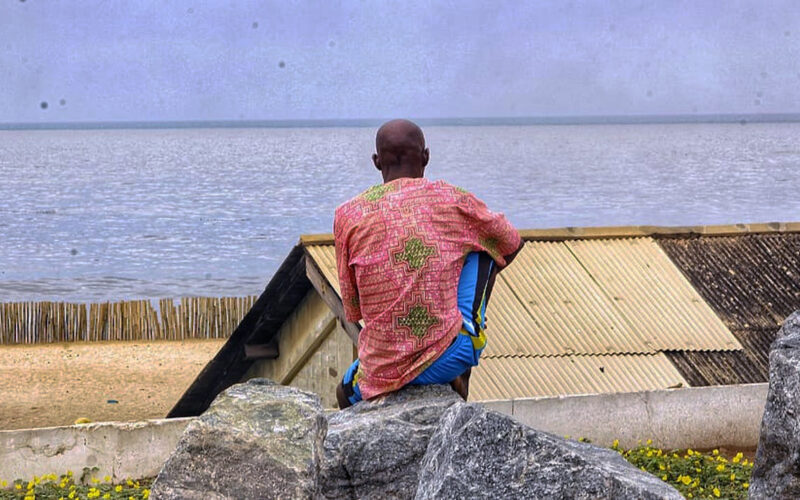
Indeed, as the background of Ga daily life and contemplation, the sea’s everyday drone sound serves as a psycho-social hedge against the socioeconomic and political pressures from uptown. Anybody who is familiar with life on the beachfront knows that one of the taken-for-granted everyday sonic experiences is the steady drone sound from the sea waves.
In present-day cosmopolitan Accra however, listening to the sea has assumed the status of a once-in-a-year sonic treat for the seven Ga residential areas on the city’s shoreline. Banning synthetic sounds and foregrounding the sea, therefore, paves the way for Ga towns to restore the prominence of the sounds of the sea. It also allows Ga towns such as La, Teshie, and Tema to expand their musical boundaries and invoke rarely heard Hↄmↄwↄ music genres such as kpa and/or kpashimↄ that elevate foot stomping and thumping over familiar musical instruments.
Kpashimↄ performances and songs for instance, are exclusively vocal, unaccompanied by any musical instrument, and in a call-and-response format. Textually and musically, the songs are made up of repeated phrases that have iconic relationships with current issues, making it easier for the listener to follow the story lines.
By invoking Kpashimↄ, Ga communities such as Teshie also transform their alleys and streets into performance grounds, and vehicles move with great difficulty because performers have taken over the space. In some cases, Ga towns block streets from vehicle use so that Hↄmↄwↄ music groups can perform their songs freely.
Hↄmↄwↄ helps Ga people to relive the sonic relationship that existed between them and the sea. Its celebrations serve as a metaphor to critique the cosmopolitan city’s emergent culture of noise-making, give attention to speech and songs produced for the festive season, and ultimately heal the community.
Indeed, Hↄmↄwↄ makes life in the city whole in that for eleven months of living in a jarring milieu of city sounds, there is suddenly a symbolic quiet – the kind that allows for ritually appropriate sounds to thrive. But a month later, Accra returns to its ordinary everyday life of unbridled noise-making, of individualism, anxiety, workaholism, and materialism.
By way of conclusion, I suggest that contrary to the general perception that the ban on noise-making is a bother to be endured rather than to be enjoyed, making way for the sea during the one-month Ga Hↄmↄwↄ festival in the cosmopolitan, national capital of Ghana, restores people to psycho-social sanity.