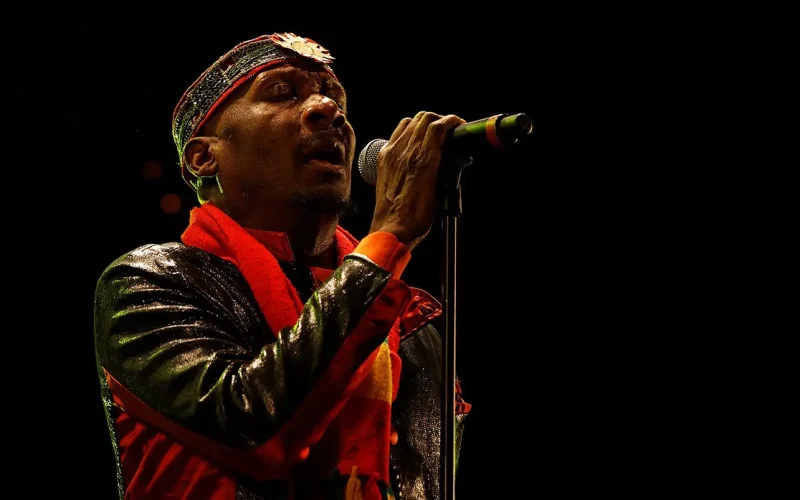
WHEN the news reached us that Jimmy Cliff had crossed his final river at age 81, something more than a musician departed – a bridge between Africa and her scattered children grew quieter. The man who sang “Many Rivers to Cross” with such aching beauty had finally reached the other shore, leaving behind a legacy that transformed not just music but consciousness itself across our vast continent.
From the shanties of Soweto to the bustling streets of Lagos, from the highlands of Addis Ababa to the coasts of Mombasa, Jimmy Cliff’s voice carried a message that Africans understood in their bones: resistance wrapped in rhythm, dignity dressed in defiance, hope delivered through harmony.
When reggae reached African shores in the late 1960s and early 1970s, it arrived not as foreign music but as homecoming. In Jimmy Cliff’s spirited tenor, in the militant poetry of his lyrics, Africans heard their own struggles reflected back – the fight against colonialism, the battle for economic justice, the quest for human dignity. The rhythms that pulsed from Jamaica were the same rhythms that had left Africa centuries before, transformed by suffering but unbroken, now returning with new lessons learned.
“It was a pure music born of the poorer class of people,” Cliff once said. “It came from the need for recognition, identity and respect.” These words could have described any liberation movement across Africa. They described all of them.
More Than Music: A Philosophy of Liberation
But Cliff offered Africa more than songs – he offered a way of being. The dreadlocks, the Rastafarian philosophy of African redemption, and the very posture of reggae became a form of resistance for African youth. From university campuses in Nairobi to townships in Cape Town, young people didn’t just listen to reggae; they lived it. They grew their hair in locks as a statement of Black pride. They rejected the materialism of the West for something more rooted, more authentic, more connected to an African identity that colonialism had tried to erase.
In countries still finding their feet after independence, still shaking off the psychological chains of colonial rule, Jimmy Cliff’s music became a soundtrack to African self-determination. His anthems weren’t imported – they were embraced as our own.
The Songs That Shaped a Continent
“Many Rivers to Cross” became Africa’s hymn of perseverance. Born from Cliff’s confrontation with racism in 1960s England, the song found new meaning in African contexts, in the refugee camps, in the struggles against apartheid, in the daily fight for survival that millions faced. When Cliff sang of wandering and loneliness, of being a lonely man trying to make it, Africans knew that feeling intimately. And when he declared that many rivers remained to cross, we understood it wasn’t despair speaking, but determination.
“You Can Get it If You Really Want” became an anthem across the continent, played at independence celebrations, at rallies, at weddings and funerals alike. Its simple message of persistence resonated in societies where obstacles seemed insurmountable, but hope refused to die. In Nigeria during the oil boom, in Zimbabwe after liberation, in South Africa during the long walk to freedom, this song reminded people that victory belonged to those who kept trying.
“The Harder They Come” spoke directly to the spirit of resistance. Its defiant promise – “the harder they come, the harder they fall” – was repeated in a thousand languages, in a thousand struggles. Dictators fell. Colonial systems crumbled. Apartheid ended. And always, somewhere in the background, Jimmy Cliff’s voice was singing that the oppressor’s power contained the seeds of their own destruction.
When “The Harder They Come” reached African cinemas in the mid-1970s, it wasn’t just a movie; it was a revelation. Here was a Black man, beautiful and uncompromising, telling his own story in his own way. The film’s hero, Ivan Martin, might have been Jamaican, but his struggle against a system rigged against him, his refusal to bow, his tragic defiance—these were African stories too.
In apartheid South Africa, the film was banned, which only made it more powerful. Bootleg copies circulated like samizdat, watched in secret, discussed in whispers. In newly independent African nations, the film played in packed cinemas, with audiences cheering Ivan’s rebellion even as they mourned his fate.
The soundtrack became one of the most cherished albums across Africa. In households from Cape to Cairo, “Sitting in Limbo” played during quiet evenings, “Many Rivers to Cross” accompanied moments of reflection, and the title track pumped through sound systems at parties where revolution and celebration became one.
The Lifestyle, The Movement
Reggae’s impact on Africa extended far beyond music. It sparked a cultural revolution. African reggae bands emerged – from Alpha Blondy in Côte d’Ivoire to Lucky Dube in South Africa, from Majek Fashek in Nigeria to Tiken Jah Fakoly across West Africa. But more than that, reggae consciousness seeped into African life.
The Rastafarian emphasis on natural living, on rejecting Babylon’s materialism, on reconnecting with African roots – these ideas found fertile ground. Young Africans didn’t need to adopt Jamaican culture; they recognised it as a reflection of their own suppressed traditions. The dreadlocks weren’t foreign- they echoed the locks worn by Maasai warriors, by Ethiopian monks, by spiritual leaders across the continent.
Jimmy Cliff, though not a Rastafarian himself, embodied this bridge. His music carried the message of Black consciousness, of Pan-African solidarity, of the fundamental connection between all African peoples, whether on the continent or in the diaspora.
Cliff lived to see his music become part of Africa’s fabric. His induction into the Rock and Roll Hall of Fame in 2010 was celebrated across Africa not as an American honour but as African validation. When he won Grammys for “Cliff Hanger” and “Rebirth,” African newspapers proclaimed the victories as our own.
He collaborated with African artists, performed at African festivals, and never forgot that his music’s power came from its connection to African suffering and African triumph. His 2022 album “Refugees” spoke directly to African realities, the displacement, the migration, the search for home that defines so much of contemporary African experience.
The Rivers Are Crossed
Now Jimmy Cliff has crossed his final river, leaving us on this shore with his songs still ringing in our ears. But what he gave Africa cannot die with him. The consciousness he helped awaken, the pride he helped restore, the resistance he helped articulate -0 these live on.
In Accra and Harare, in Dakar and Dar es Salaam, in Johannesburg and Juba, there are grandparents who can still sing every word of “You Can Get It If You Really Want.” There are parents who named their children after reggae’s revolutionary spirit. There are young people discovering “Many Rivers to Cross” for the first time and feeling the same shock of recognition their parents and grandparents felt decades ago.
Jimmy Cliff didn’t just make music for Africa – he made music that helped Africa remember itself. In a century scarred by colonialism and its aftermath, he was one of the voices that said: You are beautiful. You are strong. You will overcome.
The rivers he crossed brought him home at last. But his voice – spirited, defiant, hopeful, eternal – continues to cross every river, reaching every shore where African people struggle and dream and dance and resist.
Rest in power, Brother Jimmy. The harder they came. The harder they fell. One and all.
Jimmy Cliff is survived by his family and by millions across Africa and the diaspora who found in his music a mirror, a manifesto, and a map toward liberation. His transition was announced on Monday following complications from pneumonia. He was 81 years old and eternal.