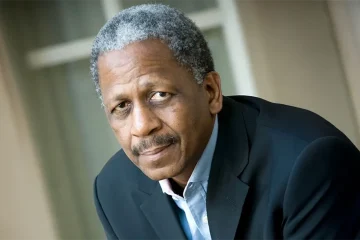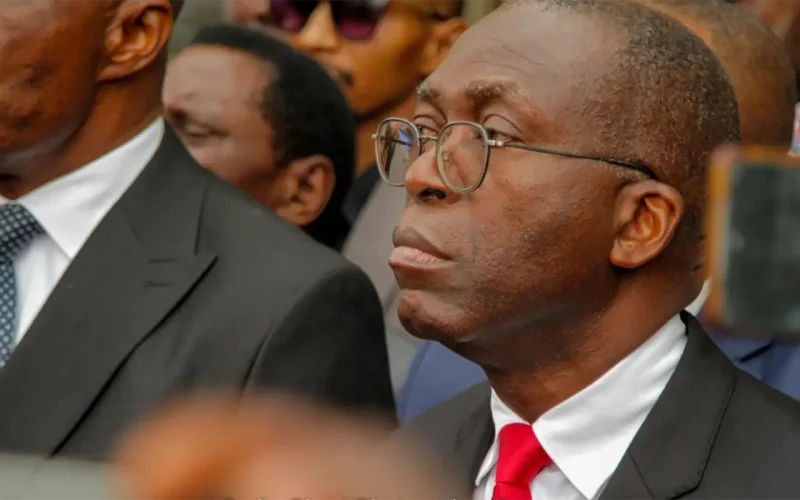
AS Augustin Matata Ponyo, once a celebrated technocrat and now a convicted fraudster, begins his 10-year sentence in a Democratic Republic of Congo (DRC) jail, the political reverberations are only intensifying. Matata, who served as prime minister from 2012 to 2016 and currently leads the opposition Leadership and Governance for Development (LGD) party, has become a lightning rod in the Democratic Republic of Congo’s battle over corruption, justice, and the future of its political elite.
His party has fiercely condemned the trial, conviction, and sentence, denouncing them as politically motivated. Matata himself has consistently maintained his innocence, describing the case as a “travesty of justice” and an orchestrated campaign to sideline him after he refused to join President Félix Tshisekedi’s ruling coalition and launched his presidential ambitions. His legal team argues that the Constitutional Court overstepped its jurisdiction and disregarded his parliamentary immunity, framing the prosecution as a tool to suppress dissent and reshape the balance of power ahead of future elections.
The fallout from Matata’s imprisonment is set to cast a long shadow over the legacy of former President Joseph Kabila and his cabinet. The conviction of such a high-profile figure signals a new willingness by the Tshisekedi administration to pursue senior officials from the previous regime, raising the stakes for others who served alongside Matata and who may now fear similar scrutiny.
While supporters of the current government hail the verdict as a milestone in accountability – proof that even the most powerful are not above the law – critics warn that justice in the DRC remains deeply politicised. The opposition and some civil society voices are watching closely to see whether this case marks the beginning of a genuine anti-corruption drive or if it will be remembered as a selective purge targeting political adversaries.
Matata was convicted Tuesday of embezzling more than $245 million from a failed agricultural megaproject, sending shockwaves through the political establishment of Kabila. The court also barred Matata and Mutombo from holding public office for five years after serving their sentences, underscoring the gravity of the convictions.
Launched in 2014 with great fanfare by President Kabila, the Bukanga Lonzo project was envisioned as the first of 22 massive agricultural parks to transform the DRC’s food production and create tens of thousands of jobs. Instead, it collapsed within three years amid allegations of rampant corruption, unpaid contractors, and the abrupt departure of its South African management firm, Africom Commodities, which cited government non-payment and chaotic oversight.
Investigations by Tshisekedi’s administration, which began in 2020, uncovered a web of shell companies allegedly controlled by Matata’s associates, siphoning off hundreds of millions in public funds. The Inspectorate General of Finance detailed massive financial mismanagement, and the Constitutional Court ultimately found Matata and his co-accused guilty of orchestrating the looting of state coffers.
The conviction of Matata marks the most significant anti-corruption prosecution since Tshisekedi took office and signals a sharp break with the impunity that characterised the Kabila era. The verdict comes as the current government intensifies its legal and political campaign against Kabila and his allies, accusing the former president of backing the M23 rebel group and even suspending his political party while pursuing asset seizures and charges of high treason.
For Kabila’s former cabinet, the ruling is a chilling precedent. It exposes senior officials to potential prosecution for abuses committed during their tenure and threatens the legacy of a government that once dominated Congolese politics. The trial also highlights the unravelling of the informal power-sharing pact that initially shielded Kabila’s loyalists after he left office in 2019.