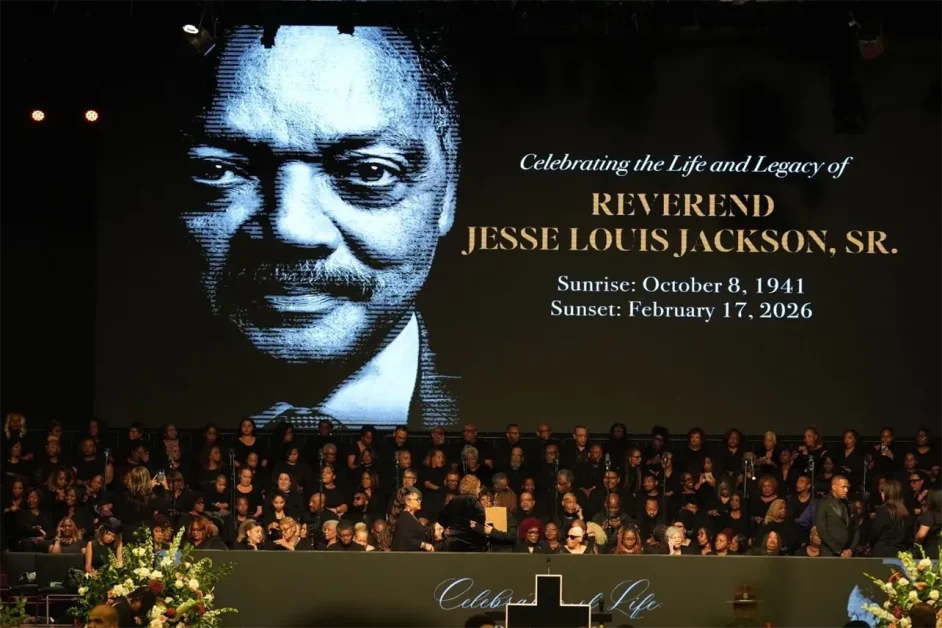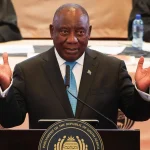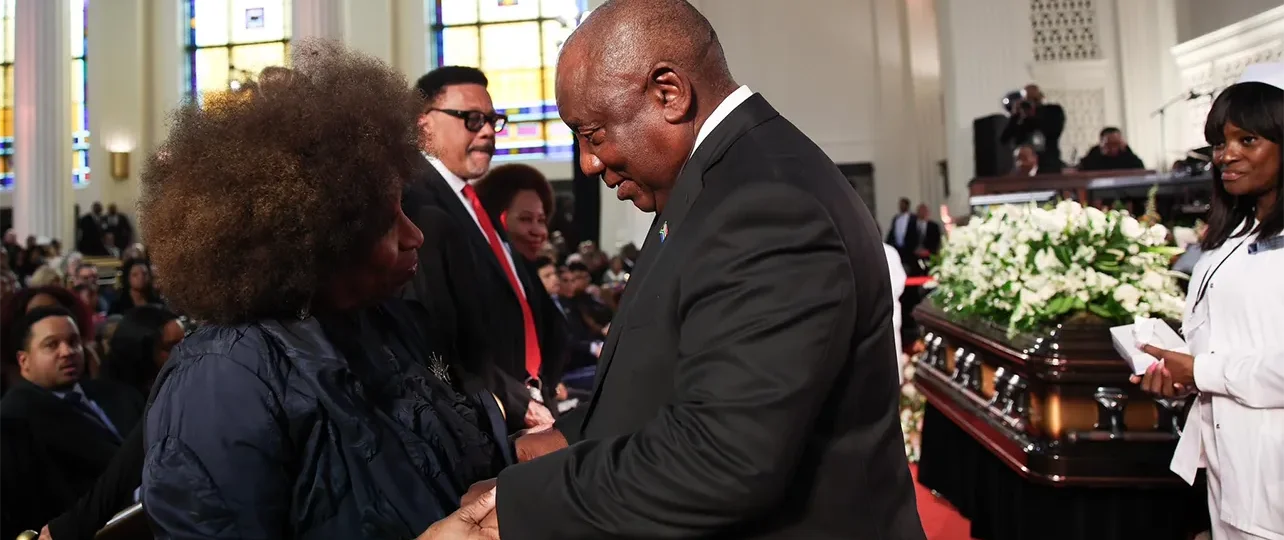

WHEN South African President Cyril Ramaphosa stepped to the podium at the Rainbow PUSH Coalition headquarters in the USA, he had not come to console a foreign nation. He had come to claim a man. To tell a grieving American congregation that Jesse Louis Jackson Sr. did not only belong to them. He belonged, also, to Africa.
It was an extraordinary gesture – but for those who understand the arc of Jackson’s six-decade life, it was the only possible ending. A man who spent his life insisting that the Atlantic Ocean was not a divide but a bridge could not be buried without the continent he loved making its way to his graveside.
The tributes from across Africa came swiftly after the Jackson family confirmed his death on 17 February 2026. Ramaphosa described his contribution to the anti-apartheid struggle as towering. Nigerian President Bola Tinubu called him a servant-leader whose commitment to fighting oppression had transcended borders. Kenya’s William Ruto cited his steadfast voice for justice. The African Union Commission Chairperson, Mahmoud Ali Youssouf, drew a direct line between Jackson’s advocacy and the AU’s own mandate – including its recognition of the African diaspora as the continent’s Sixth Region.
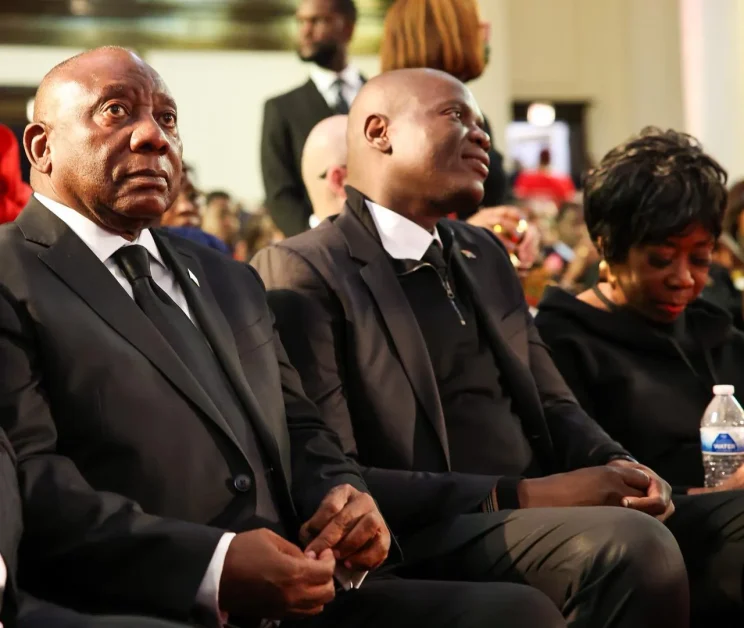
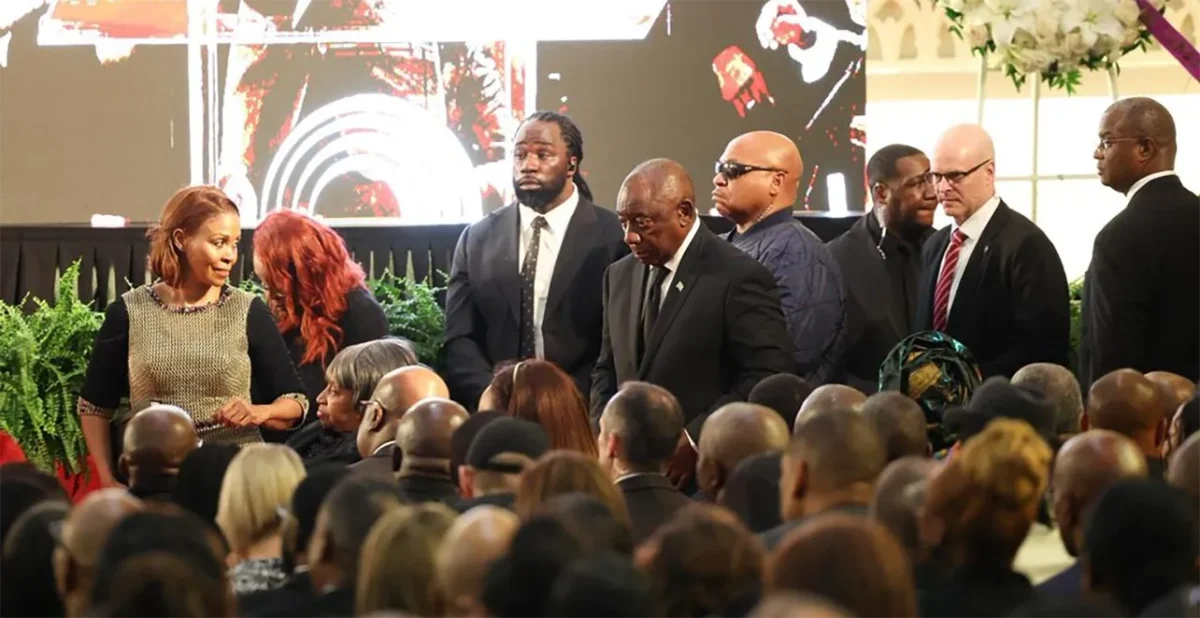
But it was the words spoken in person, inside the hall at Rainbow PUSH, that carried the greatest weight. Two African heads of state – Ramaphosa of South Africa and President Félix Antoine Tshisekedi Tshilombo of the Democratic Republic of Congo – crossed an ocean to stand at that podium and speak for a continent in mourning.
“Not only did he march in the streets, he walked into the corridors of power. He opened doors. And when the doors were closed, he kicked them down.” — President Cyril Ramaphosa
Ramaphosa’s tribute was the centrepiece of the morning. He told the congregation that the struggle for dignity in the United States had been, in Jackson’s own telling, inseparable from the fight against apartheid and injustice in South Africa. He recalled how Jackson’s message – that America’s strength lay not in exclusion but in the beautiful diversity of its people, Black and white, rich and poor, urban and rural, workers and farmers, immigrants and the forgotten – had resonated across the Atlantic and inspired a generation of South African activists. South Africa, he said, claimed the late civil rights leader as one of its own. Not only did Jackson march in the streets, Ramaphosa told the mourners, he walked into the corridors of power. He opened doors. And when the doors were closed, he kicked them down.
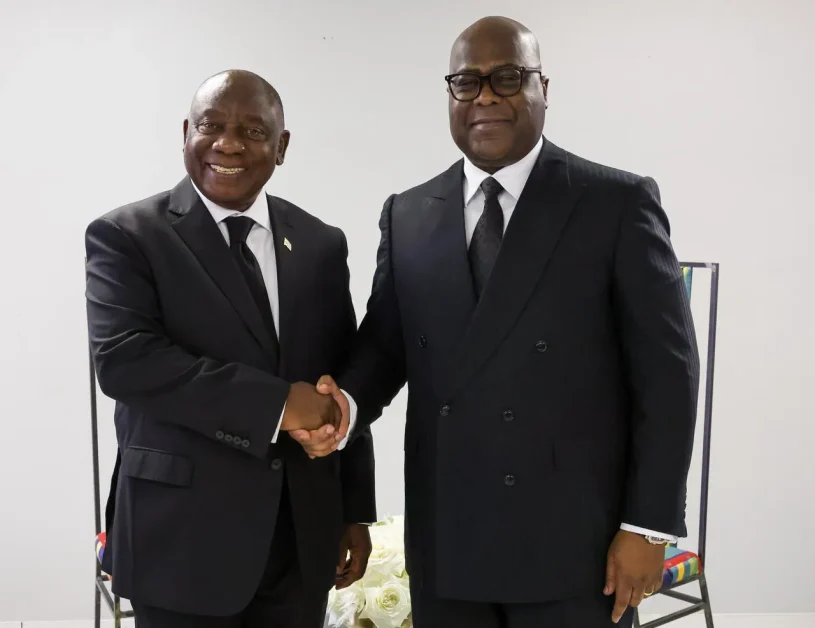
Tshisekedi’s words were brief and devastating. Addressing the Jackson family directly, he told them their mourning was also Africa’s mourning. You have lost a father, a husband, a brother, he said. The world has lost a pastor, a champion, a mender of bridges. Africa has lost a faithful, loving son.
“Your mourning is also ours. The world has lost a pastor, a champion, a mender of bridges. Africa has lost a faithful, loving son.” — President Félix Tshisekedi
The story of Jesse Jackson and Africa begins not with awards but with a murder. Steve Biko – founder of the Black Consciousness Movement – was tortured and killed by the apartheid state in 1977. Two years later, Jackson arrived in South Africa at a moment when most American political figures were either silent or actively enabling the Pretoria regime. He went to Soweto. He addressed thousands. Draped in a blanket gifted by township residents, he declared: This land is changing hands. He met Winnie Madikizela-Mandela, then under a banning order. For many South Africans, it was the first confirmation that a significant American voice had looked at their struggle and said: I see you. I am with you.
Back in the United States, he made South Africa central to his 1984 presidential campaign. In 1985, he was arrested outside the South African Embassy in Washington alongside his sons, singing We Shall Overcome as police detained them. He lobbied Pope John Paul II, Mikhail Gorbachev and Margaret Thatcher. His advocacy helped build the climate that produced the Comprehensive Anti-Apartheid Act of 1986 – passed over President Reagan’s veto.
When Nelson Mandela walked free from Victor Verster Prison in February 1990, Jackson was there. He returned for Mandela’s inauguration in 1994. In 2013, South Africa awarded him the Order of the Companions of OR Tambo in Silver. Appointed by President Clinton as Special Envoy for Democracy in Africa in 1997, he engaged governments across eight countries – pressing for democratic governance, mediating tensions, and quietly securing the release of imprisoned nationals in Gambia when other channels had failed.
All of this history pressed down on the room at Rainbow PUSH on Saturday. When Ramaphosa spoke of a man who showed up when others looked away from injustice, who pledged solidarity and used every opportunity to support the just struggle of others, he was not speaking in generalities. He was speaking from a nation’s lived experience of what it meant to have Jesse Jackson in your corner.
The African Press Agency, the continent’s oldest wire service, supplied the phrase that no presidential statement had quite managed: Africa’s truest friend. It was not hyperbole. It was four decades of evidence distilled into four words.
Jackson was buried that afternoon at Oak Woods Cemetery in Chicago. Africa was not at the graveside – but it had been in the hall. It had crossed an ocean to stand at a pulpit and tell the world, in the plain language of a people who know what solidarity costs, that this man was not merely America’s. He was theirs. He had told them the land was changing hands. He had been right. And in the end, he gave them back the only thing he had ever asked them to keep: hope.