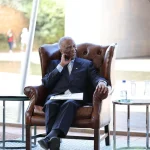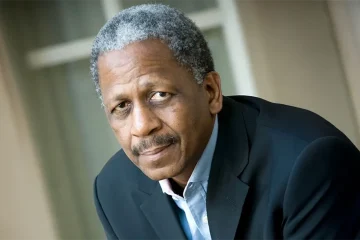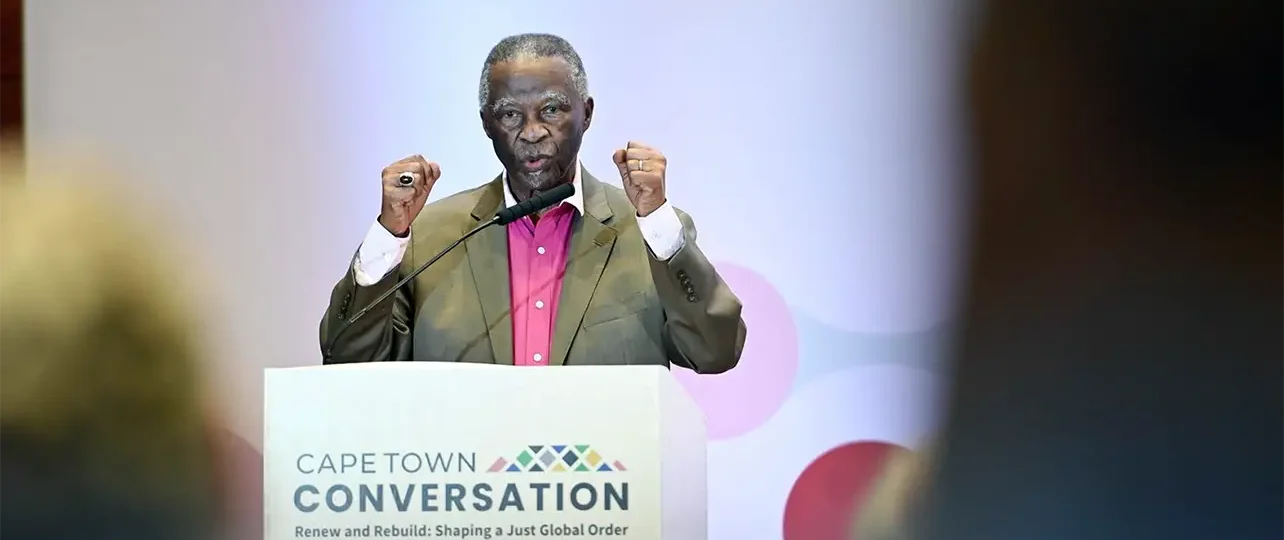

FORMER South African President Thabo Mbeki has called for a global mobilisation to address what he describes as persistent injustices in the international system, warning that current development goals are failing and the world faces a “global development emergency.”
Speaking at the closing of the 2025 Cape Town Conversations, Mbeki told attendees that only 35% of Sustainable Development Goal targets are on track, with just five years remaining until the 2030 deadline. He urged next year’s conference to maintain its focus on shaping a just global order, particularly in light of anticipated changes during President Donald Trump’s G20 presidency.
The former president expressed mixed reactions to recent statements by US Secretary of State Marco Rubio, who acknowledged in a January interview that the post-Soviet unipolar world order was “abnormal” and that multipolarity was more natural.
While initially applauding Rubio’s recognition of multipolarity, Mbeki voiced concern that the Secretary of State made no reference to the UN Charter or international law as a framework for this multipolar world. He suggested this approach implies the United States intends to pursue its interests without regard to established global rules and institutions.
Mbeki argued that achieving the SDGs requires massive capital transfers from wealthy to poor nations, drawing parallels to the Marshall Plan that rebuilt Western Europe after World War II and the EU’s regional development policies that lifted countries like Ireland and Portugal.
He pointed to China’s experience under Deng Xiaoping’s open policy as another example of how developing nations have successfully attracted foreign capital to accelerate development. Without similar resource mobilisation for Africa and other developing regions, Mbeki warned, the SDG targets cannot be met.
The former president recounted how the 2002 G8 Africa Action Plan, which established mutual accountability between G8 nations and African countries under NEPAD (New Partnership for Africa’s Development), was abandoned by 2010. When African leaders requested an assessment of the plan’s progress at the 2010 G8 summit in Canada, the host government refused to discuss it.
“The developed countries refused; they were saying this notion of mutual accountability with these Africans is wrong,” Mbeki said, noting that African leaders still attend G7 summits despite having nothing substantive to discuss.
Energy Transition Concerns
Mbeki questioned the fairness of developed nations pressuring African countries to abandon recently discovered oil and gas reserves in favour of renewable energy. He cited Uganda, Tanzania, Mozambique, South Africa, Namibia, Ghana and Côte d’Ivoire as examples of nations that have found significant fossil fuel deposits.
He highlighted South Africa’s experience, where a retired coal-fired power station that produced 1,000 megawatts was converted to solar energy, now producing only 200 megawatts. Additionally, he noted that infrastructure costs for renewable energy projects often exceed the costs of generation facilities themselves, with some areas facing waits until 2032 for grid connections.
The former president criticised developed nations for offering billions of dollars in loans rather than grants for energy transition, forcing African countries to take on dollar-denominated debt to meet climate goals. He said the principle of “common but differentiated responsibilities” in climate agreements has effectively disappeared.
Call for Popular Mobilisation
Drawing on his experience in South Africa’s liberation struggle, Mbeki called for a global anti-apartheid-style movement to achieve a just world order. He recalled how the international anti-apartheid movement united people worldwide against what was recognised as a crime against humanity.
“Can we not go back there and say this just global order is as important to the people of South Africa, southern Africa, Africa, Asia, as it is to the people of the United States and Europe?” he asked.
Mbeki acknowledged that Africa must also examine its own readiness to contribute to shaping a just global order, saying the continent is not currently in a fit position to make the necessary impact.
He concluded by challenging the next Cape Town Conversation to produce concrete proposals that can be communicated to the world, rather than simply hosting panels and discussions without actionable outcomes.
“It’s the task of this conversation for us to say at the end of the next session: we’ve got a much better idea of what must be done to achieve these common goals,” Mbeki said.