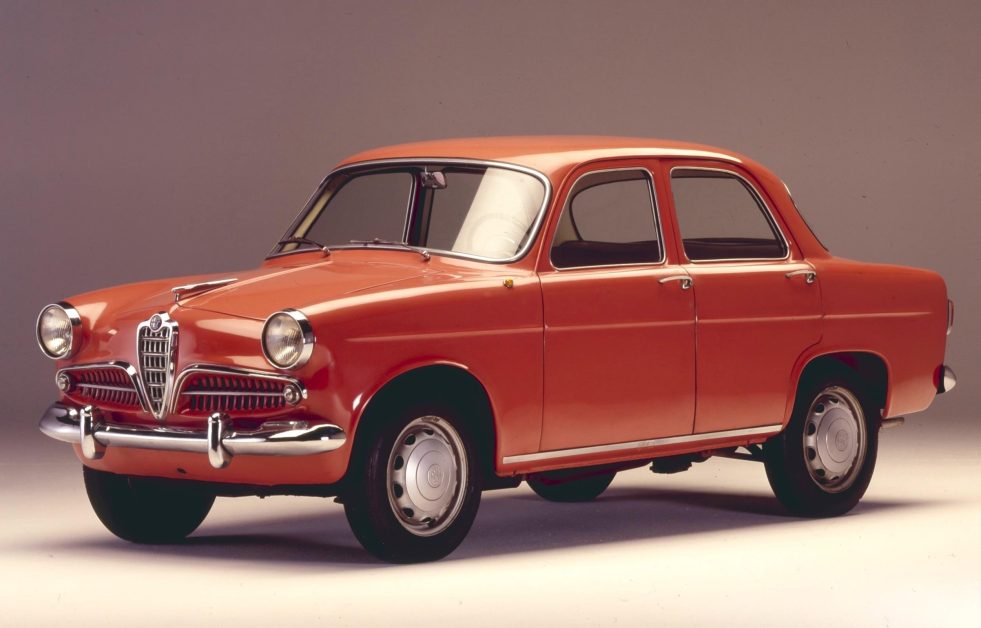
ON a pivotal spring day in 1955, the automotive world witnessed the birth of a legend. The Alfa Romeo Giulietta Berlina wasn’t just another car launching at the Turin Motor Show – it was the embodiment of Italy’s post-war renaissance, a gleaming symbol of hope and progress wrapped in an irresistible package of style and performance.
“The Giulietta Berlina brought Alfa Romeo’s sporty DNA to the everyday lives of Italians, bringing fine engineering and aspirations within the reach of an emerging middle class,” reflects Roberto Giolito, Head of Heritage Stellantis. “This model was able to blend the prestige of the Biscione’s sporty vehicles with the functionality of a family car, establishing itself as a symbol of progress and rebirth in Post-War Italy.”
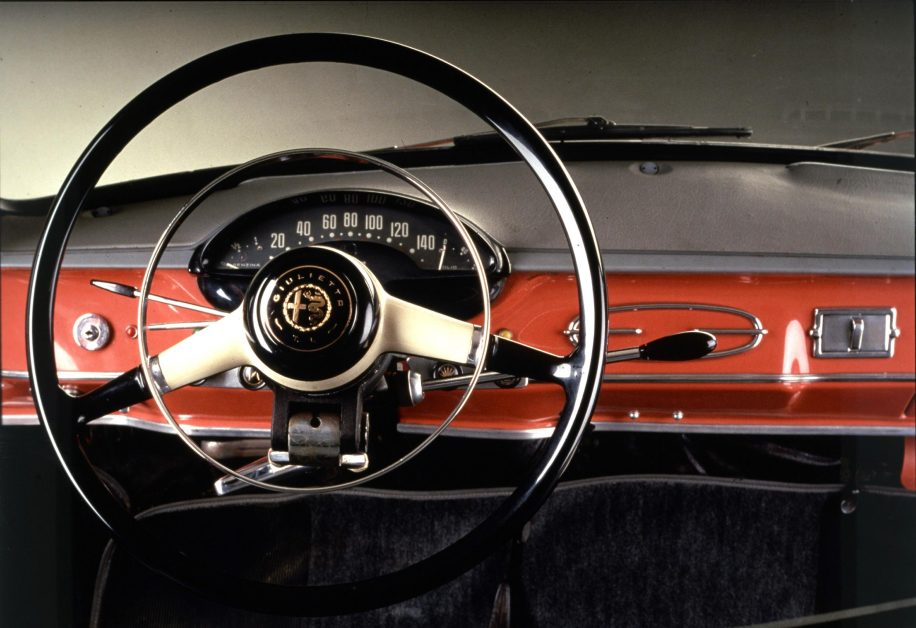
This wasn’t merely a vehicle; it was Alfa Romeo’s bold declaration that automotive excellence could belong to everyone. With its revolutionary 1290cc twin-camshaft aluminum engine – a first for mass production – the Giulietta Berlina redefined what Italians could expect from an everyday family car. It delivered a thrilling 140 km/h top speed while weighing just 870 kg, a remarkable feat that turned ordinary drivers into weekend racers.
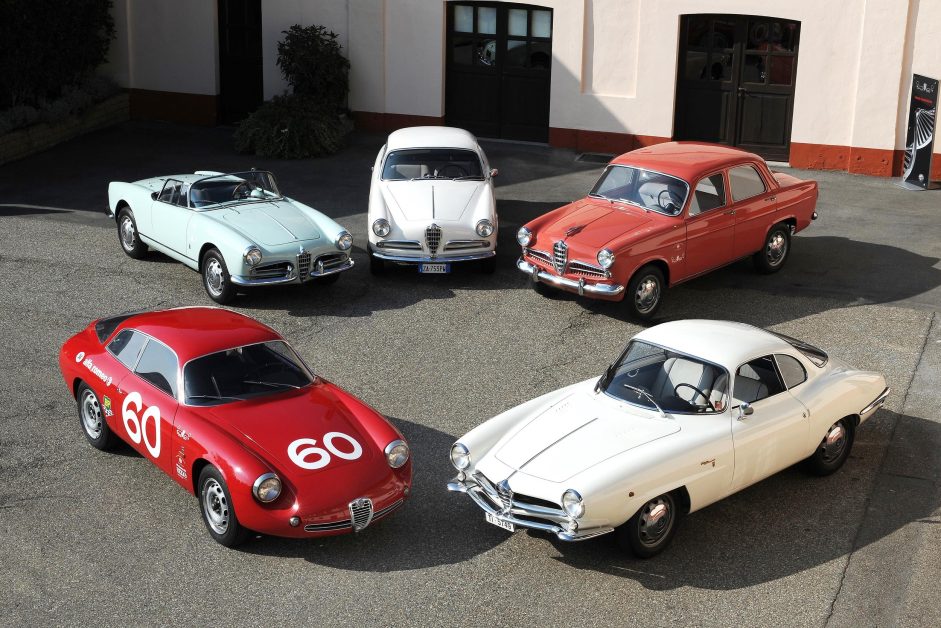
The Giulietta’s story begins with a surprising twist – the coupé Sprint version actually debuted first in 1954, creating unprecedented excitement. When dealerships were overwhelmed with demand, Alfa Romeo accelerated the Berlina’s development, unveiling it to an eager public on April 20th, 1955. Their marketing brilliantly captured its dual personality: “the family car that wins races” and “mom also drives it.”
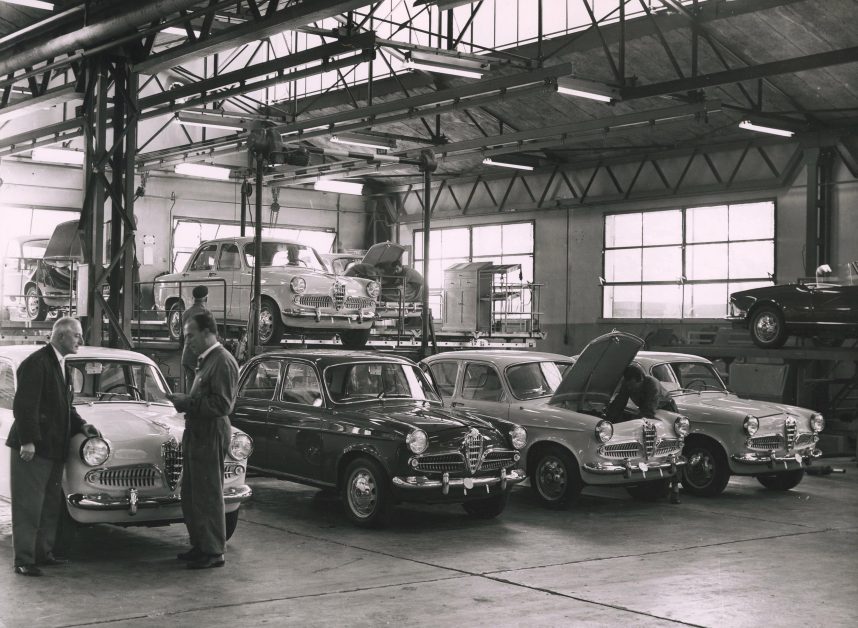
Beyond performance, the Giulietta represented Alfa Romeo’s industrial transformation. Under engineer Rudolf Hruska’s guidance, the Portello plant evolved from artisanal workshop to modern factory, quadrupling production capacity to 200 cars daily. This wasn’t just an evolution in manufacturing – it was a revolution that democratized Italian automotive excellence.
The Giulietta quickly transcended its role as transportation to become a cultural touchstone. It shared the silver screen with icons like Mastroianni, Loren, and Gassman in classic Italian cinema. When the 100,001st model rolled off the line in 1960, it was celebrated by none other than Fellini’s muse, Giulietta Masina – cementing its place in Italy’s creative soul. Even its romantic name sparked debate, with competing origin stories involving Russian princes and poetic inspiration.
With over 130,000 Berlinas produced among nearly 178,000 total Giuliettas across all variants, this wasn’t just another successful model—it was the creation of an entirely new category: the premium high-performance compact. The Giulietta essentially invented what would become a European standard for 1300cc vehicles, marrying sophistication with attainability in a way no manufacturer had achieved before.
Seventy years later, as Stellantis Heritage and Alfa Romeo commemorate this milestone, the Giulietta’s legacy remains undimmed. It stands as the perfect marriage of technology and poetry, speed and grace, dream and reality – a masterpiece that proved Alfa Romeo could bring its racing DNA to everyday streets without compromise.
The Giulietta didn’t just change Alfa Romeo; it transformed the relationship between Italians and their automobiles, making the thrill of driving accessible to a generation emerging from the shadows of war into the bright promise of an economic boom. In doing so, it wrote its name not just in automotive history, but in the very fabric of Italian identity itself.