
By Malaz Emad
MUTUAL aid groups in Sudan are responding to the mass return of hundreds of thousands of people to major cities that have been reclaimed by the army after a long and brutal occupation by the paramilitary-turned-rebel Rapid Support Forces (RSF).
But their efforts – from organising transport for returnees to running communal kitchens – are being complicated by the scale of the destruction and humanitarian need, and because of attacks against them by the army and allied militias.
“The army is present, and the situation is better than when the RSF was here, but there are arrests of many volunteers and extortion of those in the civil space,” said Yasser*, an engineering student and volunteer from Al Jazirah state, in central Sudan.
Yasser was displaced when the RSF attacked Al Jazirah in late 2023, but returned in January after the army took control. He said army supporters often view those who did not fight the RSF, including volunteer groups, as suspicious and disloyal.
The two-year conflict between the army and the RSF – former allies that took power in a 2021 coup – has produced the world’s largest displacement crisis, uprooting over 12 million people, and the biggest hunger crisis, with famine declared in 10 areas.
Backed by the United Arab Emirates, the RSF was in the ascension for much of the war. But in recent months, it has lost ground to the army, which is recognised by the UN as Sudan’s official authority despite its authority stemming from a coup.
The RSF has now left Khartoum, where its forces had engaged in widespread rape, and the detention, torture, and killing of civilians. It has also been forced out of Al Jazirah and adjoining Sennar state, where its fighters committed a string of atrocities.?
Many returnees see military control as preferable to RSF rule, despite the armed forces, historically unpopular for their stranglehold over political and economic institutions, and allied militias committing widespread abuses against perceived RSF collaborators.
Meanwhile, local infrastructure in areas of return has been badly damaged, markets are struggling to function, and rural farming is proving difficult to revive after the RSF looted crops, livestock, and machinery and burned cultivated land.
Though local and diaspora networks and mutual aid groups known as emergency response rooms, which have stepped in throughout the war amid a faltering international aid effort, are mobilising for returnees, they have limited resources, especially after US funding cuts.
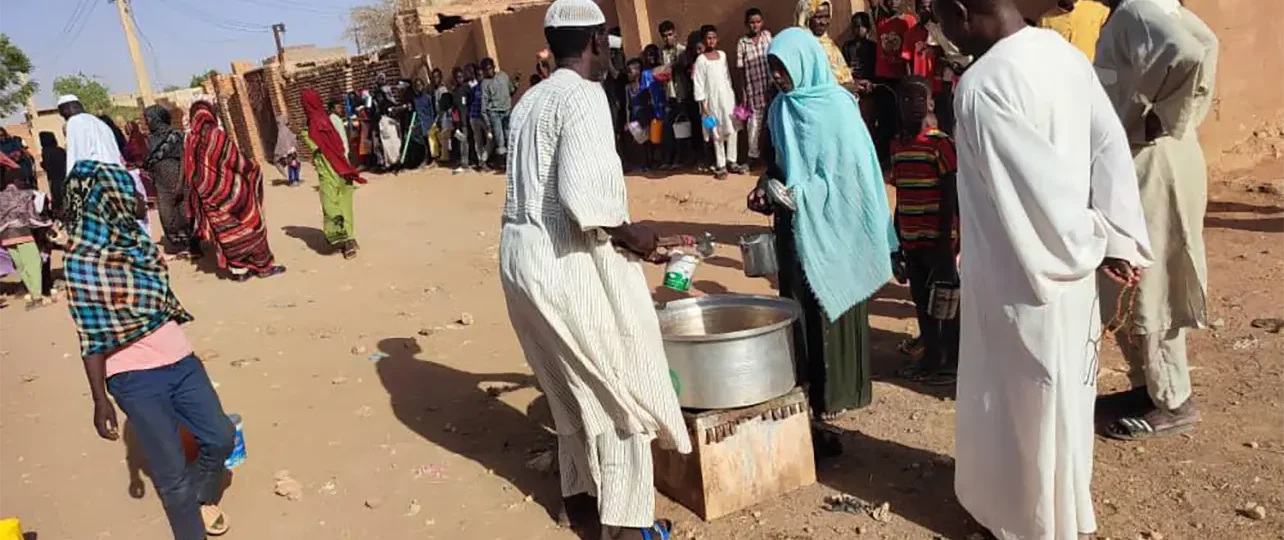
Hunger poses the greatest threat for those returning, especially young children, said Tagwa, a medical student and emergency response room volunteer who recently went back to Al Jazirah.
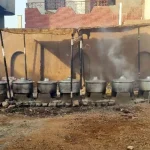
“The sight of people standing in food queues has been common in every street since the beginning of the war, but the situation has worsened due to the returns,” Tagwa said. “The number of communal kitchens is small compared to the number of people.”
Solar panels and soup kitchens
It is unclear exactly how many people are returning home, though the International Organisation for Migration reported that some 400,000 individuals returned between December and March, leading to a drop in total displacement for the first time in the war.
Khalid, a refugee who escaped to neighbouring Egypt after his family home was struck by a shell in Bahri, one of Khartoum’s adjoining cities, described growing pressure at the main border crossing between the two countries.
“The number of returnees is increasing dramatically, to the point of severe overcrowding and congestion at the crossing,” he said. “We were stranded there for three days without food, a tragic repetition of our initial displacement.”
Khalid said his family travelled to Bahri using buses funded by relatives abroad. He said the relatives also paid for other people in their community to return, using a WhatsApp group to coordinate efforts.
“We firmly believe that through solidarity and cooperation, we can rebuild our homes.”
Tagwa, the medical student and volunteer in Al Jazirah, said local networks there have also been organising weekly convoys to help families return to the state capital, Wad Madani, and other cities considered safe.
In Khartoum, a volunteer called Fatima said she is part of a group raising funds to assist people returning after the army took control in February. She said they created a WhatsApp group to register families, prioritising women and the elderly.
“We firmly believe that through solidarity and cooperation, we can rebuild our homes,” said Fatima, who coordinated neighbourhood support for two years despite the death of her husband during the war to cholera, a treatable illness if medicine is available.
Yasser, the engineering student in Al Jazirah, said that after Wad Madani was declared free of RSF forces, citizens launched a WhatsApp group called “The Return” to coordinate efforts to identify damaged and destroyed homes.
Yasser said volunteers also surveyed health facilities and other public infrastructure, and raised funds to purchase solar panels from outside Sudan for returning households, and shuttered health centres that have no reliable power supply.
Musab, a volunteer who stayed in Wad Madani while it was under RSF rule, said addressing the food needs of returnees is one of the main priorities for local aid workers.
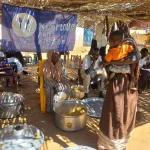
He said volunteers are currently collecting donations for daily meals, while community kitchens are developing home gardening initiatives to help the population grow their own food.
Rawan, a volunteer with the women’s wing of the emergency response rooms in Sennar state, recently returned from the eastern city of Port Sudan to support aid efforts. She said volunteers are working to bring in sanitary pads for women and girls.
“We in the women’s emergency room are working to collect the largest possible amount of donations and purchase [sanitary pads] from Egypt so that they can be distributed to returning families,” Rawan told The New Humanitarian.
She added that reconstruction efforts will require finding realistic ways to adapt to the conditions. “Starting anew requires us to think of practical solutions, such as learning to grow our food at home and relying on alternative energy sources,” she said.
International aid groups are also planning to support returnees. They are increasingly gaining access to areas vacated by the RSF, after months of blocked entry, largely caused by the army’s attempts to stop relief from entering rebel-held zones.
Still, international efforts remain slow, as ever bureaucratic army-aligned authorities delay the travel permits that aid groups need, while agencies also face internal red tape, and the risk of unexploded ordnance and RSF drone strikes.
“No job opportunities, no education, no medical care”
All the volunteers who spoke to The New Humanitarian said their ability to help returnees is constrained by funding limitations and a lack of personnel, especially since many had to flee and have not returned.
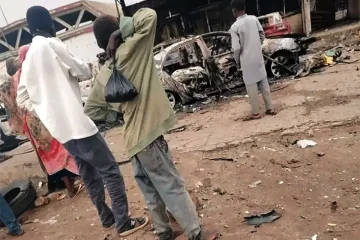
The returnees are coming back to towns and villages that were devastated by months of RSF occupation, with homes and markets looted or destroyed, and critical infrastructure left in ruins.
Al Jazirah, for example, is considered Sudan’s breadbasket, yet the RSF destroyed key parts of the agricultural system and stole crops, harvests, tractors, and fertilisers on a massive scale.
Tagwa, the volunteer from the state, said that while shops have reopened and small markets have emerged, there is limited cash, and necessities are being sold at high prices.
“One of the main motivations for citizens to return to their homes was the high cost of living [in the places they were displaced to], but that still plagues them, and volunteers are unable to meet these needs,” Tagwa said.
Yasser said parts of Al Jazirah have endured severe physical damage and the breakdown of community life. He said his younger siblings have become consumed by the war, with their attention often focused on weapons and fighting.
“One of them even said he wouldn’t go back to school but would instead carry a weapon to defend himself,” Yasser said. “This is the greatest tragedy we face as returnees to our homes: We have lost everything, even our way of life.”
Musab also said the war has impacted the social fabric of communities. “It is a complete transformation,” he said. “People no longer feel they can rely on the army, and fear is everywhere. Young men are arming themselves out of desperation.”
In Sennar state, Hala, a member of the local emergency response room structure, said returnees are struggling due to the impact of the conflict on agriculture, which has suffered because residents were displaced and unable to plant or harvest.
“There are no job opportunities, no education, and no medical care available since all public facilities have shut down, and buildings.”
Hala said many residents sold their assets to raise cash to flee Sennar, and now find themselves without the resources to survive. “Most Sennar residents are farmers and merchants who rely on their annual harvest to satisfy their basic needs,” she said.
Hala said a few merchants have returned to Singa, the Sennar capital, but goods are scarce and prices high. She added that the city is now governed by military forces allied with the army, with little civilian or humanitarian activity to counterbalance things.
Khalid, the refugee who recently returned to Bahri, described the city of his upbringing as a landscape scarred by conflict: ammunition scattered on the ground, unburied bodies picked at by stray dogs, and public infrastructure broken.
“There are no job opportunities, no education, and no medical care available since all public facilities have shut down, and buildings – including schools, mosques, and government offices – have been reduced to rubble,” Khalid said.
He added that his family home contained an unexploded shell, and that their grandmother had been hastily buried in front of the house as they had been unable to reach a cemetery due to shelling and stray bullets before they fled.
Khalid said army control has not ended the insecurity. “What is truly heartbreaking now is the looting carried out by the army in some homes, which has left many people in disbelief,” he said. “The army’s behaviour mirrors that of the Rapid Support Forces.”
Army abuse
Despite the army retaking territory, volunteers said there is a strong fear among returnees of the RSF coming back, or targeting lost areas with artillery and drone strikes.
Rawan, the Sennar volunteer, said her family is constantly worried about shelling and that her 10-year-old brother recently asked if the family “will be displaced again”.
Rawan said there is also a lack of law enforcement in the state. “The security threat is substantial, as there is no police presence in the area,” she said. “Each person is responsible for protecting themselves.”
Volunteers said their ability to help returnees is impacted by the abuse they are facing from the army and allied militias, which often falsely accuse them of collaborating with RSF forces.
Volunteers said they are viewed suspiciously because many stayed while the RSF was in control, and because they embrace a discourse of democracy and freedom that the RSF also espouses, albeit insincerely.
Hala, the volunteer from Sennar, said mutual aid workers have been leaving daily due to targeting by forces allied with the army, adding that aligned authorities are actively hindering humanitarian efforts in the state.
Fatima, the Khartoum resident and volunteer, said she was forced to leave her locality in January after the RSF arrested her brothers. Upon returning, she faced abuse from pro-army militias, which accused her of preparing food for the RSF.
Fatima said the fighters, who are now returning to their homes in the same neighbourhood as her, have been insulting her and stole the phone she uses to coordinate with volunteers.
“I am subjected to verbal abuse from a significant number of returning neighbours due to these baseless accusations,” Fatima said. “This has led to my complete isolation from work and the loss of contact with other volunteers in the area.”
Fatima said the threats have left her contemplating leaving Sudan just as others begin to return. Having fed dozens of families every day during the war, enduring harassment by the RSF in the process, the outcome was not something she anticipated: “I never imagined that all the effort I put in during the war would be forgotten, and that I would be accused in this way.”
*The names of all volunteers in this article have been changed, given the risks they face.
Edited by Philip Kleinfeld.
–––––
The New Humanitarian puts quality, independent journalism at the service of the millions of people affected by humanitarian crises around the world. Find out more at www.thenewhumanitarian.org.