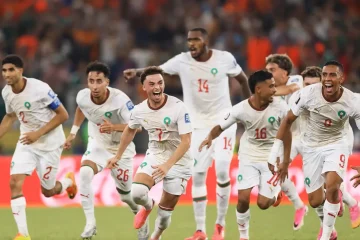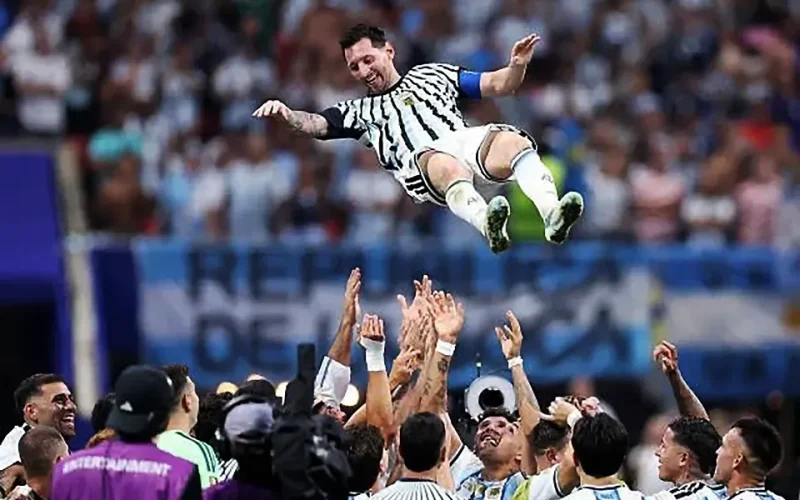
THERE is a particular kind of heartbreak reserved for teams that do everything right and still go home. Egypt lived it in Atlanta. For seventy-nine merciless minutes, the Pharaohs did not just compete with the two-time reigning world champions – they bullied them, embarrassed them, and had eleven million people in Cairo out of their seats screaming for a miracle. Then Lionel Messi remembered who he was, and the miracle evaporated like Nile mist at noon.
Final score: Argentina 3, Egypt 2. On paper, a comeback. In the stadium, it felt like daylight robbery with better PR.
The Setup: David Brings a Sling, Goliath Brings Excuses
Let’s be honest about the pre-match narrative, because it matters. Argentina strolled into this Round of 16 fixture as the favourites’ favourites – defending champions, Messi chasing history, a squad that had already needed extra time just to see off plucky Cape Verde. Egypt, by contrast, were dismissed in some quarters as a “very limited” side making up the numbers, there to be politely thanked for their participation and sent home.
Someone forgot to tell Yasser Ibrahim.
In the 15th minute, off a beautifully worked short corner from Marwan Ateya, Ibrahim rose above Argentina’s statuesque defence and planted a header into the net that sent Atlanta Stadium into delirium. Argentina – unbeaten, untroubled, unbothered all tournament – were trailing at a World Cup for the very first time. The champions looked, for a moment, entirely mortal.
Six minutes later, football served up its favourite dish: irony with a side of penalty drama. Messi, of all people, stepped up from the spot – and Mohamed “Shoubir” El Shenawy, Egypt’s inspired goalkeeper, guessed right and turned it away. It was Messi’s second penalty miss of this World Cup, an oddity that made him the first player in tournament history to fluff two from the spot in a single edition. Somewhere, a statistician wept with joy at the footnote; somewhere else, an Argentine fan wept for other reasons.
Shoubir wasn’t done. He denied Mac Allister point-blank, got a fingertip to turn away Julián Álvarez, and generally behaved like a man who had personally decided this would not be Argentina’s afternoon. Egypt defended like a team that had read the script, torn it up, and written their own.
Egypt didn’t just sit back and admire their handiwork. In the second half, Mostafa “Zico” doubled the lead on a slick counterattack, finishing off good work from Hassan on the right – his second effort of the game, after an earlier strike had been chalked off by VAR for a foul on Lisandro Martínez. Two-nil up, into the final twenty minutes, against the world champions. Egypt were not just dreaming of the quarterfinals; they could see the tickets printing.
This is the part of the story where, if you are of a certain African footballing vintage, you allow yourself the tiniest, most dangerous flicker of hope. Africa’s record ten-team contingent at this World Cup had already made history simply by showing up in such numbers. A Pharaohs run to the last eight would have rewritten the continent’s World Cup story in permanent ink.
Then Argentina Remembered They Were Argentina.
Football has an old, cruel law: it is never truly over while Messi is still upright and the clock hasn’t hit triple zeroes. Argentina, world champions for a reason, did not panic. They pressed. They probed. And with eleven minutes left, the dam broke.
Cristian Romero headed home a Messi cross in the 79th minute. Cue nervous glances around Cairo living rooms. Four minutes later, Messi himself rifled home a first-time strike to level it at 2-2, because of course he did – the man has now scored eight goals at this tournament, more than anyone else in the competition, and he picked precisely this moment to remind Egypt why nobody had given them a chance in the first place.
Even that wasn’t the cruellest cut. Deep into stoppage time, on a counterattack that Egyptian legs simply had no strength left to chase down, Enzo Fernández headed in the winner. 90+2′. Bedlam in Buenos Aires. Silence – the particular, ringing silence of a nation robbed – everywhere along the Nile.
The Numbers Don’t Lie, But They Also Don’t Tell the Whole Truth
Look at the stat sheet and Argentina “deserved” it: 2.8 expected goals to Egypt’s 0.98, nineteen shots to five. Cold, clinical, correct. But football was not invented for spreadsheets. For seventy-nine minutes, Egypt imposed a game plan on the two-time world champions that had Lionel Scaloni’s men missing penalties, seeing goals ruled out, and chasing shadows. This was not a smash-and-grab from a limited team riding its luck. This was a heavyweight fight that Egypt were winning on points until the champion landed three haymakers in the championship rounds.
What This Means for African Football
Egypt will fly home from Atlanta with nothing to show in the record books but another gallant near-miss – the kind of story African football fans know a little too well. But there should be no hanging of heads. The Pharaohs pushed a team chasing back-to-back titles to the absolute brink, exposed real cracks in Argentina’s defensive composure, and gave Africa’s largest-ever World Cup delegation one of its signature moments of the tournament, win or lose.
Moustafa Shoubir’s saves will be replayed for years. Yasser Ibrahim’s header will live in Egyptian football folklore. And somewhere in the small print of history, there will be a line that reads: for seventy-nine minutes, Egypt had the world champions beaten – and it took an all-time great, at the absolute peak of his powers, to stop them.
That is not failure. That is proof that the gap between Africa’s best and the world’s best is closing fast enough to make champions sweat. Next time – and there will be a next time – the final whistle might just go Africa’s way.