SCIENTISTS have identified 165,922 km² of coral reefs across 71 countries and 100 territories with the strongest potential to survive the climate crisis, according to a major new global study presented at the Our Ocean Conference in Kenya today by the Wildlife Conservation Society (WCS) and Macquarie University, with support from the Bloomberg Ocean Initiative. The research marks the launch of a new global campaign, Our Reefs, Our Future, from civil society calling on governments to prioritise the protection of these reefs from immediate, local threats.
This analysis, developed as part of the 50 Reefs+ study, presents a significant advance in understanding which coral reefs retain the strongest potential to survive future warming. The paper, Machine-learning and prioritisation models reveal climate refugia for coral reefs into 2050, builds on the original 50 Reefs assessment published in 2018, the first global effort to identify the coral reef systems most likely to withstand climate change and serve as priorities for conservation action. Expanding significantly on its foundation, the new study identifies three times as many climate-resilient reef areas across 30 additional countries and 54 additional territories and jurisdictions, revealing a far greater opportunity for coral reef persistence than previously understood.
Dr Emily Darling, Director of Coral Conservation at WCS and co-author of the study, says this is a significant breakthrough in the understanding of coral reef resilience.
“Coral reefs are often framed as ecosystems beyond saving, but this research shows that there is a global set of reefs that have the potential to survive and recover from the climate crisis. We now have a critical opportunity to mobilise the necessary action to protect these reefs in meaningful partnership with local stakeholders and national governments,” said Dr Darling.
The analysis finds that more than half (61%) of identified climate-resilient reefs are concentrated in five countries, including Australia, the Bahamas, Cuba, Indonesia and the Philippines. Crucially, the governments of Australia, the Bahamas, and Indonesia have signed the High-Level Commitment on Climate-Resilient Coral Reefs and are working to protect climate-resilient reefs in their territories.
The research also identifies substantial new areas of climate-resilient reefs across the Caribbean, including Belize, Panama, and the Turks and Caicos Islands, regions that earlier global 50 Reef assessments had not recognised.
While earlier global assessments focused primarily on reefs that could avoid climate impacts through favourable environmental conditions, the new analysis reveals that coral reef resilience is more complex than previously understood.
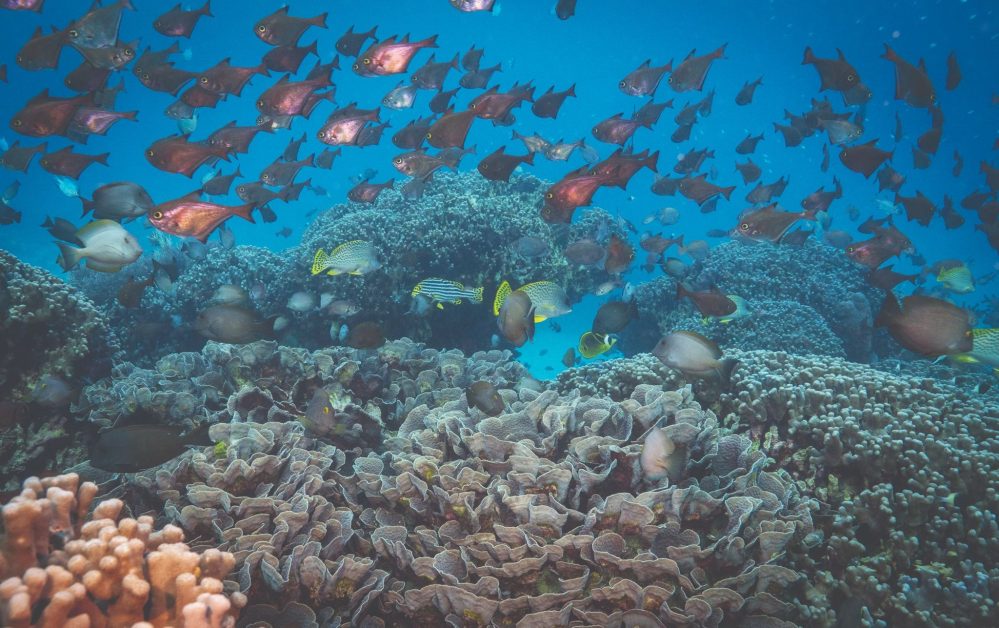
Researchers identified three distinct pathways through which reefs can persist in a warming world. Some reefs act as avoidance refugia, located in rare ocean “cool spots” where local conditions help shield corals from extreme heat and provide refuge from warming trends.
Others function as resistance refugia, where corals have developed adaptations that enable them to withstand heat stress, bleaching and other climate impacts that would damage less resilient reef systems.
A third group are recovery refugia, reefs that can rebound rapidly after disturbances such as bleaching events, cyclones or storms, rebuilding coral cover and ecological function faster than surrounding reef systems.
Nearly one billion people depend on coral reefs for food security, livelihoods and coastal protection. Yet water pollution from sewage, agricultural runoff, and sediment loss; destructive and unsustainable fishing practices; and poorly managed tourism and coastal development continue to accelerate reef decline worldwide.
Despite the growing scientific understanding of where climate-resilient reefs remain, major protection gaps persist. Only about 28% of identified priority reefs are currently within protected or conserved areas, leaving more than 119,000 km² outside existing conservation frameworks. Many existing marine protected areas also continue to face significant challenges with funding, enforcement, and long-term management capacity.
Kyle Zawada, the study’s lead author from Macquarie University, says the world’s coral reefs are facing an unprecedented crisis, with the risk of irreversible changes to coral ecosystems.
“By safeguarding these resilient reefs, we can help push back against declines driven by local human pressures and climate change. These reefs could act as living seed banks for wider ecosystem recovery, helping to ensure that future generations inherit living, functioning coral reefs and not just degraded versions of what they once were,” said Zawada.
The findings are being launched alongside the Our Reefs, Our Future campaign at the 2026 Our Ocean Conference in Kenya, a global effort led by WCS, the World Wildlife Fund (WWF) and The Nature Conservancy (TNC).
The campaign calls on governments to prioritise climate-resilient coral reefs within Marine Protected and Conserved Area (MPCA) networks and national 30×30 commitments, recognising these reefs as critical infrastructure for people, economies and coastal resilience.
It also seeks to mobilise greater political ambition and investment to tackle immediate local threats, including pollution, destructive fishing, unsustainable coastal development and poorly managed tourism, so these reefs have the greatest possible chance of surviving climate change.