JOVIAL RANTAO
IN the annals of South Africa’s liberation struggle, certain places become sacred ground, and certain moments become turning points. Naledi High School in Soweto stands as one such hallowed space, where in 1976, the seeds of revolution were planted in the fertile soil of youth resistance.
It was here that Enos Ngutshane, a matriculant whose courage would shape history, penned the fateful letter to apartheid education minister Minister M.C. Botha that became the first formal challenge to the oppressive language policy. But when the minister’s silence spoke volumes about the regime’s intransigence, it became clear that stronger action would be needed.
The tension reached its breaking point on June 8, 1976, when police arrived at Naledi High in their government-issue VW Beetle, seeking to arrest Tebello Motapanyane, the local leader of the South African Students’ Movement (SASM). The response was electric – students, their patience exhausted, pelted the police with stones, forcing them to flee, and set their vehicle ablaze. It was a moment that transformed Naledi’s schoolyard into the first battlefield of what would become a nationwide uprising.
Ngutshane and Motapanyane, working in concert with other student leaders, knew they had to channel this spontaneous resistance into organized action. On June 13, they gathered with other leaders in a crucial meeting that would change the course of history. There, they crafted the plans for the June 16 protest – a date that would be forever etched in the nation’s memory.
The ’76 generation, of which Ngutshane was a leading light, redefined the parameters of the struggle. These young lions, with textbooks in their hands and freedom in their hearts, transformed their schoolyard into a command center for dignity and justice. When they rose against the imposition of Afrikaans, they were fighting not just against a language policy, but against the entire edifice of Bantu education – a system designed to confine Black minds within the prison walls of apartheid thinking.
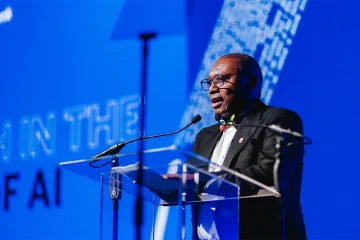
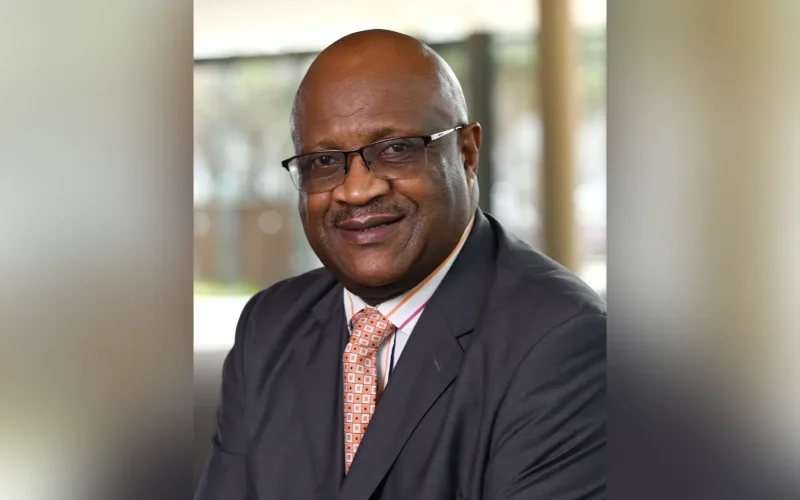
But Ngutshane’s story didn’t end with those tumultuous days of 1976. Like the true leader he was destined to become, he transformed the fire of youth resistance into the steady flame of professional excellence and national service. After his return from exile and studies at the University of Liverpool, he embarked on a remarkable journey of public service and corporate leadership that continues to this day.
As the former President of the Institute of Retirement Funds Africa (IRFA), where he continues to serve as a Board and Executive Committee member, Ngutshane has helped secure the financial future of countless South Africans. His intellectual prowess, demonstrated in his thought leadership on Corporate Governance, Local Government, Rail Engineering, Occupational Health and Safety, and Risk Management, shows how the revolutionary spirit of ’76 can be channeled into building and strengthening democratic institutions.
His path has taken him from the lecture halls of Wits Faculty of Commerce and Law to the corridors of power as Deputy Director General for Housing and Local Government in Gauteng. As CEO of the South African Foundation for Public Management (SAFPUM), he helped shape the public service that would serve a free South Africa. His fifteen-year stewardship as Chairperson and Trustee of the Prasa Provident Fund demonstrated his commitment to workers’ security and dignity.
As Chairperson of the CCMA Governing Body, Chairman of Utho Investment Management, and Board member of SASRIA, Ngutshane continues to build the South Africa he once dreamed of in those dangerous days at Naledi High. His current leadership at these crucial institutions shows how the courage to confront injustice can evolve into the wisdom to build justice.
From that brave young student who dared to challenge a minister, to the distinguished leader who helps guide national institutions, Enos Ngutshane embodies the transformation of South Africa itself. His journey reflects the country’s path from resistance to reconstruction, from protest to governance, from the fierce dreams of youth to the measured wisdom of leadership.
The story of Enos Ngutshane reminds us that the spirit of ’76 wasn’t just about tearing down the old order – it was about nurturing the leaders who would build the new. In his continued service to South Africa, we see the fulfillment of the promises whispered in the classrooms of Naledi High School, where a generation dared to imagine freedom, and then stepped forward to create it.