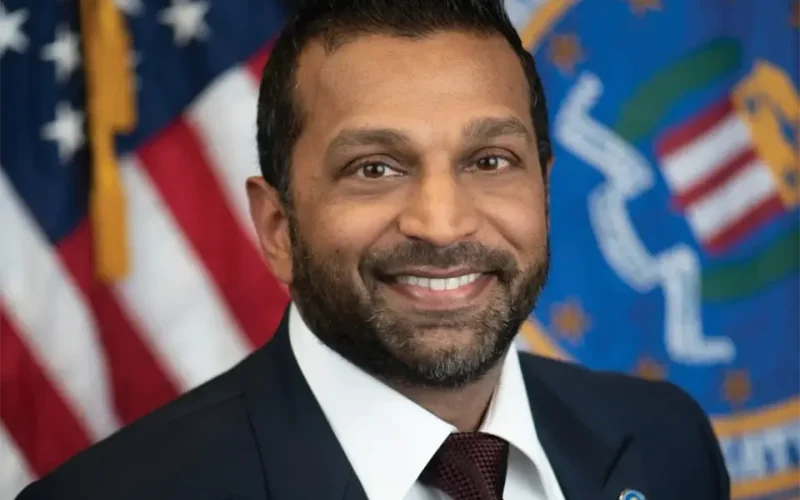
FBI Director Kash Patel faces intensifying scrutiny over his stewardship of taxpayer resources and leadership judgment as revelations emerge about luxury vehicle purchases, failed jet upgrade requests, and a pattern of behaviour that former Justice Department officials characterise as image-driven rather than mission-focused.
The BMW Controversy: Breaking With Tradition
The FBI has purchased armoured BMW X5 vehicles at Patel’s request, marking a departure from decades of tradition in which FBI directors travelled in Chevrolet Suburbans. The purchase raises fundamental questions about fiscal responsibility and the symbolism of leadership choices at America’s premier law enforcement agency.
Patel reportedly pressed for the luxury vehicles to be “less conspicuous” during his outings, a rationale that has provoked scepticism among current and former officials. MS NOW investigative reporter Carol Leonnig noted that armoured BMWs have traditionally been used in war zones and high-risk international environments, with no precedent for an FBI director requiring such vehicles.
The FBI’s defence of the purchase centres on cost savings. Spokesperson Ben Williamson stated the vehicles were selected as a cheaper alternative that would save millions, though the bureau declined to provide documentation showing costs or evidence supporting the claim of savings compared to the existing government fleet.
Former FBI officials pointed out that previous directors often travelled in Suburbans that weren’t even armoured, as the risk of being targeted in Washington and its suburbs was considered very low. The specialised BMW vehicles, designed to withstand AK-47 fire, are typically reserved for State Department diplomats operating in genuine conflict zones.
The Failed Jet Upgrade: A $100 Million Request
The BMW purchase represents a consolation after a more ambitious request was denied. Patel pushed the FBI earlier this year to purchase a new jet for his use, but the proposal was abandoned when cost estimates came in between $90 million and $115 million.
Multiple sources indicate that Patel found the existing FBI Gulfstream outdated and sought modernisation. When that failed, he reportedly ordered communications upgrades to the current aircraft, with sources suggesting he needed improved internet connectivity for simultaneous social media posting, though the FBI offered alternative explanations involving secure communications.
A Pattern of Questionable Resource Use
The vehicle and jet controversies form part of a broader pattern that has drawn bipartisan attention. In late October, Patel used the government jet to visit his girlfriend, country singer Alexis Wilkins, at a Penn State wrestling event before flying to her Nashville home, and assigned her a personal SWAT team for protection. This represents a notable shift from Patel’s previous stance as a critic of FBI directors using jets for personal travel.
Additional incidents have raised eyebrows about Patel’s priorities. Reports indicate Patel refused to exit the FBI jet at the scene of Charlie Kirk’s assassination until agents produced a properly fitted FBI raid jacket with appropriate patches. He ultimately wore a female agent’s jacket after his own wasn’t immediately available.
Patel has also faced criticism for creating and selling personal FBI challenge coins and for prematurely rushing to social media with investigation updates.
The Competency Question
Beyond questions of fiscal propriety lies a more fundamental concern about effectiveness. Two of the most notable events during Patel’s tenure—the investigations into the murders of Charlie Kirk and a Brown University shooting—saw the FBI go days without leads until independent citizens came forward, leading to bipartisan questioning of Patel’s competence.
Democratic Representative Eric Swalwell has been particularly vocal, suggesting that internal leaks represent desperate pleas from FBI personnel for leadership that can keep Americans safe. The House Judiciary Committee has opened an investigation into Patel’s use of government resources.
The Verdict From Former Officials
Stacey Young, a former Justice Department official and founder of Justice Connection, called the BMW decision “an embarrassment” and suggested it exemplifies Patel putting public image ahead of taxpayer concerns. Young’s assessment captures a growing sentiment among veterans of federal law enforcement that Patel’s tenure represents a troubling departure from institutional norms.
The accumulation of controversies—luxury vehicles, jet upgrade requests, personal travel on government aircraft, theatrical demands for photo-ready equipment—paints a picture of a director more concerned with the trappings of office than its responsibilities. Whether these represent lapses in judgment or a fundamentally different approach to leadership, they have unquestionably damaged the FBI’s reputation at a moment when public confidence in institutions remains fragile.
As investigations proceed and new revelations emerge, Kash Patel must answer not just for individual decisions but for a pattern of behaviour that raises serious questions about his fitness to lead America’s most important domestic law enforcement agency. The questions being asked of the FBI director are no longer just about luxury cars—they’re about judgment, priorities, and whether the person at the helm understands that public service demands sacrifice, not self-promotion.