IN a sophisticated operation that spanned multiple European jurisdictions, Italian authorities struck a significant blow this weekend – not on a battlefield, but in the shadowy world of terror financing. The arrest of nine individuals and seizure of over €8 million in assets linked to Hamas funding through purported charities represents more than a law enforcement success. It illuminates a strategic reality often overshadowed by kinetic military operations: the war against terrorism cannot be won without an equally vigorous war against those who bankroll it.
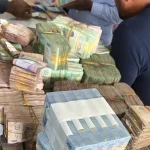
The Genoa prosecutors’ investigation, coordinated by anti-mafia and anti-terrorism units working with Dutch authorities through Eurojust, allegedly uncovered a network that diverted approximately €7 million over two years to Hamas-linked entities. Officers discovered over €1 million in cash stashed in charity offices and private residences, alongside pro-Hamas materials. These funds, raised under humanitarian pretences, allegedly sustained an organisation the European Union designates as terrorist.
The Economics of Extremism
Terrorism is, fundamentally, an enterprise that requires capital. Weapons, recruitment, training, safe houses, communications infrastructure, and operational planning all demand sustained financing. Hamas, like other designated terrorist organisations, has long understood this economic imperative and developed sophisticated mechanisms to exploit legitimate humanitarian channels.
The Italian case exemplifies a pattern seen globally: the weaponisation of charitable giving. By establishing organisations that ostensibly serve humanitarian purposes – aid for Palestinian civilians, medical assistance, educational programs – financiers create plausible deniability while funnelling resources to violent operations. This dual-use infrastructure makes interdiction challenging, as authorities must distinguish between legitimate humanitarian work and criminal enterprise.
Why Financial Warfare Matters
Military operations can degrade terrorist capabilities, eliminate leadership, and disrupt operations. But without addressing the financial architecture, such victories prove temporary. Money remains fungible, networks reconstitute, and operations resume once immediate pressure subsides.
Financial disruption offers several strategic advantages that complement direct action:
Sustainability: Unlike military operations that address immediate threats, dismantling financial networks creates lasting impediments. Rebuilding trust networks, establishing new channels, and recreating institutional relationships requires years, not months.
Attribution and accountability: Financial flows leave traces. Banking transactions, money transfers, and asset movements create investigative pathways that can expose broader networks, identify key facilitators, and demonstrate criminal intent in ways that withstand judicial scrutiny.
Legitimacy and legal frameworks: Counter-terrorism financing operates within established legal structures, both domestically and internationally. This approach garners broader international cooperation and avoids the diplomatic complications that can accompany military action.
Preventive impact: Interdicting funds before they reach operational commanders prevents attacks rather than responding to them. Each euro seized represents capabilities denied—weapons unpurchased, operatives unpaid, attacks prevented.
The Complexity of Modern Terror Finance
The Italian investigation’s coordination across multiple European jurisdictions through Eurojust highlights how terror financing has evolved. Modern networks exploit regulatory gaps between nations, utilise sophisticated financial instruments, and embed themselves within diaspora communities where cultural and linguistic barriers complicate detection.
The operation began with suspicious transaction monitoring – the unglamorous but essential work of financial intelligence units flagging anomalies in the billions of legitimate transactions processed daily. This surveillance capability, controversial in some quarters for privacy implications, demonstrates its value when properly targeted and legally constrained.
The Political Dimension
Prime Minister Giorgia Meloni’s praise for the operation reflects her government’s strong support for Israel during the ongoing Gaza conflict – a stance that has sparked substantial street protests domestically. This political context underscores a reality that complicates counter-terrorism financing: legitimate humanitarian needs in conflict zones create cover for illegitimate diversions.
Gaza faces a genuine humanitarian crisis. According to the enclave’s health ministry, Israel’s military operations have killed over 71,000 people since the October 7, 2023, Hamas attack that killed approximately 1,200 Israelis and triggered the current war. Distinguishing between aid for civilian populations and resources for designated terrorist organisations requires investigative precision and creates inevitable tensions between humanitarian imperatives and security concerns.
The Path Forward
Italian authorities’ success demonstrates what coordinated, intelligence-driven financial enforcement can achieve. Yet this single operation, however significant, represents one node in vast, resilient networks. Sustained pressure requires several commitments:
Enhanced international cooperation through frameworks like Eurojust that enable real-time information sharing and coordinated action across borders. Terror financing is inherently transnational; responses must be equally so.
Investment in financial intelligence capabilities, including transaction monitoring systems, investigative expertise, and analytical tools that can identify suspicious patterns amid enormous volumes of legitimate activity.
Regulatory frameworks that balance legitimate privacy concerns with security imperatives, ensuring financial transparency while protecting civil liberties.
Engagement with diaspora communities to distinguish between legitimate charitable giving and criminal diversion, building trust while maintaining vigilance.
Conclusion: Two Wars, One Struggle
The distinction between military operations against terrorist organisations and investigations into their financial networks is, in many respects, artificial. Both represent essential components of a comprehensive counter-terrorism strategy. While military action addresses immediate threats and degrades operational capacity, financial warfare strikes at sustainability and reconstitution.
The Italian arrests remind us that terrorism’s support infrastructure extends far beyond training camps and weapon caches. It includes accountants and fundraisers, charitable organizations and financial facilitators—individuals who may never handle a weapon but whose actions enable violence.
As Israeli Ambassador Jonathan Peled noted in praising Italian authorities, countering “the infiltration of radical Islamic elements that operate to promote terrorism” requires persistent, sophisticated law enforcement. The €8 million seized in this operation represents attacks prevented, capabilities denied, and networks disrupted.
In the broader struggle against terrorism, victories come not only from operations rooms and battlefields, but from prosecutors’ offices and financial intelligence units. The war against terror and the war against its financiers are not separate conflicts—they are inseparable dimensions of the same essential struggle. Italy’s operation this weekend demonstrates that understanding clearly.