IN a watershed moment for African security, law enforcement agencies across six nations have delivered a devastating blow to the shadowy financial networks that keep terrorist organisations breathing. Operation Catalyst represents nothing less than a paradigm shift in how the continent confronts the economic machinery of terror.
The numbers tell a story of unprecedented coordination: 83 arrests, 160 persons of interest identified, and a staggering USD 260 million in suspicious assets uncovered – all achieved through the first-ever joint operation bringing together financial crime, cybercrime, and counter-terrorism units under the coordinated leadership of INTERPOL and the African Union’s police agency, AFRIPOL.
What makes Operation Catalyst revolutionary is its recognition of a brutal truth: terrorism survives not on ideology alone, but on cold, hard cash flowing through increasingly sophisticated channels. The operation exposed the hydra-headed nature of terror financing -21 arrests for terrorism-related crimes, 28 for financial fraud and money laundering, 16 linked to cyber-enabled scams, and 18 connected to illicit virtual asset schemes.
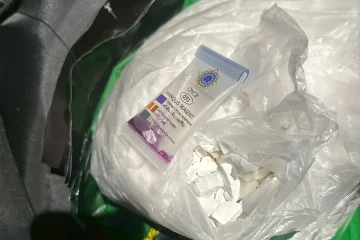
In Angola’s bustling commercial centres, authorities detained 25 individuals operating informal value transfer systems-the underground banking networks that move money across borders invisibly. Police seized USD 588,000, confiscated 140 devices, and froze 60 bank accounts in raids that peeled back layers of financial subterfuge.
Kenya’s operation revealed the new frontier of terror financing: cryptocurrency. Investigators uncovered a USD 430,000 money laundering scheme using virtual asset platforms, potentially feeding funds to extremist groups. Even more chilling, two suspects were arrested for recruiting young East and North Africans into terrorist organisations online, with the digital paper trail leading through cryptocurrency exchanges back to handlers in Tanzania.
Nigeria struck at the heart of the beast, arresting 11 suspected terrorists, including senior figures in multiple terrorist organisations. Meanwhile, investigations into a transnational cryptocurrency Ponzi scheme – masquerading as a legitimate trading platform- revealed connections that sent shivers through security agencies: over 100,000 victims worldwide lost an estimated USD 562 million, with several high-value wallets potentially linked to terrorism financing across Cameroon, Kenya, and Nigeria.
The Terrorism Scourge: A Continental Crisis
The urgency driving Operation Catalyst cannot be overstated. Across Africa, terrorism has metastasised from isolated insurgencies into a continental emergency that bleeds economies, displaces millions, and destroys the fabric of nations.
The Sahel’s Gathering Storm
The Sahel region endures perhaps the world’s fastest-growing terrorism crisis. In Mali, Burkina Faso, and Niger, jihadist groups affiliated with Al-Qaeda and Islamic State have transformed vast territories into ungoverned spaces. Burkina Faso alone has witnessed over 2 million people displaced by violence, while Mali’s crisis has created 400,000 refugees and sparked multiple military coups as governments struggle to respond.
The economic devastation is staggering. Burkina Faso’s gold mining sector – a crucial revenue source – has been repeatedly targeted, with terrorists either extorting mining operations or seizing control outright. The country’s GDP growth plummeted from 6.9% in 2021 to just 3.6% in 2023 as insecurity choked economic activity.
East Africa’s Long War
Somalia’s battle against Al-Shabaab continues into its third decade, with the group controlling rural areas and launching devastating attacks in Mogadishu and beyond. Despite an African Union peacekeeping mission, Al-Shabaab generates an estimated USD 100 million annually through taxation, extortion, and illegal trade, money that fuels continued attacks across East Africa, including the deadly 2019 DusitD2 hotel attack in Nairobi that killed 21 people.
Kenya faces its own terrorism challenges, with Al-Shabaab conducting cross-border raids and recruitment drives in the country’s northeast. The 2013 Westgate Mall attack (67 dead) and the 2015 Garissa University massacre (148 dead, mostly students) demonstrated the group’s reach and ruthlessness. The economic impact on Kenya’s crucial tourism industry has been severe, with repeated travel advisories costing billions in lost revenue.
West Africa’s Rising Threat
Nigeria confronts multiple terrorist insurgencies simultaneously. Boko Haram and its splinter faction, Islamic State West Africa Province (ISWAP), have killed over 35,000 people since 2009 and displaced more than 2 million people in the northeast. The Lake Chad Basin crisis has created one of Africa’s worst humanitarian emergencies, with 10.7 million people requiring assistance across Nigeria, Niger, Chad, and Cameroon.
The economic toll on Nigeria is catastrophic. The northeast’s agricultural heartland lies fallow, with farmers afraid to tend their fields. The World Bank estimates the crisis has cost Nigeria’s economy over USD 9 billion, while humanitarian response costs continue mounting.
Meanwhile, insurgencies are spreading along West Africa’s coastal states – Benin, Togo, Ghana, and Côte d’Ivoire increasingly face threats from groups operating from Burkina Faso and Mali, opening new frontiers in the terrorism crisis.
Mozambique’s Northern Nightmare
Since 2017, Mozambique’s Cabo Delgado province has suffered brutal attacks by Islamic State-linked insurgents. Over 5,000 people have been killed and 1 million displaced in violence that has threatened USD 60 billion in liquefied natural gas projects – investments that could transform Mozambique’s economy. TotalEnergies suspended its USD 20 billion LNG project in 2021 after a deadly attack, illustrating how terrorism directly strangles development.
The Human Cost
Beyond statistics, the human toll is immeasurable. Children in northeastern Nigeria have known nothing but war. Families in Burkina Faso flee villages repeatedly as violence washes back and forth. Students in Kenya wonder if their university might be next. Entire generations are growing up traumatised, undereducated, and without economic opportunity – creating the very conditions that terrorist recruiters exploit.
The Virtual Asset Revolution
Operation Catalyst exposed a disturbing evolution in terror financing: the weaponisation of cryptocurrency and digital platforms. One case involved a sophisticated crypto scheme that defrauded victims of USD 5 million, redirecting funds through multiple addresses and exchanges to obscure the trail – exhibiting methodologies consistent with known terrorist financing patterns.
This represents the new battlefield. Where traditional banking systems have erected compliance barriers, cryptocurrencies offer pseudonymity, rapid cross-border transfers, and limited oversight. Terrorist organisations, criminal syndicates, and fraudsters have rushed into this space, creating a toxic ecosystem where a Ponzi scheme in one country can ultimately fund bomb-makers in another.
A New Model for African Security
What distinguishes Operation Catalyst from previous efforts is its holistic approach. Rather than treating terrorism, financial crime, and cybercrime as separate silos, participating nations recognised these threats as interconnected tentacles of the same beast. Angola, Cameroon, Kenya, Namibia, Nigeria, and South Sudan shared intelligence in the pre-operation phase, supplemented by strategic cyber intelligence from INTERPOL and AFRIPOL, and critical data from private sector partners, including Binance, Moody’s, and Uppsala Security.
“Operation Catalyst is the first time financial crime, cybercrime and counter-terrorism units from multiple African countries have joined forces with INTERPOL and AFRIPOL to target the financing of terrorism,” declared INTERPOL Secretary General Valdecy Urquiza. “By sharing intelligence, expertise and resources, we can more effectively identify and disrupt the financial flows that support terrorist activities.”
Ambassador Jalel Chelba, AFRIPOL’s Executive Director, emphasised the power of unity: “This joint endeavour illustrates how coordinated action between Member States, facilitated by AFRIPOL and INTERPOL, can effectively address complex and evolving security threats. Africa’s law-enforcement community, when united, offers a decisive and appropriate response in the pursuit of a secure and stable Africa.”
Operation Catalyst’s success – USD 600,000 already seized with ongoing investigations to recover more – demonstrates what continental cooperation can achieve. The issuance of Red Notices for key suspects signals that perpetrators can no longer hide behind borders or digital anonymity.
Yet this is just the beginning. The USD 260 million in suspicious assets identified represents merely a fraction of the funds flowing to terrorist organisations. For every network disrupted, others adapt and evolve. The cryptocurrency realm remains largely unregulated across much of Africa, offering continued opportunities for exploitation.
The operation was delivered under the framework of the ISPA programme, funded by Germany’s Federal Foreign Office, highlighting the importance of international support for African security initiatives. Sustaining this momentum will require continued investment in capacity building, technology, and cross-border cooperation mechanisms.
A Fighting Chance
For too long, African nations have fought terrorism with one hand tied behind their backs, lacking the resources, coordination, and financial intelligence capabilities to strike at terror’s economic foundations. Operation Catalyst changes that calculus. It proves that African security forces, when empowered with the right tools and frameworks for cooperation, can take the fight to the enemy’s most vulnerable point: their wallet.
The 15,000 persons and entities screened, the 160 persons of interest identified, and the 83 arrests made send an unmistakable message: the days of freely moving blood money across African borders are ending. Every dollar seized is a bullet not fired, a bomb not built, a recruit not radicalised.
In the unforgiving mathematics of counterterrorism, Operation Catalyst represents a historic recalibration – not the end of the war, but perhaps the beginning of a new chapter where Africa’s enemies discover that the continent has finally learned to choke off the money that keeps their machinery of death running.
The question now is whether this breakthrough can be sustained, scaled, and replicated across other regions before terrorism’s next evolution outpaces law enforcement’s response. For the families mourning loved ones lost to terrorism, for the millions displaced and traumatised, and for the young Africans who deserve to grow up in peace- the answer must be ye