
THE20-month prison sentence handed down to former South Korean first lady Kim Keon Hee on Wednesday represents far more than the fall of one woman from grace. It marks another decisive chapter in South Korea’s relentless campaign to prove that power—no matter how elevated—offers no immunity from justice.
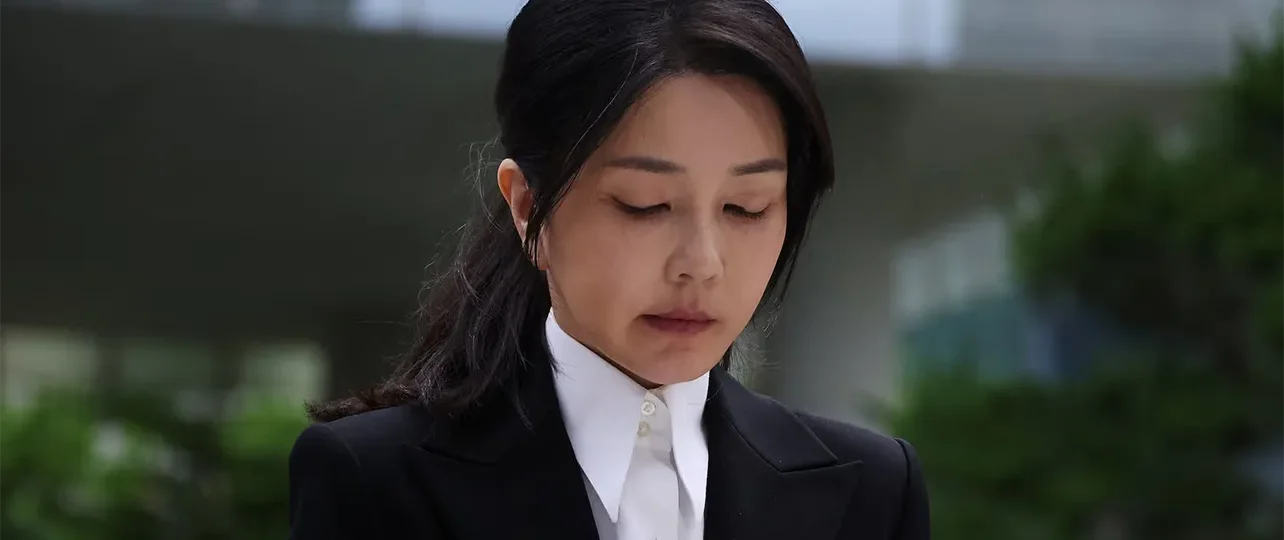
As Kim sat quietly in Seoul Central District Court, wearing a dark suit and face mask, the symbolism was unmistakable. The woman who once inhabited the Blue House, accepting luxury Chanel handbags and diamond jewellery, now faces the stark reality of a prison cell. The court’s message rang clear: in modern South Korea, privilege is not a shield against accountability.
A System That Refuses to Blink
Judge Woo In-sung’s words during sentencing cut to the heart of the matter. While acknowledging that the first lady position carries no formal governmental power, he emphasised its symbolic weight. “A person who was in such a position might not always be a role model, but the person must not be a bad example to the public,” he stated—a rebuke that transcends this individual case.
The court found that Kim had accepted expensive gifts from Unification Church officials in exchange for political favours, a clear abuse of her influential position. While she was acquitted on charges of stock manipulation and violating political funds laws, prosecutors are already moving to appeal those verdicts, demonstrating their determination to pursue accountability to the fullest extent.
The relatively lenient sentence—20 months compared to the 15 years prosecutors sought—might appear merciful. Yet it still sends an unmistakable signal: corruption at the highest levels will be met with consequences, not cover-ups.
A Pattern of Accountability
Kim’s conviction doesn’t exist in isolation. It forms part of a broader reckoning that has ensnared South Korea’s political elite with remarkable consistency. Her husband, former President Yoon Suk Yeol, faces an astonishing eight separate trials, including charges of insurrection following his disastrous attempt to impose martial law in December 2024. Prosecutors have even sought the death penalty in one case, while he has already received a five-year sentence for obstructing his own arrest.
This willingness to prosecute sitting and former leaders has become a defining characteristic of South Korean democracy. The country has imprisoned multiple former presidents, sending a clear message that the title of “president” or “first lady” comes with heightened responsibility, not reduced accountability.
From Suspicion to Sentencing
Kim’s troubles predated her husband’s presidency. Questions about her academic credentials and stock manipulation allegations had already drawn public scrutiny before Yoon’s 2022 election. Her alleged connections to a political broker and a shaman added fuel to concerns about inappropriate influence within the presidential circle.
The court’s decision to focus on the bribery conviction—the acceptance of luxury goods in exchange for favours—strikes at the most visible and publicly offensive aspect of the allegations. The image of a first lady accepting Chanel bags while ordinary citizens struggled resonated as a betrayal of public trust.
The Price of Power
Kim’s lawyers issued a statement saying she “humbly accepts the court’s stern criticism” and is “sorry for causing public concern.” But this contrition comes after months of denial and detention since August. The transformation from defiance to apology reflects the reality that in South Korea’s justice system, even the most powerful must eventually face the consequences of their actions.
The court ordered confiscation of the diamond necklace and imposed a fine of 12.8 million won ($8,990)—symbolic gestures that pale beside the 20-month sentence but underscore the stripping away of ill-got gains.
A Democracy’s Immune System
What makes South Korea’s approach remarkable is its consistency. While supporters of Yoon and Kim braved freezing temperatures outside the courthouse to cheer the partial acquittals, the broader public sentiment supports the aggressive prosecution of corruption at all levels. This isn’t about political persecution—it’s about institutional accountability functioning as it should.
The court’s ruling reflects a mature democracy’s immune response to corruption, regardless of where it appears in the body politic. When Judge Woo noted that a first lady must not be “a bad example to the public,” he articulated a standard that many democracies aspire to but few enforce so rigorously.
The Road Ahead
As Kim begins her sentence—already detained since August—and her husband faces potential execution for insurrection charges with a verdict due February 19, South Korea demonstrates that accountability extends to the very pinnacle of power. This isn’t about revenge or political theatre. It’s about maintaining the principle that no position, no matter how exalted, places anyone beyond the reach of law.
The former first lady’s journey from luxury goods to prison uniform serves as a stark reminder: in South Korea, corruption will be prosecuted, power will be scrutinised, and justice—however imperfect—will be pursued. For a democracy, that’s not just a message. It’s a promise kept.