A coalition of governments and international organisations have announced a comprehensive Action Plan to dramatically increase private sector investment in developing countries, addressing a $4 trillion annual financing gap that has widened since the pandemic.
The initiative, unveiled at the Fourth Financing for Development Conference (FFD4), brings together the UN Capital Development Fund, UN Economic Commission for Africa, African Union Commission, OECD, and governments from Finland, Norway, and Switzerland, among others. The plan specifically targets mobilising private capital for the world’s 44 Least Developed Countries, home to 880 million people.
The announcement comes as official development assistance declined by over 7% last year compared to 2023, according to OECD data. This drop coincides with a stark investment imbalance: while global assets have doubled to $482 trillion over the past decade, only 5% flows to developing countries excluding China, with an even smaller fraction reaching the most underserved markets.
“The world has the resources – the money we need – to eradicate poverty,” said Pradeep Kurukulasuriya, Executive Secretary of the UN Capital Development Fund. “Much of those resources lie with the private sector in the world’s most developed nations and they will likely remain there until the real and perceived risks that act as a barrier to investment in underserved markets are tackled head-on.”
The Action Plan centres on blended finance models that combine public sector resources with private capital to reduce investment risks in emerging markets. Current official development finance mobilises only $57 billion in private investment annually – representing just 1% of the $6-7 trillion needed annually to meet UN Sustainable Development Goals.
The coalition has set specific implementation targets:
- At least 16 OECD DAC countries to endorse the plan by March 31, 2026
- 27 African countries and 27 non-African developing countries to sign on by the same date
- 16 developed and 54 developing countries to begin implementation by June 30, 2026
Political Backing
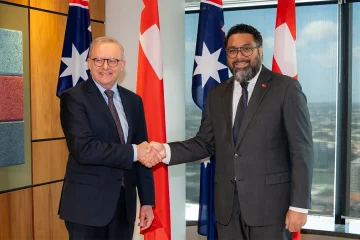
Norway’s Minister of Development, Åsmund Aukrust, emphasised the urgency: “Addressing the financing gaps in Least Developed Countries and underserved markets is critical to tackling poverty, hunger, and climate challenges.”
Finland’s Minister for Foreign Trade and Development, Ville Tavio, highlighted the need for standardisation: “We believe that developing a common action plan and standardising the proven blended finance models will help us scale up private capital mobilization.”
Market Reality
The financing gap has grown from $2.5 trillion pre-pandemic to $4 trillion annually, while cross-border private investment flows from developed to developing countries have remained consistently low. The Financial Stability Board reports that despite massive global wealth accumulation, investment patterns show little change in favor of emerging markets.
Joan Larrea, CEO of Convergence Blended Finance, noted the timing: “As traditional streams of overseas development assistance dry up, more people than ever are talking about the promise of blended finance. At FFD4, with this joint proposal, we have made a significant step towards making that promise a reality.”
The Action Plan will be developed through 2025 and 2026, with implementation beginning in mid-2026. The initiative represents one of several concrete proposals emerging from the once-in-a-decade FFD4 conference aimed at restructuring global development finance architecture.