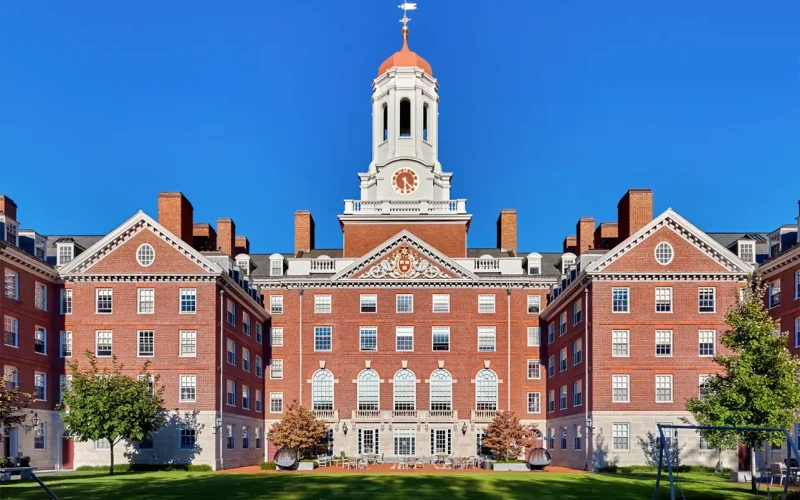
IN a dramatic escalation that pits America’s oldest and wealthiest university against presidential power, Harvard University has chosen principles over pragmatism – risking $2.3 billion in federal funding to defend what it sees as core academic freedoms.
When the Trump administration presented Harvard with a sweeping list of demands – from dismantling diversity initiatives to overhauling international student admissions – university leadership made a calculation that few other institutions have dared: they said no.
“The University will not surrender its independence or relinquish its constitutional rights,” declared Harvard President Alan Garber in a public statement that has sent shockwaves through higher education. While Columbia University previously capitulated to similar government demands to restore its funding, Harvard has elected to fight, casting itself as a defender of academic freedom in a politically charged environment.
The consequences were swift and severe. Within hours, the Department of Education announced the freezing of $2.3 billion in federal funds to Harvard. More alarming for the university, officials indicated that an additional $9 billion in multiyear grant commitments could be under review.
Even for an institution with Harvard’s $53.2 billion endowment – the largest of any university – this represents an extraordinary financial gamble. The university already faces headwinds, with endowment donations dropping by $151 million in 2024 as several billionaire donors withdrew support over concerns about antisemitism on campus.
At its core, this confrontation represents a fundamental dispute about who should govern America’s universities. The Trump administration’s demands went far beyond addressing antisemitism, extending to control over faculty promotion, student admissions, campus discipline, and organisational structure.
Key demands included:
- “Reducing the power” of faculty deemed “more committed to activism than scholarship”
- Ending all affirmative action in hiring and admissions
- Changing international student admissions to screen for those supportive of “American values”
- Closing all diversity, equity, and inclusion programs
- Implementing a comprehensive mask ban for protesters
Harvard’s lawyers argue these requirements violate First Amendment rights and freedoms recognised by the Supreme Court – essentially claiming the government is attempting to exert unconstitutional control over university affairs.
Barack Obama has come out in support of Harvard. In a statement, the US President from 2009 to 2017, says: “Harvard has set an example for other higher-ed institutions – rejecting an unlawful and ham-handed attempt to stifle academic freedom, while taking concrete steps to make sure all students at Harvard can benefit from an environment of intellectual inquiry, rigorous debate and mutual respect. Let’s hope other institutions follow suit.”
The Harvard-Trump standoff occurs against a backdrop of increasing government pressure on elite universities. Princeton, Cornell, and Northwestern have all seen federal funding suspended or frozen in recent weeks. Nine universities and three education associations have filed a lawsuit challenging new Department of Energy funding caps that will save the government $405 million annually.
The Harvard confrontation appears to be the most significant escalation yet in this wider struggle. By refusing to bend to presidential pressure in an era of heightened political polarisation, Harvard has positioned itself as a test case for university independence in the face of government influence.
With Harvard’s chapter of the American Association of University Professors filing a lawsuit accusing the administration of “unlawful and unprecedented misuse of federal funding,” this conflict seems destined for the courts. At stake is not just Harvard’s funding but potentially the relationship between government and higher education across America.
For Harvard, the question now becomes how long it can maintain its stance as financial pressures mount. For other universities, the decision will be whether to follow Harvard’s lead or take Columbia’s path of accommodation.
In an era where political divisions increasingly extend into academic institutions, Harvard’s resistance represents more than just a budget dispute – it signals a fundamental clash over who ultimately controls the direction of American higher education.