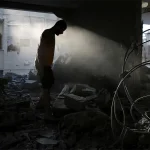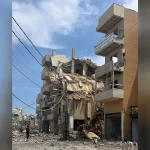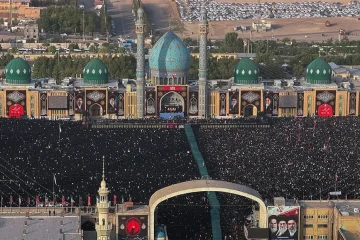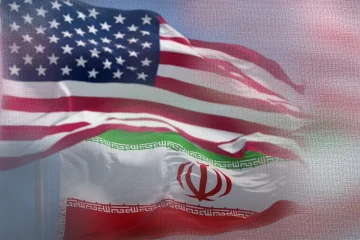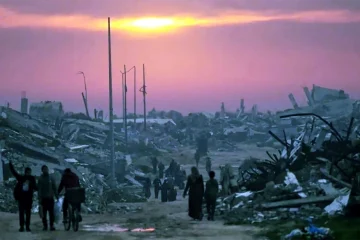

THE American and Israeli attacks on Iran and the confusion within the United States over the war’s objectives are making headlines.
The attacks, and Iran’s counter-tactics of targeting American military bases and allies in the region is having geopolitical ramifications beyond Iran’s borders. The surge in oil prices is just one way the war is affecting people around the world.
The war is also having a significant impact on other conflicts globally — especially the Russia-Ukraine war. The assault on Iran is helping advance Russian interests as it prepares for a spring offensive against Ukraine.
Impact of the war on Russia
The current phase of the Russia-Ukraine war is entering its fifth year, with the cost of the conflict in terms of resources and human casualties mounting on both sides.
One U.S. think tank estimates Russia’s total number of casualties at over 1.2 million, forcing Russia to rely on North Korean soldiers and illicit recruiting practices, primarily in Africa and Asia, to make up for a shortfall.
Russian casualty levels have impacted how it approaches the conflict, but equally important from Russian President Vladimir Putin’s perspective is maintaining support among both the broader populace and the Russian oligarchs. Preventing the Russian economy from collapsing has been critical to Putin’s endeavours.
The linchpin of the Russian economy is oil revenues, which are a critical component of the country’s federal budget. Efforts by Ukrainian allies to limit Russia’s ability to profit from oil revenues have resulted in oil reaching the lowest percentage of Russia’s budget in 2025 in over five years.
But the U.S.-Israeli war against Iran, however, is likely to reverse this trend and indirectly further Russia’s war efforts.
The oil factor
Rising oil prices are the most immediate impact of the American-Israeli attack on Iran. In response to the attacks, Iran has shut down the Strait of Hormuz — a critical juncture in global energy responsible for one-fifth of the world’s oil supply.
Iran has also targeted hydrocarbon production in surrounding states to further increase the strain upon the U.S., Israel and their allies.
Rising oil prices benefit Russia. The closure of the Strait of Hormuz is having a disproportionate impact on Asia because the majority of the oil that goes through the strait is bound for Asian markets. That means Asian countries will have to look elsewhere to replace it.
The likely replacement source for Middle Eastern oil is Russia. Despite efforts by Ukraine’s allies to impose a price cap on Russian oil, Russia’s shadow fleet has succeeded in evading Western sanctions.
China and other Asian countries will seize upon relatively cheaper Russian oil to insulate their economies against the energy shocks created by the war on Iran.
The oil profits generated by Russia as a result will help it continue its war in Ukraine. Given the declining state of the Russian economy, this turn of events couldn’t have happened at a better time for Putin.
Ukraine’s need for global support
The Ukraine-Russia conflict has become a war of attrition. The resources needed for victory go beyond the immediate resources that either Russia or Ukraine possess. Ukraine, in particular, needs its allies to focus on developments in the conflict.
The war in Iran, however, is diverting global attention from Russia-Ukraine. This works to Russia’s advantage.
America’s bombing campaign against Iran is also rapidly exhausting its stockpile of munitions. U.S. President Donald Trump has blamed former President Joe Biden for the shortage.
While the U.S. has cut supplies to Ukraine under Trump, Ukraine still relies on its European allies purchasing munitions from the U.S. due to Europe’s atrophied arms industry. As the war drags on, Ukrainian needs are likely to take a backseat to American needs.
Glimmer of hope?
Trump commented last year that Ukraine had no cards left to play in the war against Russia. Iran’s attacks, however, have exposed a critical weakness in American capabilities: drone warfare.
While the U.S. and its Gulf allies have shot down most Iranian drones thus far, they’ve done so at a disproportionate cost and are rapidly exhausting their air defence capabilities.
Ukraine has mastered drone warfare and countermeasures and is now arguably the most innovative state in these areas. A war game in 2025 between Ukraine and NATO in Estonia demonstrated Ukrainian superiority in this area of warfare.
Trump, in fact, has asked Ukraine for assistance in this area. It’s an opportunity Ukraine should seize upon to counter the many existential risks it faces due to the war in Iran.
James Horncastle, Assistant Professor and Edward and Emily McWhinney Professor in International Relations, Simon Fraser University
- This article is republished from The Conversation under a Creative Commons license. Read the original article.