I am writing these words from Paris. Just a few months ago, I was evacuated from Gaza through the French consulate after enduring nearly two years of siege, bombardment, and starvation. I left with nothing but the clothes I wore, my phone, and my ID card. My family and friends remain behind, surviving in ruins. The guilt of leaving them has no language.
By Nour ElAssy
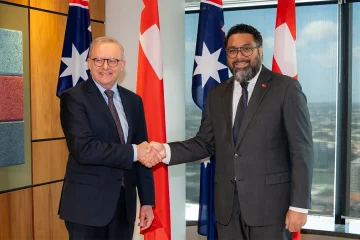
And yet, as I learn to breathe in exile, the world suddenly finds its voice: After decades of denial and equivocation, Britain, Canada, Australia, Portugal, France, Belgium, and other Western states have now joined over 145 other countries in “recognising” the State of Palestine.
The headlines, press releases, and diplomatic applause have been abundant. Forgive me if I do not clap.
Palestine does not need recognition. Palestine does not need permission to exist. We are not an idea waiting for validation from London or Paris. We are a people, a land, a history written in olive groves, refugee camps, exile, and resistance.
The Palestine Liberation Organisation declared independence in 1988. In 2012, the United Nations recognised Palestine as a non-member observer state. The problem was never that Palestine lacked recognition. The problem is that Palestine lacks freedom and action.
What recognition does not do
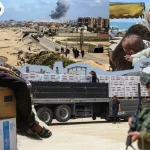
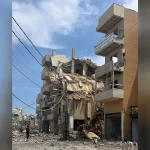
Recognition does not stop the missiles falling tonight on Gaza, where more than 65,000 of my people have been killed since October 2023. It does not resurrect the families that have already been buried under concrete collapsed by bombs. It does not return the farmer’s land seized by settlements nor open the checkpoints that strangle the West Bank.
Recognition is paper. Palestinians are bleeding flesh.
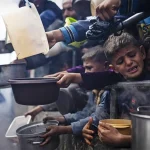
It does not end the Israeli-induced famine in Gaza City – my home, which is being ethnically cleansed as I write these words – or lift the siege that has turned Gaza into a prison camp of dust and hunger. It does not free even one of the more than 11,000 Palestinians held in Israeli prisons. It does not let refugees return home.
Recognition is paper. Palestinians are bleeding flesh.
For us, Gazans, whether in exile or living the hell of the genocide inside, we know that this recognition doesn’t stop the death toll. I know it won’t bring back my family’s house. My father knows it will not bring back his many family members who have been killed in this war. When I talked to my friends and family in Gaza after these announcements, their answers were sharp and true.
My cousin Salma is still in northern Gaza City, where evacuation orders and violent Israeli assault are closing in. “They talk of recognition while I have no bread for my children. Recognition does not stop the drones above us. It does not give me medicine for my sick mother,” she said.
My dear friend, the writer Hanan Azaiza, said: “Recognition might embarrass Israel internationally. But it does not stop the bombs, it does not end the hunger, it does not rebuild my home.”
This is how we feel: Recognition is symbolic at best, insulting at worst. It changes nothing in daily life.
What we need is action
What makes this spectacle unbearable is its hypocrisy. How can Western leaders recognise Palestine while continuing to arm Israel? While not using all of their leverage to end the slaughter? While protecting the occupation from accountability? How can the same governments that watched Gaza starve and burn suddenly act as if they stand with us?
Arab leaders are no less complicit. Some shake hands with Israel in one room and pretend to negotiate in Palestine’s best interest in another. How can you be on the side of both the jailer and the prisoner, the occupier and the occupied, as if they are equals? That is not solidarity. That is betrayal. Recognition without sanctions, without boycotts, without justice is not recognition. It is performance.
For many Palestinians, hearing “we recognise” feels like an acknowledgement of our reality – of our suffering. It cracks the silence.
What we actually need, urgently, is not applause but action. An immediate and permanent ceasefire. The lifting of Gaza’s blockade. Full humanitarian access. Food. Water. Medicine. Shelter. An end to settlement expansion and land theft. International accountability for war crimes. True sovereignty over borders, airspace, resources, and governance. The right of return for millions of refugees exiled for generations.
This is what liberation looks like. Anything less is theatre staged over our graves.
To be fair, this move is more than nothing. For many Palestinians, hearing “we recognise” feels like an acknowledgement of our reality – of our suffering. It cracks the silence. It asserts in international forums that Palestine’s claim to dignity, to land, to justice is not trivial. It raises the cost of silence. It gives us more tools – legal, diplomatic, moral – to demand something more. It sends a message that the status quo is no longer tolerable for many governments, and that perhaps one day the occupation will be held accountable.
But as a Palestinian student now in Paris, I carry the voices of those who cannot leave. I scroll through the news every day and see new massacres. I remember neighbours and classmates who no longer exist. Then I hear foreign leaders congratulating themselves for recognising what we have always known.
So, do not ask us to celebrate. Recognition is meaningless while Gaza is starved, bombed, and occupied. Recognition is hollow when families are still digging their children out of rubble. Palestine already exists. What we demand is freedom.
If recognition is to mean anything, it must be tied to liberation. Otherwise, it is hypocrisy. Otherwise, it is betrayal. Otherwise, it is noise echoing over the ruins of Gaza. We do not need your recognition. We need you to stop enabling our annihilation.
–––––
The New Humanitarian puts quality, independent journalism at the service of the millions of people affected by humanitarian crises around the world. Find out more at www.thenewhumanitarian.org.