
By Fatima Ibrahim
Late on a night near the end of March, Israeli soldiers pounded on the doors of apartments in the densely populated and usually bustling heart of Tulkarm, a city in the north of the Israeli-occupied West Bank. Heavy rain was pouring down, whipped sideways by chilling winds. The families inside the homes were observing the Muslim holy month of Ramadan, but the soldiers ordered the residents of several buildings to evacuate, citing plans to convert the structures into military outposts.
Unable to object, the families rushed to gather whatever belongings they could – identification papers, a few personal items – and left. Those who could called relatives in different neighbourhoods to seek refuge in their houses. Others had nowhere to go. Soon, children carrying bags of clothing and blankets emerged into the muddy, dark roads. The soldiers had only given the families one hour to get out.
“We all left, wandering. No one knew where we could go at this late hour of the night and in this difficult weather,” Abdulsalam Sharab, a 50-year-old father of six, told The New Humanitarian. “We didn’t know the purpose of seizing our homes. What does it mean to turn the home of a family of eight into a military barracks?”
Over a month later, Sharab’s building and the others in the centre of Tulkarm are still occupied by the Israeli military.
Similar scenarios have played out countless times in recent months across the West Bank, where, on 21 January, Israel launched Operation Iron Wall, its largest military action in years in the illegally occupied territory.
Israeli military and settler violence – accompanied by forced displacement, land grabs, and settlement expansion – have been increasing in the West Bank since October 2023. The escalation began after the Palestinian political and militant group Hamas launched its deadly attack into Israel, but it has been largely overshadowed by Israel’s devastating retaliatory war on Gaza, where Hamas is the governing authority.
The new military campaign in the West Bank, which Israeli officials say could last for a year, was launched just two days after the now-collapsed ceasefire in Gaza took effect. In its first month, more than 40,000 people were displaced from their homes – the largest number in the West Bank since Israel occupied the territory in 1967.
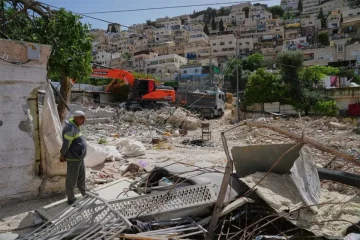
The Israeli military says it is going after Palestinian militant groups that have formed in recent years in refugee camps in the northern West Bank. But in addition to forcing people out of their homes and largely destroying the camps in Tulkarm and Jenin, it has seized land, demolished infrastructure, arrested thousands, and installed dozens of road gates to control and restrict people’s movement. All of this is taking place amid calls from senior Israeli politicians for the official annexation of large parts of the territory.
The governorate of Tulkarm, home to two of the most densely populated camps in the West Bank for Palestinians driven out of their homes by the establishment of Israel in 1948 and their descendants, has been one of the epicentres of the violence, along with Jenin and Tubas in the north and Hebron in the south.
Long before October 2023
Even before October 2023, living conditions for Palestinians in the West Bank were dire. During the first eight months of that year, settler violence had already reached the highest rates recorded by the UN since it began documenting in 2006, and forced displacement due to the violence was also on the rise.
Long-standing and ever-tightening Israeli restrictions on the 2.7 million Palestinians living in the West Bank had put a significant damper on the economy, with the 567 Israeli checkpoints impeding the movement of people and goods being just one example.
The situation got much worse after October 2023. Iron Wall is only the latest – and largest – of several significant Israeli military incursions in the past year and a half. The number of checkpoints has also risen to nearly 900 – an uptick of almost over 330 since early October 2023. And the unemployment rate has jumped from around 15% to over 32%, and continues to rise.
The restrictions on movement have had a massive impact on businesses. The Tulkarm Chamber of Commerce and Industry recorded a 60% to 80% drop in the revenues of local businesses due to the Israeli military’s deployment in the city and closure of checkpoints.
According to Qais Awad, head of the chamber of commerce, approximately 12,000 workers have lost their jobs since the beginning of Israel’s new military campaign. “Nearly 250 commercial establishments have been completely destroyed. This compares to 3,000 businesses that have closed their doors in the past 25 years,” he said, adding that Tulkarm’s financial losses range between 10 and 15 million shekels (about $2.7 to $4.1 million) a day.
Displacement and expanding settlements
On a hill overlooking the Nur Shams camp, one of the two refugee camps in Tulkarm, 55-year-old Ibtisam Abdel Rahman watched in late March as Israeli bulldozers destroyed homes, anxiously wondering if hers would be next. The camp – a warren of narrow alleyways lined with multi-storey cement buildings – is located about three kilometres from the city centre. It is next to a sewage network that floods with the winter rains, blanketing the camp in a foul smell and insects.
Abdel Rahman has been displaced and living in the suburb of Iktaba since early February. “We had no choice but to leave,” she said.
Before being displaced, she and her family endured days without water due to Israeli-imposed supply cuts. Then, the order came from the Israeli military: Evacuate within two hours or face bombardment. “We are four families living side by side – my two brothers, my sister, and I. We had two hours to leave. Twenty-seven of us fled with nothing but the clothes on our backs. Now, we all crowd into my sister’s small home. It is unbearable.”
Abdel Rahman still clings to the hope of returning, even if only to a tent pitched on the rubble of her home. “The people of Gaza returned [to their wrecked homes] during the ceasefire, even though Israel violated it. This is all we want – to be able to return too,” she said.
As Palestinians are being displaced, the construction of Israeli settlements is rapidly expanding. More than 10,300 units are in the pipeline for existing Israeli settlements in the West Bank, and an unprecedented 49 new settlement outposts were established between November 2023 and the end of October last year, according to a UN report.
“Dozens of unauthorised roads have been paved by settlers and the army around settlements and outposts, helping to connect them while blocking Palestinians’ movement and enabling further seizure of their land,” the report says.
Additionally, 20,000 housing units are planned in new and existing Israeli settlements, and 214 Palestinian properties and structures have been demolished in East Jerusalem, which is part of the West Bank but has been unilaterally annexed by Israel and is divided from the rest of the territory by a separation barrier and checkpoints.
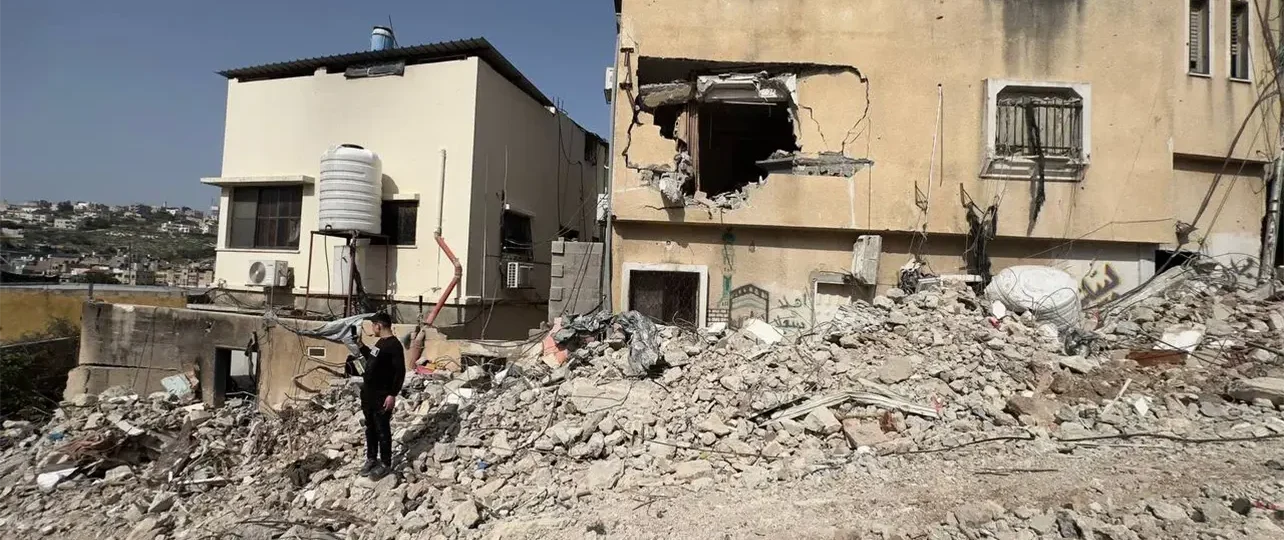
According to Abdullah Kamil, the governor of Tulkarm, Israel aims to alter the demographic landscape of northern West Bank camps, including Nur Shams, Tulkarm, Jenin, and potentially Nablus. “Two thousand homes have been partially or completely destroyed since the start of the military operation in Tulkarm. Four thousand families are facing displacement, 70% of whom are children,” Kamil told The New Humanitarian.
“Israel seeks to rewrite the history of this place, and it won’t succeed,” he said.
Limited aid and limited hope
Palestinian families who have been displaced from Tulkarm and Jenin and have nowhere else to go are staying in nearly a dozen public shelters. A recent UN report found that these facilities often lack water, medicine, bedding, bathrooms, showers, and cleaning materials. Many of the people staying in them are forced to reduce or skip meals because they are not able to afford food, and children are unable to attend school.
“The Palestinian government is scrambling to provide shelter for displaced families,” Kamil said. “We are working to provide temporary housing for those who lost their homes.”
This comes at a time when the UN’s agency for Palestine refugees, UNRWA – the main provider of aid and services in camps throughout the West Bank – is facing major barriers to its operations due to Israeli efforts to dismantle it. A ban on UNRWA that came into effect on 30 January has forced schools, healthcare centres, and other vital services to suspend their operations.
Coupled with reductions to US and other foreign aid budgets – as well as moves by Israel to curtail the activities of humanitarian NGOs – residents of Tulkarm have largely been left to fend for themselves, according to Nihad Abu Shawish, head of the Nur Shams Camp Services Committee, a government body that works closely with aid organisations.
Even local businessmen who have regularly provided support in the past have been unable to do so this year. Two consecutive years of decline in their sales because of the escalating violence and restrictions have impacted their businesses and hindered their ability to finance aid efforts in the community, he added.
Over 11,000 displaced residents of the Nur Shams camp are staying in five shelters across the city and its suburbs. “They received little aid from UNRWA, as Israeli restrictions hamper relief efforts. Most of the aid has come from international charities, but it’s not enough,” Abu Shawish said. “Even the Palestinian Authority provided no real support.”
Meanwhile, on the hill overlooking the camp, a group of young men huddled around a fire, seeking warmth as they watched Israeli forces continue their demolitions. Among them was 26-year-old Abdel Karim Nasrallah, who had fled his home in the Manshiyya neighbourhood ahead of Israel’s incursion into Nur Shams.
“We knew the military operation would expand, so we had no choice but to leave,” he said, recounting how his family of five relocated to the nearby town of Anabta.
As he spoke, an explosion rocked the area. Israeli forces had just demolished another home.
“We are lucky we found a place to stay,” Nasrallah said. “We’ve lived through many raids and operations, but this current situation is unbearable. This operation is different. No one is spared.”
This piece was published in collaboration with Egab. Edited by Dahlia Kholaif and Eric Reidy.
–––––
The New Humanitarian puts quality, independent journalism at the service of the millions of people affected by humanitarian crises around the world. Find out more at www.thenewhumanitarian.org.