THE sun had barely crested the horizon when Shahrzad woke her daughters. Today wasn’t like the countless other mornings they had experienced in Areesha camp. Today, after seven long years, they were finally going home.
“Pack only what you need,” she whispered to her daughters, aged 7 and 8, though the instruction was unnecessary. The girls had been ready for days, their few possessions already gathered, their excitement palpable in the predawn darkness of their tent.
Outside, the normally quiet camp entrance buzzed with activity. Eighty-four residents loaded their lives, what remained of them after years of displacement, into waiting trucks. Some laughed. Others wept tears of joy. All shared a singular thought: home.
Shahrzad’s daughters waited impatiently as their mother completed the final paperwork before boarding the minibus that would carry them 200 kilometres south to Al Mayadin in Deir-ez-Zor governorate. There, they would reunite with their father, who had been in Damascus receiving medical treatment.
“I wish everyone could feel the joy I feel today,” Shahrzad said, her voice thick with emotion. “I’ve waited for this moment for seven years. There is nothing left to fear now.”
For Shahrzad’s eldest daughter, who arrived at the camp as an infant, home exists only in her mother’s stories. Her younger sister, born within Areesha’s confines, has never known any other life. Neither child has memories of the place their parents speak of with such longing.
“My daughters keep imagining all the things they want to do once we are back,” Shahrzad explained, watching as the girls clutched their small backpacks. “They were so happy while packing. My joy doubled when I saw my children being happy about going back home.”
The fall of the Assad government in December 2024 opened a door that had been firmly shut for more than a decade. For the first time in years, over 7 million internally displaced Syrians and 5.5 million refugees in neighbouring countries could dare to imagine a return to their former lives.
In northeast Syria alone, an estimated 214,000 people live in camps like Areesha or informal settlements. Most have endured prolonged and repeated displacement since the conflict began, spending an average of nine years away from their homes. Many, like Shahrzad, fled military offensives in 2017, carrying children and whatever possessions they could grab in their desperate flight to safety.
“During our regular interactions, displaced Syrians in Areesha camp have been asking us to support their transport home. The cost is prohibitive—approximately $500 per family,” explained Marcel Colun, UNHCR’s Head of Sub Office in Qamishli. “Through our support, each family has a truck to load their personal belongings, which is essential to helping them restart their lives.”
But transportation is just the beginning. Areas around Deir-ez-Zor remain littered with unexploded mines, causing some parents to delay their return out of fear for their children’s safety. UNHCR organises mine-awareness sessions specifically for children in community centres to prevent accidents.
For families like Shahrzad’s, the journey home means facing the physical destruction of the places they once knew. Many return to find their homes damaged or destroyed, basic services non-existent, and livelihoods gone.
“Without support, we would be unable to pay for transportation, which is too expensive,” Shahrzad explained. “My home is still there, but destroyed, so we can’t live there yet. Basic services are also lacking.”
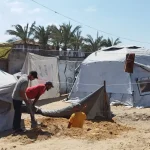
Some families, including Shahrzad’s, take their camp tents with them, pitching them near their damaged homes while undertaking essential repairs—a bittersweet symbol of transition between displacement and true homecoming.
As the loaded trucks and minibuses pulled away from Areesha camp that April morning, those left behind watched with a mixture of hope and envy. For them, the wait continues.
UNHCR has developed plans to help some 3.5 million Syrian refugees and internally displaced people projected to return home in 2025, including nearly 1.5 million who have already done so. But these efforts face devastating challenges as global humanitarian funding has been brutally cut. This year, UNHCR must reduce its workforce in Syria by 30 per cent and close nearly half of the community centres that provide vital services to returnees.
“This is a moment displaced Syrians have been waiting for years, and we now have a unique opportunity to help them return home,” said Richard Ndaula, UNHCR Coordinator for the Repatriation of Syrian Refugees. “Creating the conditions for voluntary return of displaced people is at the heart of UNHCR’s mandate.”
As Shahrzad’s minibus drove away from Areesha camp, her daughters pressed their faces against the window, watching the only home they’d ever known recede into the distance. Ahead lay uncertainty, challenges, and hard work—but also the promise of a life reclaimed.
For the first time in seven years, they were moving toward something, not running away.