
AS diplomats try to thrash out a US-Iran peace deal and how Lebanon fits into it, more than a million people who fled Israeli bombardment face a pressing question: If and when they are able to go home, do they actually have the paperwork they need?
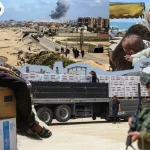
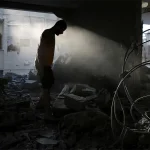
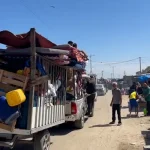
Over the past four months of Israel’s heavy airstrikes and occupation of South Lebanon, many of the country’s internally displaced had to flee for their lives with no time to think about packing anything at all, let alone various forms of ID.
In Lebanon, people need official documents to access many important services, such as enrolling in school, receiving medical treatments, or starting a job. Many displaced by the conflict are now living in rented homes, with relatives, or in shelters across the country. Along with dealing with ongoing violence – which has reportedly killed at least 4,192 people in Lebanon – and uncertainty about ceasefires, they are also struggling to obtain the documents they need because of bureaucratic barriers.
As Mustafa Qarout, the mukhtar of the south Lebanon village of Meis al-Jabal, put it, “geographic dispersal has made obtaining any official document nearly impossible.”
A mukhtar is an elected official responsible for authenticating documents, registering births and deaths, and acting as a liaison between residents and the state. But, like Qarout, many mukhtars are themselves now displaced, while administrative offices have been moved or closed, working hours have been reduced, and prices have shot up.
Delays in receiving documentation can prevent people from travelling to see relatives, end the chances of much-needed employment, and add to the psychological toll of the war.
If and when the fighting ends and people return to south Lebanon, the problem is only likely to get worse: Any future compensation or help rebuilding the tens of thousands of destroyed and damaged homes, as well as death benefits for people killed, is expected to require even more paperwork.
With his entire village of 30,000 displaced, Qarout said people are growing increasingly frustrated: “The way the Interior Ministry is operating looks like it was designed to punish the displaced, not help them.”
A struggling system breaks
Lebanon’s documentation crisis has two overlapping dimensions.
The first is the sheer scale of displacement: Constant bombardment and sudden mass evacuation orders affecting entire cities have forced tens of thousands of southerners to flee without documents.
The second is a bureaucratic failure that predates the war but is now severely compounded by it. Lebanon’s two key civil registries – personal and family – are run by the Interior Ministry. They were supposed to be fully centralised and digitised years ago, but this process stalled around 2021 due to the combined pressures of an ongoing economic crisis and COVID-19.
That means that before the war, some records had already been put into a central system. Getting certified copies of these birth, marriage, or death records took only a few hours to a day, and this could be done quite easily by mukhtars like Qarout. Other certified copies of various documents still went through the mukhtar system, but they took longer as the information wasn’t digitised and had to be physically accessed from archives.
Now, as Mukhtars from the south are mostly displaced and registry offices have been moved to major cities like Sidon and Beirut, what once took half a day for even the easier documentation now takes weeks, and prices have rocketed up.
In some ways, this has not been the catastrophe it could have been. Youssef Kleib, who runs a government shelter at the Faculty of Law at the Lebanese University in the southern city of Sidon, said requirements that people show ID have mostly been suspended.
“Many families fled their villages under bombardment with no time to retrieve identity papers,” Kleib told The New Humanitarian. The change in ID policy, he said, “reflects a collective awareness among all official and international bodies of the necessity of prioritising the humanitarian dimension over complex bureaucratic procedures in times of crisis”.
At another shelter, in downtown Beirut, supervisor Ahmad Hamid described a similar reality. Hundreds of families had arrived there from southern villages, having left without personal documents because Israeli strikes had forced sudden, panicked displacement. But “the absence of papers has not prevented anyone from receiving support”, Hamid said, adding that “national and humanitarian solidarity in this period demands exceptional flexibility.”
One day a week for 44 villages
The worst-case scenario may have been avoided, but the costs and time required to sort out basic things like an offer of new employment – a crucial step for many displaced people who have lost livelihoods as well as homes – are still prohibitive.
Take for example what has happened in Nabatieh. More than 276,000 people lived in the small southern city and its surrounding areas before the war. Wherever they are now, Nabatieh residents who need to access the registry must travel to the Interior Ministry in Beirut, where one day a week has been allocated to them for a province that was made up of around 44 towns and villages, most of them now empty.
“How can the rights of hundreds of thousands of displaced and scattered people be compressed into one day and a few hours?” asked Ali Shakroun, mukhtar of the Nabatieh village of Kfarman, which was home to around 11,000 people. Like most of his neighbours, Shakroun is now displaced and staying in north Lebanon.
Kfarman residents still turn to Shakroun for help with their documentation, but he can’t make regular trips to Beirut because it’s too far and petrol is expensive. “Every time a citizen contacts me to complete a transaction, I find myself helpless and embarrassed,” said Shakroun. “The geography of displacement has paralysed our ability to serve.”
Those who try describe the experience as running a gauntlet. Qarout said the process has effectively become a three-stage ordeal, with no clear ending: People from his village of Meis al-Jabal submit their request in Beirut on an initial visit. Then they must come back again to receive an appointment. Then they enter what he called “a dark tunnel where you have no idea when the transaction will be completed or in which drawer it was buried”.
The cost for official documents or registering births, deaths, and marriages is around $23, more than five times the cost at the start of the war – and no small fee in a country where 79% of people were considered to be living in multidimensional poverty in 2022, with 27.4% living under the national poverty line. These numbers are likely much greater now, which means even fewer people are able to afford petrol, the official fees, plus what three separate mukhtars referred to as “informal payments” that have effectively become mandatory due to the war economy, if you want things to progress.
“There is not a single employee in these departments… who completes a transaction without receiving a commission or bribe,” said Qarout. “For every document, you are expected to pay roughly 100,000 Lebanese lira ($1.11) to move things along,” he said. “By what logic do we ask a citizen whose family has lost their home, their livelihood, and their loved ones to pay this amount simply to obtain a piece of paper proving who they are?”
Lebanon’s Interior Ministry did not reply to official requests for a comment, but a source in the ministry, who spoke on condition of anonymity because they were not authorised to speak to the media, denied the allegations of bribery.
They also said that moving offices to Beirut and elsewhere was “intended to remove the geographic and security obstacles preventing residents from reaching their local administrative centres, and to provide a single, accessible point of contact for all displaced southerners to process accumulated paperwork as quickly as the circumstances demand.”
Overall, they said changes were made “to ensure displaced southerners can continue accessing administrative services despite the security situation”.
A second punishment that adds insult to injury
Muhammad Asayli, a mukhtar from the border area of Bint Jbeil – which has been devastated by Israeli airstrikes, fighting, and demolitions that international legal experts say amount to war crimes – said the documentation problem for the 250,000 people who used to live in his region was severe: Around 90% of residents fled without any paperwork.
But Asayli said the Interior Ministry had moved to address some of the gaps for residents of his area, with offices open for Bint Jbeil across the country, plus a recently announced exception that allows citizens to use older documents when applying for other registry changes.
“We haven’t encountered a single case where we were ultimately unable to secure the person’s document,” said Asayli. “But it is taking more and more time and effort and trips back and forth, which add up quickly for displaced families trying to complete transactions from afar.”
He noted that official stamps proving a document has been paid for are selling on the black market for around $12, which is double their official price.
Mohammed Hijazi was forced to leave Meis al-Jabal early in the war and is staying in Baabda, near Beirut. He wanted to get ID documents for himself, his wife, and his daughter, in part so they could eventually look to get help rebuilding a home he assumes has been destroyed.
“The savings we left home with are not enough for more than a few months. In the middle of this deprivation, we discovered that the price of a document that used to cost $4 had jumped to $20 since the war started.” He ended up having to pay $60 all at once. “That is a serious amount for a displaced family.”
Zaher Srour, a 38-year-old displaced from the southern village of Aita al-Shaab, has been sheltering in a school in the northern governorate of Akkar since early March. He described his quest to get a passport so he could join his brothers for work outside of Lebanon as a second punishment layered on top of the displacement.
“We are not talking about a passing crisis but about a southern community that has collapsed entirely,” he told The New Humanitarian. “Farmers whose harvests were burned by phosphorus shells have lost their only source of income. And, on top of that, we are forced to pay enormous sums and travel a long transit between Akkar and Beirut (two hours by car) just to prove our identity or obtain a passport to escape this hell.” Srour still doesn’t have a passport.
Bureaucratic challenges extend even to death.
When a southerner is killed in an Israeli strike, their family must navigate what Qarout describes as a “long and complicated ordeal” to register the death and complete burial paperwork.
If the legal 45-day window for registering a death passes – as it routinely does when families are displaced, unreachable, or simply overwhelmed – the process is transferred to the Finance Ministry and the bereaved family is fined around $28 before the death can be officially recorded.
This can also lead to a delay in obtaining a burial permit and additional costs like keeping bodies in hospital morgues, which can be $20 to $30 a day.
For many, the red tape and the expense feels like an unnecessary indignity, adding insult to injury amidst the already stressful experience of war and displacement.
And as Asayli pointed out, it isn’t likely to get easier anytime soon: “The deeper problem is that return is not an option soon: Israeli occupation of frontline villages means residents cannot go back to retrieve what they left behind.”
This story was produced in collaboration with Egab. Edited by Dahia Afif and Annie Slemrod.
–––––
The New Humanitarian puts quality, independent journalism at the service of the millions of people affected by humanitarian crises around the world. Find out more at www.thenewhumanitarian.org.