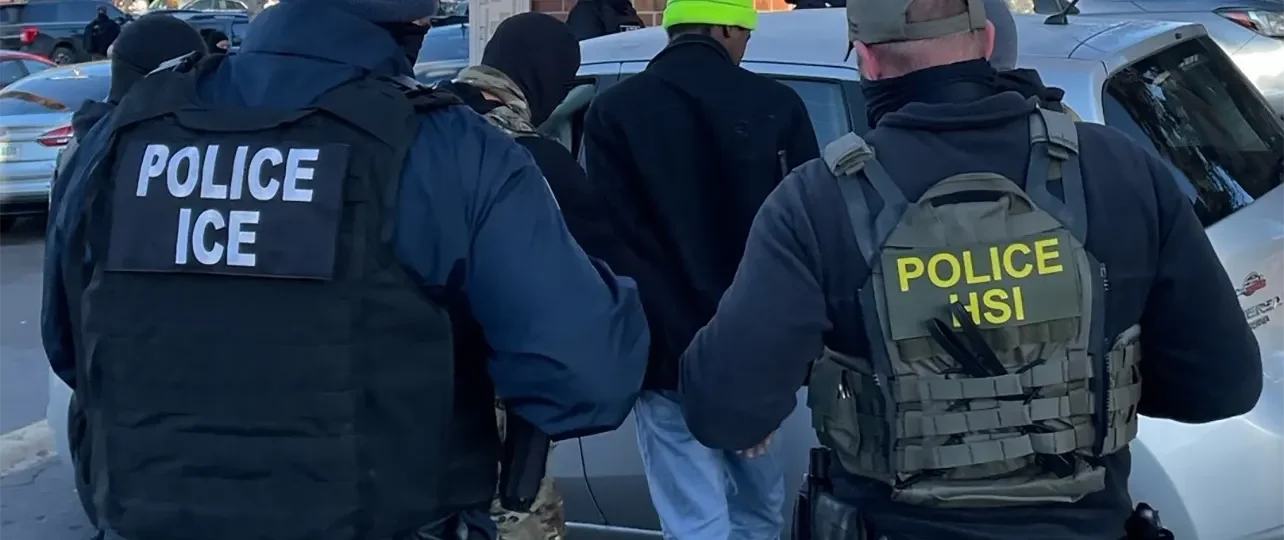

FOR three months between December 2025 and March 2026, the world’s most powerful government turned its security apparatus on a single American metropolitan region — and what it produced, according to Human Rights Watch, was not law enforcement but terror. In a 180-page report released this week, the New York-based watchdog has delivered one of the most damning indictments yet of the Trump administration’s immigration enforcement machinery, documenting killings, mass arbitrary detention, racial profiling and a climate of fear so pervasive that it emptied clinics, classrooms and city streets across the Twin Cities of Minneapolis and Saint Paul.
The report, titled “‘A Manufactured Crisis’: Minnesota Communities Terrorized by the Federal Government,” is the product of interviews with more than 130 people — immigrants, lawyers, healthcare workers, educators and current and former officials — alongside an analysis of video evidence, sworn court declarations, government data and independent surveys. Its conclusion is unambiguous: Operation Metro Surge, the largest interior deployment of federal immigration agents since President Donald Trump returned to office, was not an isolated overreach but a vivid demonstration of patterns that recur wherever Washington concentrates its Department of Homeland Security (DHS) machinery on American towns and cities.
A Body Count on American Streets
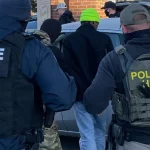
Two names anchor the report’s moral weight: Renee Good and Alex Pretti, both US citizens shot dead by federal agents in incidents that ignited national outrage in January. Investigators found a broader pattern beneath these killings — agents repeatedly drawing firearms on residents without justification, smashing vehicle windows without cause, shoving people who posed no resistance to the ground, and firing chemical irritants and flash-bang grenades at close range and without warning.
The killing of Pretti, captured in the harrowing image of a protester sitting in the street with his arms raised before a line of federal agents on a Minneapolis avenue, has come to symbolise the entire operation — a citizen surrendering to a force that, Human Rights Watch argues, had already abandoned the restraints that distinguish policing from punishment.
The Machinery of Mass Detention
Behind the headline violence lies a detention apparatus of staggering scale. Human Rights Watch found that Immigration and Customs Enforcement (ICE) detained roughly 4,000 immigrants over the course of the operation — more than three-quarters of whom carried no US criminal conviction at all. Many, the report concludes, were detained arbitrarily, with no individualised basis beyond their presence in the wrong place.
The US court system has, in effect, corroborated this finding. Of 532 habeas corpus cases resolved between 1 December 2025 and 15 May 2026, lawyers secured release orders or bond hearings in close to 90 percent — a conviction rate for the government’s underlying detentions, inverted, that few prosecutors would tolerate in any other context.
Profiling by Skin, Not by Law
Perhaps the report’s most politically combustible finding is its documentation of racial profiling as a tool of policy rather than an aberration of individual agents. A survey conducted by the US Immigration Policy Center at the University of California San Diego found that people of colour in Minneapolis were roughly 40 percent more likely than white residents to report an encounter with federal agents. Citizens of colour told researchers they had taken to carrying their passports at all times, treating their own constitutional birthright as a document requiring proof.
US citizenship itself proved no shield. More than 500 American citizens were arrested while protesting or simply observing ICE and Customs and Border Protection activity, according to figures compiled by the National Lawyers Guild of Minnesota — a statistic that should trouble even those Americans inclined to view immigration enforcement as someone else’s concern.
The Quiet Casualties
The report’s most consequential argument may be the one furthest from the cameras: that terror itself, sustained over months, inflicts harm independent of any single raid or arrest. Healthcare clinics in the affected area recorded patient-volume drops of up to 50 percent at the operation’s peak, with people skipping even urgent and emergency care rather than risk the journey. Thousands of children missed school outright or were withdrawn into virtual learning by parents too afraid to put them on a bus.
Human Rights Watch records the testimony of a seven-year-old girl whose father was seized during a home raid in December, and who now begs him not to leave the house. Her mother, pregnant at the time, did not leave home for prenatal care for months afterward. It is testimony of this kind — ordinary, domestic, unglamorous — that the report insists will outlast the news cycle. As one resident told researchers, the cameras will move on long before the grief and trauma do.
Analysis: Impunity as a Governing Method
What distinguishes this report from a routine accounting of enforcement excess is its insistence that Operation Metro Surge was not anomalous within the administration’s broader approach to immigration, but illustrative of it. Human Rights Watch frames Minnesota as a uniquely well-documented case study — the scale of the deployment matched by the speed and volume of residents who organised to witness, film and record it — of tactics deployed in concentrated form across other American cities with less scrutiny.
That framing carries weight beyond US borders. For readers across Africa long accustomed to watching Washington position itself as the world’s adjudicator of human rights conduct — issuing State Department reports on policing, detention and minority treatment from Lagos to Nairobi to Pretoria — this report inverts the lens. The conduct it documents, including unlawful killings of citizens, racially targeted policing, and detention regimes that courts have repeatedly found unlawful, would draw swift and pointed condemnation from Washington were it observed in any government south of the Mediterranean. Operation Metro Surge is a reminder that accountability for state violence is not a Global South problem to be lectured about, but a universal obligation that the world’s most powerful democracy has, on this evidence, failed to meet for its own residents.
Accountability Still Owed
Human Rights Watch is explicit that Operation Metro Surge’s official conclusion does not close the matter. The organisation is calling for a structural overhaul of DHS and its component agencies, including ICE and CBP; the reconstitution of meaningful transparency and oversight mechanisms; enforceable limits on the use of force; and accountability that reaches officials at every level of command — not only the agents who pulled triggers and trigger-guards, but those who designed and authorised the operation. The organisation says it wrote to DHS on 30 April with a detailed summary of its findings and a list of questions. As of this report’s publication, it had received no response.
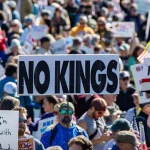
Reagan Williams, a crisis and conflict researcher at Human Rights Watch who led the investigation, put the stakes in stark terms: agents were sent in to seize people off the streets and abuse those who tried to bear witness, while ordinary Minnesotans organised to protest, document and care for one another in the gaps the state left behind. The silence from Washington since April, set against the volume of evidence now in the public record, is itself a form of answer — and not one likely to satisfy the families of Renee Good and Alex Pretti, or the thousands who spent a winter afraid to leave their own homes.