
A viral video posted just after Christmas spurred an avalanche of news coverage, changes from the Trump administration, and congressional hearings that appeared to indicate that a massive trove of child care fraud was just uncovered in Minnesota.
Much of it has been misleading.
The video by right-wing YouTuber Nick Shirley, posted on December 26, purports to show that various Minneapolis day cares run by Somali Americans are not providing services to children despite receiving public funding. Although the video has already been debunked by investigators, the Trump administration and Republicans in Congress have seized on it. Vice President JD Vance said Shirley “has done far more useful journalism than any of the winners of the 2024 [Pulitzer Prizes].”
The fallout has been massive. In the past week, the Trump administration has frozen child care payments to five Democratic-run states and ramped up reporting requirements for all states receiving child care funds to cover services for the lowest-income kids. Minnesota Gov. Tim Walz, a Democrat, has suspended his reelection campaign over it.
But the real story behind child care fraud in Minnesota is far less nefarious.
Here’s what we actually know about child care fraud in Minnesota and elsewhere, and how day cares and families may be impacted by the new changes.
What does Nick Shirley uncover in his video?
Nothing conclusive. The video shows Shirley visiting daycares run by Somali Americans, sometimes under the false pretence of trying to enrol a child. In a couple of instances, workers do open the door but seem immediately suspicious when it’s clear Shirley is recording them and refuse to let him in or give him more information.
Because some of the sites appear closed and Shirley doesn’t see any children, he declares this as proof of fraud at these facilities.
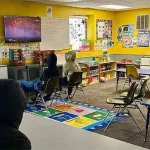
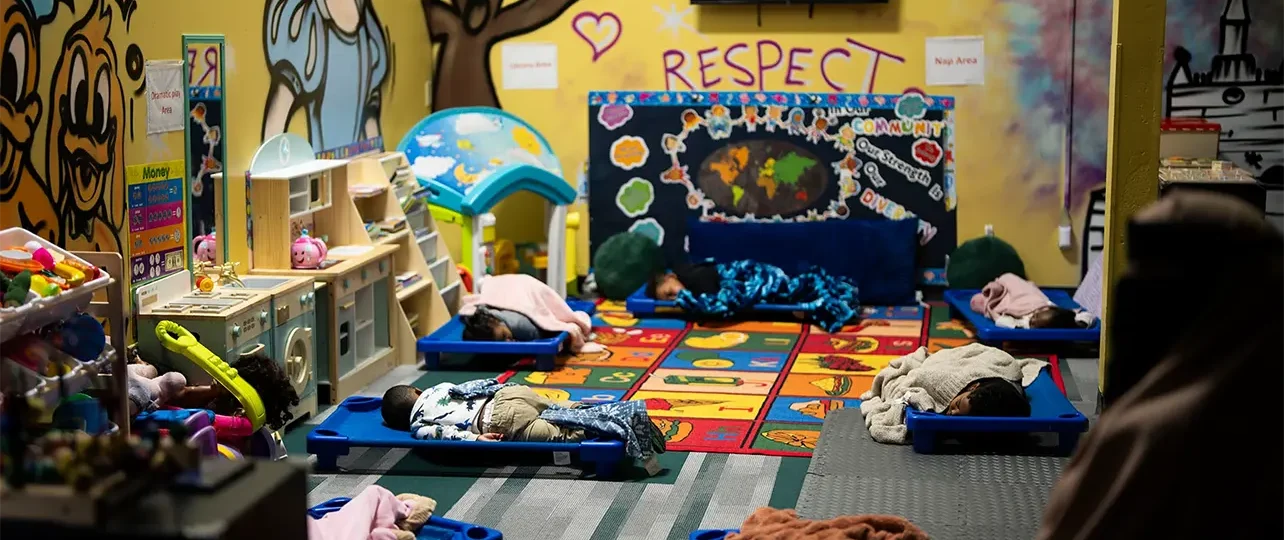
Most child care centres are locked and have obscured doors or windows for children’s safety. Children are also kept in classrooms and would not likely be visible from a reception area. One of the day cares in the video told several news outlets that it did not grant Shirley entrance because he showed up with a handful of masked men, which raised suspicions that the men were agents with Immigration and Customs Enforcement. At least one of the centres was closed at the time Shirley arrived because it opens later in the day to serve the children of second-shift workers.
Is there a history of child care fraud in the state?
Yes, but it’s not as widespread as Shirley claims.
The federal government sends money to states to subsidise the cost of care for very low-income children, and some states put additional funds into that system. In Minnesota, it’s known as the Child Care Assistance Program, or CCAP. Centres that accept children on subsidies will bill the state for the cost of caring for those kids.
In 2019, a state investigation found that there were probably several million dollars in child care fraud taking place within that system, where centres were billing for children they were not providing services for. Investigators believed the level of child care fraud in the state was more than the $5 million to $6 million prosecutors had been able to prove until that point.
By 2019, state prosecutors had charged at least a dozen Minnesotans and centres with defrauding the state’s child care program in the prior five years.
After the 2019 report was issued, the state tightened oversight, including creating the Department of Children, Youth and Families (DCYF) to take over child care licensing, oversight and auditing. Last year, Minnesota passed a law to criminalise kickbacks for child care program enrollment referrals.
A 2025 report by the federal Department of Health and Human Services Office of the Inspector General found that issues with overpayments continue in the state. The OIG sampled 1,155 child care centres and found that 11 percent of the payments made to those centres in 2023 had errors.
But that doesn’t necessarily mean there was fraud. Improper payments is an umbrella term that could include fraud.
For example, “an improper payment is a child was present for 40 hours and somehow the state paid only for 30 hours. Fraud is when you’re charging for kids that were never enrolled,” explained Danielle Ewen, a national child care expert.
An 11 percent rate puts Minnesota above the permissible 10 percent threshold established by the federal government, Ewen said. On average, nationwide, the rate is 4 percent.
So while child care fraud is something Minnesota has been working to reduce in recent years, “these are not new issues, but they are being repackaged, and they are being promoted in ways to make it seem like there is an epidemic,” said Elliot Haspel, a national child care expert, on a call with reporters this week.

Is there evidence of large-scale child care fraud nationwide?
No.
According to a 2020 report by the United States Government Accountability Office, only seven states since 2013 have had errors in more than 10 percent of their child care fund payments. That also does not mean there is necessarily fraud, but rather errors in overbilling.
The federal Office of Child Care did not respond to questions from The 19th about which states are above the threshold.
What did state investigators find when they investigated the day cares in the videos?
State investigators conducted unannounced visits at the day cares in the viral video over the past six months as part of the typical licensing and auditing process, according to Tikki Brown, the commissioner of the Minnesota DCYF. An analysis of publicly available inspection records by The 19th found that most of the centres had unannounced inspections as recently as October, November or December.
After the video was posted, investigators from the state Office of Inspector General conducted compliance visits to nine of the 10 centres in the video (one of the centres in the video has been closed for several years and has not received funds in that time). They found normal operations and children at all but one, which had not yet opened for the day. Further investigations are being conducted into four of the nine facilities, but the state has not said what exactly it’s investigating.
Most of the centres in the video did have numerous state licensing violations against them regarding cleanliness, staff supervision and some recordkeeping around immunisations and allergies. But none of the violations against the centres were regarding fraud, according to state enforcement records.
Quality Learning Centre, the centre most prominently featured in the video, because one of its signs misspelt learning, closed this week. Another centre in the video, Mako Childcare Centre, has been closed since 2022, Minnesota DCYF said.
There is evidence of one of the day cares in the video having a connection to prior fraud investigations. Fowsiya Hassan, the CEO of Minnesota Best Childcare Centre, previously owned another day care called Sunshine Child Care Centre that was raided in 2022 as part of an overbilling fraud investigation. No charges were brought.
Hassan sued the state last year over the raid, which led to the closure of Sunshine, claiming “licensing and fraud investigations in Minnesota have long been disproportionately targeted against Somalis.”
How can I check if my child’s day care has been inspected and audited?
Every state is federally mandated to publicly report the results of inspections at licensed child care centres (including the dates of the inspections), and day cares are required to undergo at least one unannounced inspection a year. In Minnesota, that information can be found at the state’s Licensing Information Lookup tool.
To find information on your state, visit The 19th’s child care safety dashboard, which has a link to each state’s dashboard of child care providers.
Why was the Somali community targeted?
David Hoch, the lobbyist and former right-wing candidate for Minnesota attorney general who serves as the main source in Shirley’s video, received information on the centres from Republican staffers in Minnesota.
Hoch has had a particular focus on the Somali community and fraud for some time. In a now-deleted Instagram account, Hoch posted almost exclusively about the Somali community, according to reporting in The Intercept.
“EVERY Somali in MN is engaged in fraud. ALL of them,” Hoch posted. “Even the Blacks have had enough of the demon Muslims,” he said in November.
Over the years, whistleblowers alleged that the fraud money in Minnesota’s child care system was being used to fund the Somali terrorist organisation al-Shabab. The 2019 Office of the Legislative Auditor investigation found those claims to be unsubstantiated.
The Somali community has been a particular target of President Donald Trump, who has claimed that “much of the Minnesota Fraud, up to 90%, is caused by people that came into our Country, illegally, from Somalia.”
The president last month called Somali immigrants “garbage” who he doesn’t want in the country.
Minnesota has the largest Somali population in the United States, and child care has historically been an industry that employs large numbers of immigrants. About 1 in 5 child care workers are immigrant women.
Since Shirley’s video, there have been numerous reports of people harassing Somali-run day cares and businesses either through in-person visits demanding to see children, or through threatening phone calls. At least one centre was broken into.
Day cares in Minnesota have reported concerns for children and staff safety, particularly as ICE activity in the state has ramped up.
Dawn Uribe, the owner of four Spanish-immersion preschools in Minnesota, said she “really can’t overstate how afraid” her all-immigrant staff is since the video was posted, even though all have work authorisation and most are citizens or permanent residents.
“We are really preparing for the next couple of weeks for people to be calling off [work] and not coming,” Uribe said.
What is the child care funding freeze and who is impacted by it?
After the video was released, the Trump administration announced a funding freeze to five Democratic-run states: Minnesota, California, Colorado, New York and Illinois. The freeze would stop federal child care funds from flowing to states to cover care for low-income children. It was also pausing $7.3 billion in funding for the Temporary Assistance for Needy Families program, which supports low-income families, in those five states.
The five states impacted sued the administration over the freeze, arguing that withholding the funds from low-income and vulnerable families would cause “immediate and devastating impacts.” On Friday, a federal judge ordered the Trump administration to release the funds while the case is pending.
Officials had previously said funds would be released “only when states prove they are being spent legitimately.”
In Minnesota, state officials had until Friday to provide additional documentation, including Social Security numbers for all of the estimated 23,000 children who receive child care funds in the state, to the federal Department of Health and Human Services.
The state has informed providers that it has “several months” of reserves to cover care for those children should federal funds be frozen, so child care centres and families have not been impacted directly.
It’s unclear what evidence the Trump administration had to justify freezing funds to California, Colorado, New York and Illinois. In a letter to Illinois Gov. JB Pritzker, Alex Adams, the assistant secretary for the Administration for Children and Families, said the Trump administration was “concerned by the potential for extensive and systemic fraud in Illinois” and added that it has reason to believe the state is “illicitly providing illegal aliens with CCDF benefits intended for American citizens and lawful permanent residents.”
Nationally, every state will also now have to submit additional documentation to access child care dollars, a process that could slow payments to centres and increase the risk of day cares cutting staff or limiting operations.
Andrew Nixon, a spokesperson for the Department of Health and Human Services, declined to comment on any of the questions from The 19th.
“For too long, Democrat-led states and Governors have been complicit in allowing massive amounts of fraud to occur under their watch,” he said in a statement. “Under the Trump Administration, we are ensuring that federal taxpayer dollars are being used for legitimate purposes.”
Are there other impacts from the freeze?
National child care experts said there is a lot of confusion around exactly what data the federal government is requiring states to submit, and whether it’s even data that states have on hand to provide.
For providers and families, there is a lot of uncertainty about what happens next and whether a freeze could still occur.
Freezing child care funding can lead day cares to cut staff, close classrooms or close entirely because many don’t have reserves to continue operations. During the government shutdown at the end of 2025, for example, numerous Head Start child care programs that rely on federal funding closed in at least 13 states.
Kylie Cooper, a director of a child care centre in the Twin Cities, said that the families who face the most uncertainty are those with the fewest resources if their child care options fall through.
“These are the families who absolutely need [it],” she said. “They likely don’t have PTO or benefits in place with their employers if they have to take a day off work for child care. There’s no support system.”
About 95 percent of the families who receive assistance in her program are headed by single mothers.
“If that freeze were to go into effect, there are a whole lot of centres that run on a very thin margin, and most of their kids are CCAP,” Cooper said. “They would last less than a month before they’re closing their doors.”