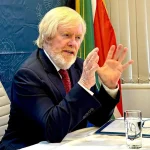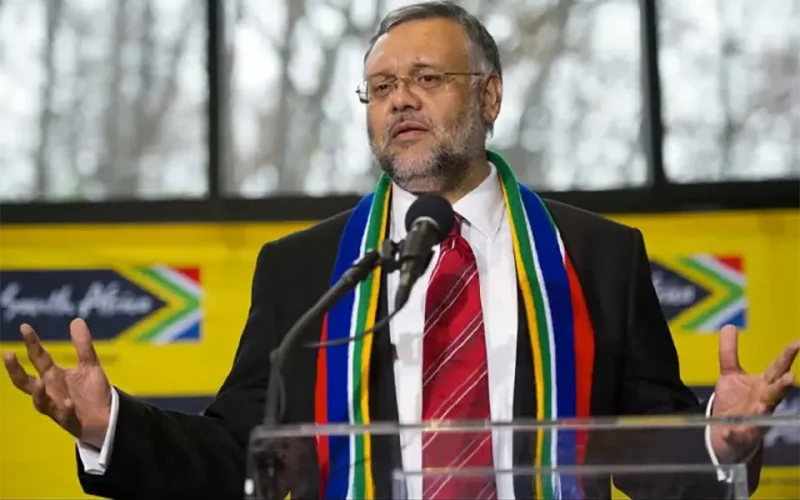
IN a dramatic chess move on the global stage, one of Africa’s most influential nations now finds itself frantically manoeuvring to salvage its fractured relationship with the United States – the world’s preeminent superpower. Diplomatic channels have plunged to an unprecedented nadir following the Trump administration’s explosive decision to expel South Africa’s ambassador, Ebrahim Rasool, from American soil.
The ambassador’s reported personal criticisms of President Donald Trump triggered a swift and decisive response from Washington, sending shockwaves through international diplomatic circles. Yet beneath this flashpoint lies a more complex tapestry of geopolitical strain and contested narratives surrounding South African policies.
As Pretoria scrambles to repair this critical alliance, both nations find themselves caught in a diplomatic maelstrom where perception, power, and politics collide with potentially far-reaching consequences for regional stability and international relations.
The Trump administration has been critical of South Africa’s land reform policies, which aim to address historical racial inequalities in land ownership. Despite no land being seized, Trump has falsely accused the South African government of violating the rights of white Afrikaner farmers by expropriating their land. This narrative has been amplified by figures like Elon Musk, who has described South Africa’s policies as “openly racist”.
Additionally, South Africa’s decision to pursue a genocide case against Israel at the International Court of Justice has further strained relations with the U.S., a close ally of Israel. This move has been seen as a significant factor in the escalating tensions between the two nations.
Some white South African groups, such as AfriForum, have actively lobbied in the U.S. to frame land expropriation as a threat to property rights and minority protections. They have sought intervention from the U.S., often relying on misinformation about South Africa’s policies. However, not all white South Africans support this approach, with some groups advocating for negotiation and legal safeguards instead of foreign interference.
The expulsion of Ambassador Rasool has been met with disappointment from South Africa, which has reaffirmed its commitment to maintaining a positive relationship with the U.S. Despite this, the U.S. has taken a hard stance, with Secretary of State Marco Rubio labelling Rasool as “no longer welcome” in the U.S.
One of the most significant potential consequences for South Africa is the possible termination of the African Growth and Opportunity Act (AGOA), which provides preferential access to the U.S. market for South African exports. Losing AGOA would severely impact South Africa’s economy, leading to reduced exports, job losses, and decreased foreign investment. This could destabilise the country’s economy and affect its creditworthiness.
Musk plays a significant role in the current tensions between the U.S. and South Africa, primarily through his influence on Trump and his vocal criticism of South Africa’s land reform policies. His role in the current tensions between the U.S. and South Africa is significant due to his influence on Trump, his public criticism of South Africa’s land policies, and his engagement with South African leadership. His actions have contributed to the escalation of tensions and have shaped U.S. policy towards South Africa.