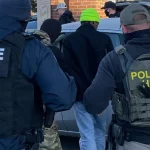
IN early December 2025, the US Immigration and Customs Enforcement launched a targeted operation in Minneapolis-St. Paul, deploying over 100 federal agents to communities with significant Somali populations. The operation marked a dramatic escalation in President Donald Trump’s immigration enforcement efforts, which have already resulted in nearly 300,000 deportations since he returned to office in January 2025.
What distinguishes this operation from the broader deportation campaign sweeping through American cities is its explicit focus on a single ethnic community. Trump has repeatedly singled out Somali immigrants in public statements, describing them as people who have “caused a lot of trouble” and claiming they “contribute nothing” to the United States. In one particularly inflammatory post, he referred to Somali immigrants as “garbage,” while demanding that Minnesota send them “back to where they came from.”
A Tragedy Exploited
The catalyst for intensified scrutiny of the Somali community arrived on November 26, 2025, when an Afghan national named Rahmanullah Lakanwal shot two National Guard members near the White House, killing 20-year-old Specialist Sarah Beckstrom and critically wounding Staff Sergeant Andrew Wolfe. Within hours, Trump pivoted from discussing the Afghan suspect to attacking Somali refugees in Minnesota.
When reporters questioned the connection between an Afghan shooter and Somali immigrants, Trump responded: “Ah, nothing, but Somalians have caused a lot of trouble, they’re ripping us off a lot of money.” The president then launched into attacks on Representative Ilhan Omar, a naturalised U.S. citizen born in Somalia.
This rhetorical leap reveals a deliberate strategy: using a tragedy involving one immigrant group to justify expanded enforcement against another, unrelated community. Trump subsequently announced reviews of all green cards from 19 “countries of concern” and moved to terminate Temporary Protected Status for Somali immigrants in Minnesota.
The Reality Behind the Rhetoric
The facts on the ground in Minnesota tell a different story from Trump’s inflammatory characterisations. The Minneapolis-St. Paul area is home to approximately 80,000 people of Somali descent, representing the largest Somali population in the United States. According to Minneapolis Mayor Jacob Frey, the vast majority are U.S. citizens or legal residents. Only about 700 Somalis nationwide held Temporary Protected Status as of March 2025.
Nearly 58 percent of Somali Americans were born in the United States, and 87 percent of those born elsewhere are naturalised citizens. Many families have lived in Minnesota for decades, establishing businesses, owning homes, and contributing to the economic and cultural fabric of their communities.
Yet during the early December ICE operation, federal agents deployed chemical irritants to push through crowds of community members who had gathered to block vehicles conducting immigration checks. Witnesses reported masked agents demanding identification papers in heavily Somali neighbourhoods, creating an atmosphere of fear that extended far beyond those actually subject to deportation orders.
The Fraud Narrative
Trump has repeatedly cited a significant fraud scandal in Minnesota as justification for his attacks on the Somali community. Prosecutors have alleged that criminals defrauded the state of approximately $9 billion in misused social assistance funding and nearly $300 million in COVID-related funds. Attorney General Pam Bondi announced that 98 individuals have been charged in the Justice Department’s fraud investigation.
However, the Trump administration’s response extends far beyond investigating and prosecuting the individuals accused of crimes. On December 30, 2025, the administration froze $185 million in federal childcare subsidies for low-income families in Minnesota, affecting thousands of families – both Somali and non-Somali – who had no connection to the fraud cases.
More troublingly, the White House announced it is reviewing plans to strip citizenship from Somali Americans convicted of fraud through denaturalisation proceedings. While denaturalisation is legally possible for foreign-born citizens who obtained citizenship through false pretences, the practice is exceedingly rare and requires a high burden of proof. The suggestion of widespread denaturalisation efforts based on fraud convictions represents an unprecedented expansion of this power.
The Broader Deportation Machine
The Minnesota operation must be understood within the context of Trump’s larger mass deportation campaign. Since returning to office in January 2025, his administration has conducted sweeping immigration enforcement operations in cities including Los Angeles, Chicago, Miami, Houston, Atlanta, New York City, Phoenix, Washington D.C., Portland, Charlotte, and New Orleans.
By October 2025, at least 527,000 people had been deported from the United States. ICE has been making approximately 1,100 arrests per day, with internal data showing the agency has arrested nearly 579,000 individuals since Trump’s inauguration. The administration has set an ambitious goal of one million deportations per year.
However, data reveal significant gaps between the administration’s rhetoric about targeting dangerous criminals and the reality on the ground. According to analysis from multiple sources, the majority of those arrested and detained do not have criminal convictions beyond immigration violations. By June 2025, data showed that only 30 percent of those in ICE detention had criminal convictions, with 27 percent having pending charges, and only 8.5 percent of those with criminal records involving violent offences.
A July 2025 analysis found that the proportion of immigrants convicted of violent crimes has dropped significantly under Trump’s enforcement surge. The Cato Institute reported that 65 percent of those detained by ICE had no criminal convictions, and 93 percent had no violent convictions. As of May 2025, ICE had arrested 752 non-citizens convicted of murder and 1,693 convicted of sexual assault—a fraction of the estimated 435,000 unauthorised immigrants with criminal convictions that ICE identified as being in the United States.
The Human Cost
The Minneapolis ICE operation has created profound anxiety within Minnesota’s Somali community. Residents report carrying passports and identification documents everywhere they go, fearing stops by federal agents. Signs reading “No ICE enter without a court order” have appeared on businesses. Many community members describe feeling targeted not for any actions they have taken, but simply for who they are.
Abdul Abdullahi, who runs an employment office at the 24 Somali Mall, expressed his frustration: “It’s very unfortunate for someone in the highest office in the world to generalise and demean a whole community by saying that they are garbage – they’re of no good. This is just an attempt to divide us – an attempt to pit us against each other.”
Said Mohamed, an Uber and Lyft driver, told reporters that Trump’s remarks have “hurt” the community, adding that members are “very scared.” The atmosphere of fear has extended beyond those who are undocumented. U.S. citizens of Somali descent report being stopped and questioned, raising concerns about racial profiling and constitutional violations.
Political Dimensions
Trump’s attacks on Minnesota’s Somali community carry clear political overtones. The president has repeatedly attacked Governor Tim Walz, a Democrat who served as Kamala Harris’s running mate in the 2024 election. Trump has also maintained a years-long campaign of disparaging remarks against Representative Ilhan Omar, one of the first Muslim women elected to Congress.
In one particularly inflammatory post, Trump wrote: “The seriously retarded Governor of Minnesota, Tim Walz, does nothing, either through fear, incompetence, or both, while the worst ‘Congressman/woman’ in our Country, Ilhan Omar, always wrapped in her swaddling hijab, and who probably came into the U.S.A. illegally in that you are not allowed to marry your brother, does nothing but hatefully complain about our Country.”
Local officials have pushed back forcefully. Minneapolis Mayor Jacob Frey described the operation as “terrorising” and “not American,” promising the city would not cooperate with ICE. St. Paul Mayor Melvin Carter noted the seeming pattern: “It seems to many of us, like, the darker-skinned the immigrants who come to our country are, the more our posture on immigration as a country has shifted. That’s un-American. That’s concerning.”
A Pattern of Targeted Rhetoric
The focus on Somali immigrants fits a broader pattern in Trump’s approach to immigration enforcement. Throughout his political career, Trump has made inflammatory statements about specific immigrant communities, often focusing on people from developing countries with darker skin. During his 2016 campaign, he claimed Mexico was sending “rapists” across the southern border. In 2024, he spread false claims that Haitian immigrants in Ohio were “killing and eating pets.”
The administration’s rhetoric stands in contrast to its treatment of white South African immigrants, for whom Trump reduced the total refugee acceptance number to just 7,500 annually but indicated a preference. This selective targeting based on national origin and race has drawn widespread condemnation from civil rights organisations and immigrant advocacy groups.
Constitutional and Legal Questions
The Minnesota operation raises significant legal and constitutional questions. Federal courts had already ruled certain aspects of Trump’s immigration enforcement unconstitutional. A week before the National Guard shooting, a federal judge ruled that Trump’s deployment of National Guard troops to Washington, D.C. was likely unlawful, though the ruling was stayed pending appeal.
The practice of conducting immigration checks in specific neighbourhoods based on ethnicity raises Fourth Amendment concerns about unreasonable searches and Equal Protection issues under the Fourteenth Amendment. Legal experts have warned that targeting individuals based on their appearance or national origin, rather than specific evidence of immigration violations, constitutes racial profiling.
The administration’s discussion of denaturalising citizens en masse represents another potential constitutional crisis. While the government has the power to revoke citizenship obtained through fraud, the process typically requires proving that the individual knowingly made false statements during the naturalisation process. Using fraud convictions unrelated to the naturalisation process as grounds for denaturalisation would represent a significant expansion of federal power.
The Impact on Immigration Policy
The Minnesota operation demonstrates how the Trump administration has transformed immigration enforcement from a targeted effort focused on individuals with serious criminal records to a broad campaign that sweeps up large numbers of people whose only violation is their immigration status.
ICE has shifted tactics significantly, moving away from arresting immigrants already held in local jails to conducting street-level operations in communities. According to a Washington Post analysis of government data, this represents a fundamental change in enforcement strategy, concentrating arrests in states that fully cooperate with federal immigration authorities.
The administration has also eliminated previous priorities that focused enforcement on those who posed genuine public safety threats. Under the Biden administration, people without criminal convictions beyond immigration violations were not prioritised for arrest and deportation. Trump’s ICE has been encouraged to make “collateral arrests”—apprehending undocumented people who happen to be with someone on a target list, such as other household members.
Public Opinion Shifts
As the deportation campaign has intensified, public opinion has shifted against the administration’s approach. A Pew Research Centre survey conducted in October 2025 found that 53 percent of Americans believe the Trump administration is doing “too much” when it comes to deporting immigrants living in the United States illegally, up from 44 percent in March.
Overall, 50 percent of Americans disapprove of Trump’s approach to immigration, including 36 percent who strongly disapprove. Among Democrats, 86 percent say the administration is doing too much on deportations, up 11 percentage points since March.
Notably, 59 percent of Latino respondents reported that ICE has conducted arrests or raids in their area, higher than Asian (47 percent), Black (39 percent), or white (38 percent) respondents. Hispanic Republicans are far more likely than white Republicans to say the Trump administration is doing too much, with 47 percent expressing this view, up from 28 percent in March.
Looking Forward
The targeting of Minnesota’s Somali community represents more than just another chapter in Trump’s deportation campaign. It signals a willingness to use inflammatory rhetoric about specific ethnic groups, exploit unrelated tragedies for political purposes, and deploy federal law enforcement resources in ways that raise serious constitutional concerns.
The operation has created deep fractures in Minnesota communities, generated fear among legal residents and citizens, and raised fundamental questions about equal protection under the law. While the administration frames its actions as necessary for national security and combating fraud, the evidence suggests a broader campaign that conflates specific criminal cases with entire ethnic communities.
As ICE operations continue to expand across the country, with new deployments announced in North Carolina, Louisiana, and other states, the Minnesota case offers a preview of how Trump’s immigration policies may increasingly target specific communities rather than focusing narrowly on individuals who pose legitimate public safety concerns.
The full consequences of this approach – for the targeted communities, for American constitutional values, and for the country’s relationship with immigrant populations—will continue to unfold in the months ahead. What is already clear is that the administration’s rhetoric and enforcement tactics have moved far beyond the traditional bounds of immigration enforcement, creating an atmosphere of fear and division that extends well beyond those actually subject to deportation orders.
For Somali Americans in Minnesota who have built lives, raised families, and contributed to their communities over decades, Trump’s attacks represent not just a policy disagreement but an assault on their place in American society. As one community member put it: “This is my home. This has to stop.”