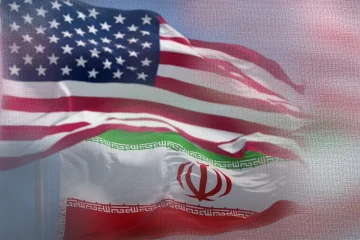

WHEN the first American B-2 stealth bombers crossed into Iranian airspace on the night of 28 February 2026, the explosions they triggered were felt not only in Tehran but in the fuel queues of Nairobi, the supermarkets of Johannesburg and the freight corridors of Lagos. Ten days later, the full economic aftershock is arriving – and for hundreds of millions of people who had nothing to do with Washington’s decision to go to war, the bill is arriving fast.
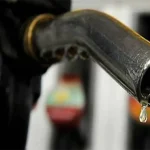
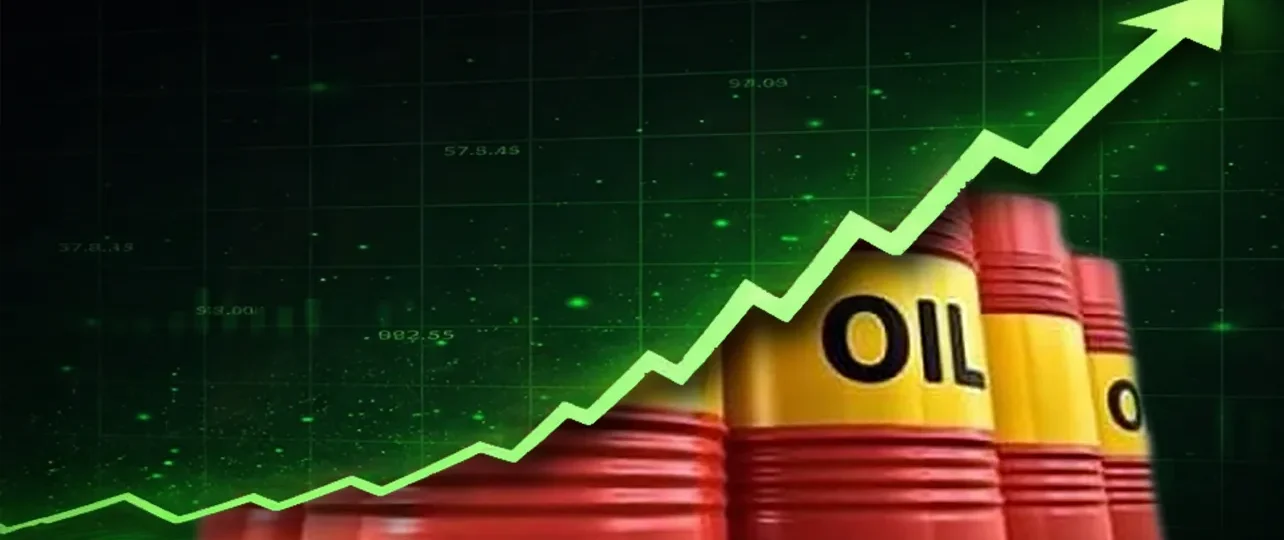
Brent crude oil, the global benchmark, surged past $100 a barrel on Sunday – a threshold not breached since Russia’s invasion of Ukraine in 2022 – before briefly spiking towards $120 on Monday morning as fresh Israeli strikes hammered energy infrastructure in Iran and Bahrain’s national oil company, BAPCO, declared force majeure after its Sitra refinery complex was struck. The price has climbed more than 40 percent since the war began. WTI, the American benchmark, crossed $100 a barrel on Monday for the first time in four years.
The International Monetary Fund warned on Monday that a sustained 10-percent increase in oil prices would translate into a 40-basis-point rise in global inflation. ‘Think of the unthinkable and prepare for it,’ IMF Managing Director Kristalina Georgieva told a symposium in Tokyo, speaking bluntly to a gathering of finance ministers already scrambling to respond. G7 finance ministers convened an emergency video conference the same day to discuss a coordinated release of strategic oil reserves. The question animating capitals from Seoul to Accra was simple and brutal: how long will this last, and who will bear the greatest burden?
| Brent crude (9 March 2026) | ~$103/barrel (spike: ~$120) |
| Price rise since 28 Feb 2026 | +40%+ |
| WTI benchmark | $100/barrel |
| Global oil through Strait of Hormuz | ~20% of supply |
| IMF inflation warning (10% oil rise) | +40 basis points globally |
| South Africa fuel spike (2022 parallel) | >25% in 6 months |
THE WAR THAT MOVED MARKETS
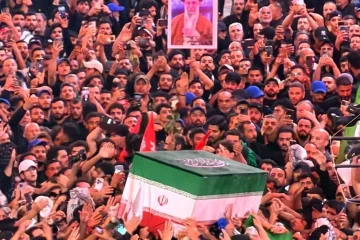
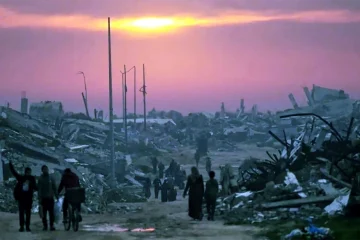
The conflict, codenamed ‘Operation Epic Fury’ by the United States, began in the pre-dawn hours of 28 February with coordinated air strikes that killed Supreme Leader Ali Khamenei alongside much of Iran’s senior military command. Iran retaliated with barrages of ballistic missiles and drones against US bases in the Gulf, against Israeli cities, and against Arab states hosting American forces. By Monday, the war had entered its tenth day with no ceasefire in sight.
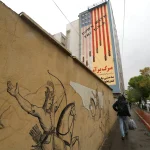
Overnight on Sunday, Israel launched what it described as a ‘new wave of strikes’ targeting rocket engine production facilities, ballistic missile launch sites, and IRGC command infrastructure across Iran, including in Isfahan. A CNN team in Tehran reported hearing multiple thuds from what appeared to be fresh air strikes at dawn, as thick black smoke from oil storage facilities torched in Saturday’s raids still hung over the capital’s skyline.
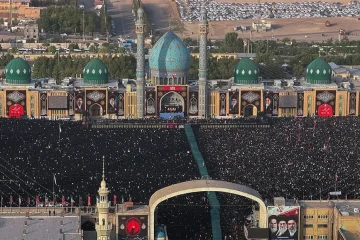
Iran responded by appointing Mojtaba Khamenei – son of the slain supreme leader – as its new paramount leader, a choice that former US Ambassador to Oman Gary Grappo described as eliminating any early prospect of negotiations. ‘We can dismiss any thought that we’re going to get off to a good start with this individual,’ Grappo told CNN. ‘He’s most definitely a hardliner facing what I think is truly an existential crisis, unlike anything the country has faced in its 47-year history.’
The appointment was immediately read by markets as a signal that the war would last longer than initially assumed. Analyst Neil Wilson of Saxo Markets wrote that ‘complacency has been replaced by a degree of panic’ as investors repriced the likelihood of sustained damage to energy and trade flows. Asia-Pacific equity markets took the full force of the opening bell: Japan’s Nikkei 225 shed 5.2 percent, South Korea’s Kospi fell 6 percent, and Taiwan’s Taiex dropped 4.4 percent. European and US futures followed lower.
“Complacency has been replaced by a degree of panic because the market is now pricing in a more sustained hit to energy and trade flows.” — Neil Wilson, Saxo Markets
THE STRAIT OF HORMUZ: A CHOKEPOINT FOR THE WORLD
Central to the market panic is a single narrow passage, the Strait of Hormuz, the 21-mile-wide channel separating Iran from Oman and the UAE through which roughly one-fifth of the world’s crude oil passes each day. Since the war began, tanker traffic through the strait has collapsed, with vessels refusing to risk Iranian threats to set ships ablaze. Oil and gas storage in Gulf facilities is reportedly filling rapidly, forcing Iraq and Kuwait to cut production and threatening the UAE with the same.
The disruption extends beyond crude. Roughly one-fifth of global liquefied natural gas (LNG) also moves through the Strait – a fact of particular significance for East Asian economies. Taiwan, which in 2025 sourced nearly 70 percent of its crude oil from the Middle East and some 34 percent of its LNG from Qatar alone, has been scrambling to declare sufficient reserves. Foxconn chairman Young Liu, whose company assembles iPhones for global markets, warned publicly last week: ‘If the war continues, it will lead to increases in raw materials and processing costs.’
The energy infrastructure of Gulf states has itself become a theatre of war. Bahrain’s BAPCO – which exports over 85 percent of its refined petroleum products globally – declared force majeure on Monday after strikes on its refinery complex in Riffa. Saudi Arabia reported intercepting nine drones targeting the Shaybah oil field, one of the Gulf’s largest, between midnight and midday on Monday alone. The UAE’s defence ministry said its air defence systems had intercepted ballistic missiles and engaged drones over Abu Dhabi. Kuwait’s National Guard shot down a drone at one of its protected sites.’ Qatar confirmed intercepting a missile attack.
The attacks have, as Chatham House economist Stephen King noted, altered the fundamental ‘terms of trade’ for energy-importing nations worldwide. When oil prices rise, income is transferred from importing countries to exporters — a redistribution with deeply unequal consequences depending on where a country sits in the global energy hierarchy.
AFRICA: MOST EXPOSED, LEAST INSULATED
For the 54 nations of the African continent, the shock is landing on already-strained ground. Africa is a net importer of refined petroleum products, and that structural vulnerability means the continent has almost no buffer against the kind of supply-side shock now unfolding.
‘Africa is a net importer of oil products, meaning it is heavily exposed to shocks like these,’ said Nick Hedley, an energy transition analyst at Zero Carbon Analytics. When global supplies tighten, Hedley explained, prices rise while African currencies weaken simultaneously as investors move capital into safe-haven assets like the US dollar — a double blow that amplifies the pain felt by consumers. The same dynamic played out after Russia invaded Ukraine in 2022, when transport fuel prices in South Africa surged more than 25 percent within six months.
Oxford Economics senior economist Brendon Verster echoed the concern: ‘The near-term risks come mainly from rising oil prices and weakening exchange rates.’ Verster noted, however, that for major exporters the calculus is more complex. Nigeria, which exports roughly 1.5 million barrels of crude per day and had set its medium-term fiscal framework on prices between $64 and $66 per barrel, could see a significant revenue windfall at current prices. Angola, Algeria, and Libya stand similarly positioned.
But the picture at the household level is grimly different. ‘Oil producers could benefit from higher crude prices,’ Hedley said, ‘but ordinary citizens will likely face higher transport and fuel costs, and potentially higher interest rates.’ The point is critical: Nigeria and Ghana both produce crude oil but import the vast majority of their refined petroleum — they lack sufficient refining capacity to translate production gains into affordable fuel for their own citizens.
“For most African households, the immediate effect is higher living costs. Most food and goods across Africa are transported by road.” — Nick Hedley, Zero Carbon Analytics
Countries already under IMF fiscal frameworks face a particular bind. As energy import bills consume greater shares of foreign exchange reserves, fiscal space narrows, and social spending comes under pressure. Analysts identify Sudan, Zimbabwe, The Gambia, Lesotho and the Central African Republic as among the most acutely vulnerable nations whose currencies, debt positions, and import dependency combine to leave ordinary people almost entirely unprotected from the price shock.
South Africa enters the crisis with somewhat more resilience. ‘So far the impact has been muted for South Africa,’ said John Ashbourne of Capital Economics, citing recent structural economic reforms that have helped stabilise the rand and bond markets. ‘Still, higher oil and gas prices are expected to filter into inflation in the coming months.’ For a country where petrol prices are a direct lever on the cost of transport, food delivery, and consumer goods across a vast geographic spread, those months matter enormously to the most economically vulnerable South Africans.
East African economies, including Kenya and Uganda, have said their immediate fuel supplies remain stable, but both governments are working to ensure continuity. Djibouti’s Finance Minister Ilyas M. Dawaleh issued a stark warning on Saturday, writing that the war will ‘bring severe economic consequences for developing countries’ and that small states dependent on maritime trade ‘risk being pulled into deeper economic uncertainty as external shocks ripple across the region and Africa.’ Egypt’s President Abdel Fattah el-Sisi went further, declaring his country’s economy to be in a ‘state of near-emergency’ as inflation warnings flared.
GOVERNMENTS SCRAMBLE – FROM SEOUL TO WASHINGTON
The policy response to the crisis has been swift, if uneven. South Korea – a major world economy and leading G20 member – announced its first fuel price cap in nearly 30 years on Monday, with President Lee Jae Myung convening an emergency cabinet session and instructing the industry ministry to implement the measures that week. Lee also announced that South Korea had secured over six million barrels of crude from the UAE and instructed his government to crack down on fuel market speculation. ‘For petroleum products that have been excessively increased recently, the maximum price system should be quickly introduced,’ he said.
Japan’s government convened an emergency energy council. Taiwan’s Bureau of Energy confirmed statutory crude reserves of at least 90 days. European stock markets and US futures fell in tandem on Monday. The STOXX Europe 600 index touched its lowest level since December, while government bond yields in the UK – tied to mortgage rates – climbed back above 4 percent as investors priced in the prospect of delayed interest rate cuts or even increases as inflation re-emerges.
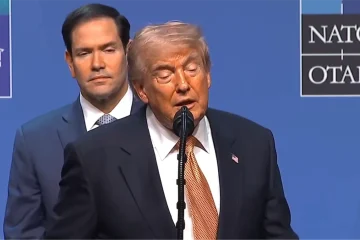
Goldman Sachs warned clients this week that US inflation could snap back to 3 percent if the war drags on and oil prices remain elevated – reversing months of progress and directly threatening the economic confidence that had underpinned consumer spending. CNN Business analysis noted that Trump, who had entered the war with favourable economic indicators, now faces a significant political liability: rising gas prices, renewed mortgage market jitters, and the spectre of stagflation heading into midterm elections.
African governments have fewer instruments at their disposal. Without the forex reserves, credit facilities or refining infrastructure available to developed economies, most are reduced to watching the oil price ticker and hoping for a short war.
THE LONGER VIEW: SOVEREIGNTY AND ENERGY SECURITY
Behind the immediate cost-of-living crisis lies a longer strategic question for African nations: how long can the continent remain structurally dependent on energy geopolitics it has no power to shape?
‘It makes strategic sense for African countries to ensure long-term energy security and sovereignty,’ said Kennedy Mbeva, a research associate at the Centre for the Study of Existential Risk at the University of Cambridge. Achieving that, Mbeva argued, requires balancing immediate fiscal pressures with long-term investment in clean energy and green industrialisation – a formidable challenge for governments already stretched thin by debt service obligations and post-pandemic recovery spending.
The crisis has renewed calls for accelerating Africa’s own energy transition, not from an ideological starting point, but from a realist one: diversified domestic energy systems, including renewables and expanded refining capacity, are in effect a form of geopolitical insulation. The continent’s vast renewable resources – wind, solar, hydropower – remain enormously underleveraged precisely because decades of cheap imported fuel made domestic investment seem less urgent.
That calculus is now being visibly revised. For the ordinary motorist filling up in Lagos or Nairobi, the abstract language of energy sovereignty translates into something immediate and painful: a fuel price that has no ceiling in sight, driven by a war fought thousands of kilometres away, decided in capitals that bear none of the downstream cost.
As of Monday morning, the war showed no sign of ending. Israel had launched fresh strikes on Iranian missile facilities. Iran’s new supreme leader had pledged defiance. Bahrain’s oil refinery was ablaze. And the price of Brent crude – the single number that connects every petrol pump, every food delivery truck, every imported consumer good across the developing world – remained above $100 a barrel.
The children in Tehran, Lagos, Johannesburg, Nairobi, Cairo and Khartoum had played no part in the decisions that lit this fuse. They will pay the price regardless.